The Provincial Government of Granma has extended an invitation to private sector representatives who import cooking oil, various food items, and personal hygiene products for a meeting scheduled this Friday. The explicit aim of this gathering is to find "joint solutions in response to the harsh U.S. blockade."
The announcement, shared by the Coordinadora Economía on Facebook—a profile linked to the local government—invites small and medium enterprises (SMEs) and self-employed importers dealing in oil, food, and hygiene products to the meeting.
While the brief message does not specify any sanctions, new pricing, or concrete measures, the call to find solutions "for the good of our people" amid rapidly rising prices of essential goods underscores the urgency and pressure on private importers.
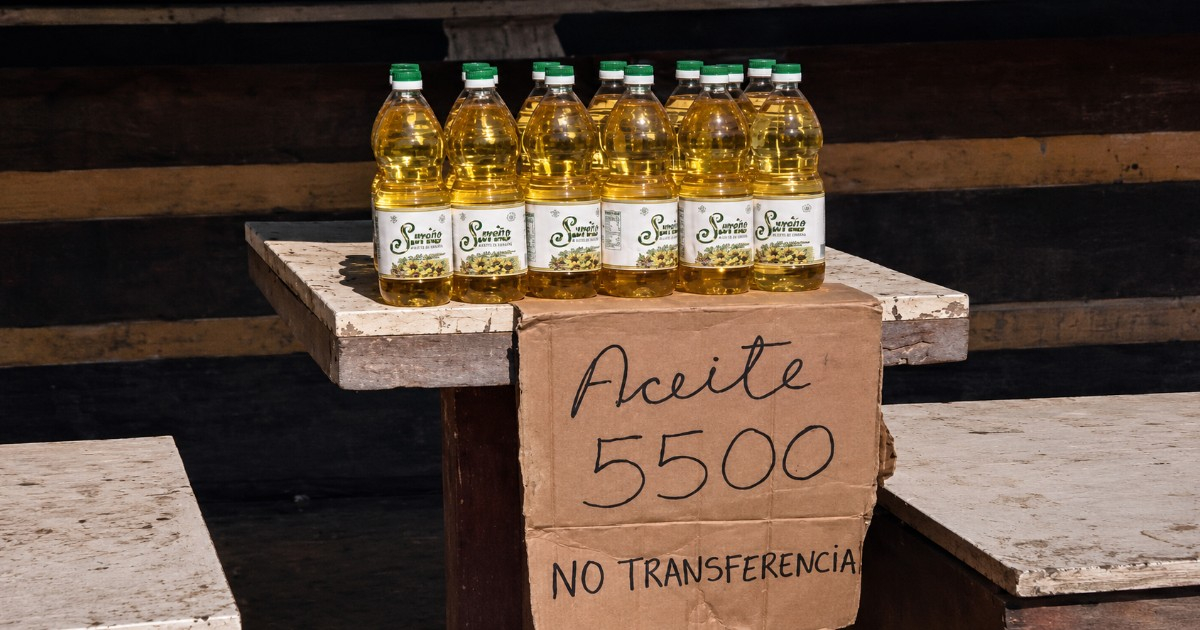
This initiative follows a similar move by authorities in Guantánamo earlier this week. In response to complaints about soaring oil prices, they set a reference price of 2,200 pesos per unit without specifying brand, volume, or packaging, but warned of fines, seizures, forced sales, and temporary closures for those who fail to comply.
The pressure on the private sector in this region is not new. Governor Yanetsy Terry Gutiérrez had already summoned SMEs and self-employed workers in July, demanding greater responsibility for issues that are state responsibilities, such as cash circulation and timely payments to pensioners and workers.
The situation has spiraled out of control to the extent that the regime is compelled to apply new pressures on private actors.
The Granma meeting comes shortly after the Ministry of Finance and Prices removed retail price caps for cut chicken, edible oils—except olive oil—powdered milk, pasta, and sausages. This decision, cemented by Resolution 150/2026, repealed the caps set in 2024, maintaining tax exemptions on imports of these five foods.
Furthermore, Miguel Díaz-Canel acknowledged that price controls failed to curb inflation, admitting that the regime would not continue imposing them broadly. He also conceded that "some obstacles don’t come from outside or from blockades," a statement that contrasts with Granma authorities' current narrative.
Following the removal of controls, oil prices surged across various regions. For instance, a consumer from Isla de la Juventud reported a bottle price jump from 2,600 to 4,500 pesos within a week, sparking widespread criticism of both the government and private merchants.
The growing role of these businesses has not prevented the overall economic decline. An analysis of data from the National Office of Statistics and Information showed that as of the end of 2025, Cuba had 20,349 economic entities, including 9,941 private SMEs, while the economy contracted at an average annual rate of 2% between 2022 and 2025.
The liberalization of prices, intended as a correction to the failed price caps, has backfired on the regime.
The sharp increase in prices for oil and other foods has led to a surge in public complaints, forcing local administrations to seek rapid solutions to mitigate a crisis directly affecting the purchasing power of the population.
Understanding the Economic Crisis in Granma
Why is the Granma government meeting with private importers?
The Granma government is meeting with private importers to explore "joint solutions" to address the rising cost of essential goods amid the ongoing U.S. blockade and internal economic pressures.
What recent changes have impacted food prices in Cuba?
Recent changes include the removal of retail price caps for certain food items, which led to a significant increase in prices, exacerbating economic challenges for consumers.
How has the removal of price controls affected Cuban citizens?
The removal of price controls has resulted in severe price hikes for basic goods, intensifying the economic strain on citizens and leading to widespread public dissatisfaction.