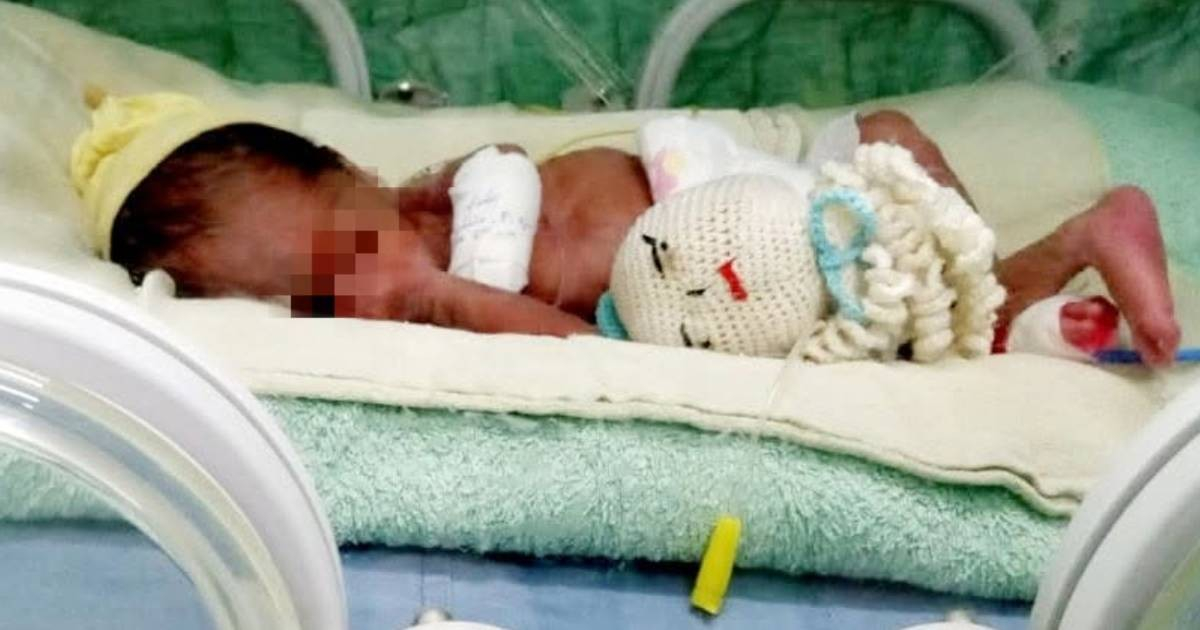
A preterm infant weighing just 950 grams made history on Wednesday by becoming the first newborn in Santiago de Cuba to receive a 'comfort octopus'—an initiative designed to provide emotional support to hospitalized neonates.
Born at 34 weeks, the baby, Derek Mateo, is currently in the Neonatal Intensive Care Unit at the Tamara Bunke Bider Maternal Hospital North. Here, the medical team decided to implement this neonatal care humanization tool for the very first time.
The announcement was made by Dr. Dagner Vargas González through a Facebook post.
"This little crochet octopus is no ordinary toy. Its tentacles mimic the umbilical cord, offering Derek Mateo a sense of security, comfort, and the protection he felt in his mother's womb," wrote Dr. Vargas, sharing several pictures of the baby.
The 'comfort octopus' is a crocheted toy with tentacles that resemble the umbilical cord. Advocates argue that it helps to soothe some premature infants and reduces their tendency to grab or pull on medical tubes, catheters, and other equipment while in intensive care.
The concept originated in Denmark between 2012 and 2013 when crocheter Josefine Hagen Solgaard created the first octopus for a premature newborn at the request of the child's father. This led to the Danish Octo Project, a movement that has since spread to hospitals worldwide.
In Cuba, this practice began in 2026 across several neonatal units. According to Dr. Vargas González, Matanzas was the first province to adopt it, followed by Pinar del Río, Artemisa, Ciego de Ávila, Holguín, and now Santiago de Cuba.
In Holguín, Ana Nastia Tamayo Ortiz, head of the Neonatology Department at Vladimir Ilich Lenin Hospital, indicated that these toys can also help keep newborns calmer and reduce the likelihood of them interfering with the tubes or lines used in their treatment, according to a report by Radio Angulo.
However, while the comfort octopus has gained popularity in numerous hospitals as part of neonatal care humanization strategies, scientific evidence regarding its direct clinical benefits remains limited. Thus, specialists agree that it serves as a supplement to medical care and should never replace prescribed treatments for premature infants.
The news generated numerous supportive messages for little Derek Mateo and the healthcare staff.
"Even amid challenging times, there are heartening news and events. Congratulations to this committed team of professionals," a user commented.
Dr. Vargas concluded his message with a heartfelt note to the newborn, encapsulating the essence of the initiative.
"Derek Mateo, you are a warrior. Your little octopus, woven with threads of hope, is a reminder that even in the toughest times, love and human warmth can make a difference. May this be the first of many embraces you receive in your life. Welcome, little one!"
Understanding the Comfort Octopus for Preemies
What is a comfort octopus?
A comfort octopus is a crocheted toy with tentacles designed to mimic the feel of an umbilical cord, providing comfort and security to premature infants in neonatal care.
How does a comfort octopus help premature babies?
It is believed to soothe premature babies by offering a sense of security and reducing their tendency to pull on medical equipment like tubes and catheters.
Where did the concept of the comfort octopus originate?
The concept originated in Denmark between 2012 and 2013, leading to the Danish Octo Project which has since expanded globally.