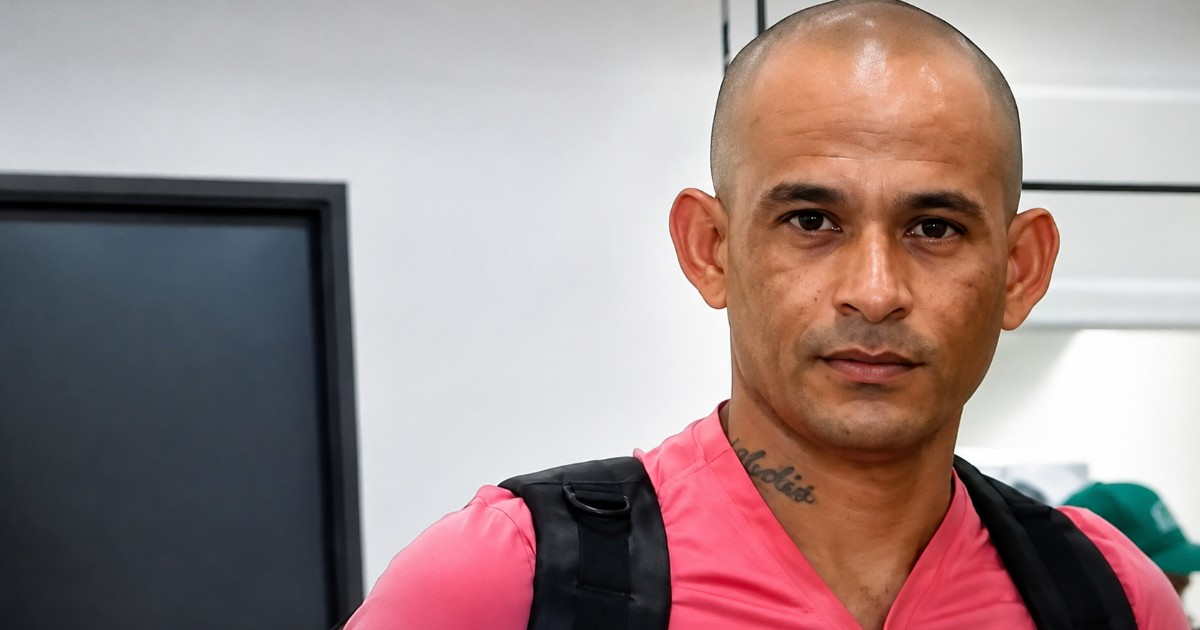
The family of Radame Irán Clavel Chaveco, a Cuban truck driver who passed away in the United States, is grappling with profound grief: the unexpected loss of their beloved and the challenge of fulfilling his dying wish to be laid to rest in Santiago de Cuba.
Independent journalist Yosmany Mayeta Labrada brought attention to this situation on social media and encouraged people to support a fundraising campaign, which has since concluded.
Heartbreaking Loss in Hialeah
Irán was residing with his family in Hialeah, Florida. His wife shared that during a workday, he began experiencing fever and severe muscle pains. The following day, he ceased responding to calls, and later, the police informed the family that he had been discovered deceased in the truck he was driving. The precise cause of his death remains unknown as the family awaits forensic investigation results.
A Community Mourns
Mayeta visited the family's home in Hialeah to express his condolences. He described a house constantly filled with visitors paying their respects. "He was a good man, always willing to help," family and friends repeatedly mentioned amidst tears and embraces.
The journalist's post overflowed with comments celebrating a well-loved figure in his community. A close relative stated, "Men as bold, determined, and kind-hearted as you are never forgotten. Rest in peace, brother."
A family friend recalled Irán's generosity, noting how he would bring supplies to his mother without being asked and had supported him in establishing his life in the United States. "The news hit me hard," he wrote.
Another mourner remembered Irán as the godfather to their child, describing him as "a kind, considerate man and a great provider" who dearly loved his wife and family.
The Journey Home
Irán leaves behind a significant void on both sides of the ocean. In Santiago de Cuba, his mother survives him, facing this loss just two months after burying Irán's father, who also died unexpectedly.
The family's heartfelt wish is to transport Irán's ashes back to the island so his mother and loved ones can bid him a proper farewell.
The Complex Process of Repatriation
Irán's case underscores a painful and frequent reality for the Cuban exile community. Sending a deceased person's body from the U.S. to Cuba can cost between $6,800 and $7,000 and may take up to two weeks.
Transporting ashes is a more feasible option: with a death certificate and cremation permit, ashes can be flown, even carried by a family member. However, the process still requires consular coordination, legalization procedures, and expenses that many families cannot manage alone. This has made fundraising campaigns on social media a common practice among the Cuban community in Florida.
In May 2026, the family of a young Cuban who died in ICE custody launched a campaign to cremate and send his remains to Cuba. In June, the mother of a Cuban woman who passed away in Santiago de Chile publicly sought help to repatriate her ashes, a process costing around $1,320 and needing resolution within 48 hours.
Irán's family is determined to see his ashes cross the sea to Santiago de Cuba, where his mother can say goodbye surrounded by family and friends' love.
Understanding the Challenges of Repatriating Remains to Cuba
What are the costs involved in repatriating remains from the U.S. to Cuba?
Repatriating a full body from the U.S. to Cuba can cost between $6,800 and $7,000, whereas transporting ashes is generally less expensive but still entails consular and legal costs.
How long does it typically take to repatriate a body to Cuba?
The process of repatriating a body to Cuba can take up to two weeks, depending on the completion of necessary procedures and documentation.
Can ashes be transported by a family member?
Yes, with the appropriate death certificate and cremation permit, ashes can be transported by a family member on a flight.