The U.S. Department of State issued a pointed question on Tuesday directed at the Cuban military conglomerate GAESA: with a reserve of $18 billion, why do the Cuban people continue to face power outages, food shortages, and a decaying infrastructure?
The Bureau of Western Hemisphere Affairs shared an official infographic on X, endorsed by the State Department, which contrasts the vast assets accumulated by the Grupo de Administración Empresarial S.A. with the dire daily struggles of ordinary Cubans.
"Cuba’s economic crisis, a direct result of the regime's incompetence, is no secret. While Cubans endure frequent power cuts, crumbling infrastructure, and product shortages, GAESA, the military-run enterprise, controls much of the island's economy and holds $18 billion in reserves," the publication states.
The infographic labels these reserves as a "war chest" and concludes with a question that encapsulates Washington's stance: "Why doesn't GAESA use these funds to meet the needs of the Cuban people?"
This message followed a complete blackout of Cuba's National Electrical System, the sixth of the year, which resulted in generation deficits nearing 2,315 megawatts and caused power cuts lasting up to 24 hours across the nation.
GAESA, the economic arm of Cuba's Revolutionary Armed Forces, operates with extreme opacity, failing to publish verifiable audits or financial statements. Its real influence is concentrated among a small group of fewer than 15 individuals.
Internal documents leaked and reviewed by the Miami Herald in August 2025 revealed that by March 2024, the conglomerate had amassed over $18 billion in liquid assets, including approximately $8.5 billion in deposits from its tourism subsidiary Gaviota and another $5 billion through TRD Caribe and Almacenes Universales.
Estimates suggest GAESA's control over the Cuban economy ranges from 40% to 70% of the GDP, yet its fiscal contribution to the state in foreign currency is virtually nil, according to available analyses.
The conglomerate dominates sectors such as tourism, retail, banking, ports, remittances, and mining, siphoning off foreign currency revenues that the regime withholds from the populace.
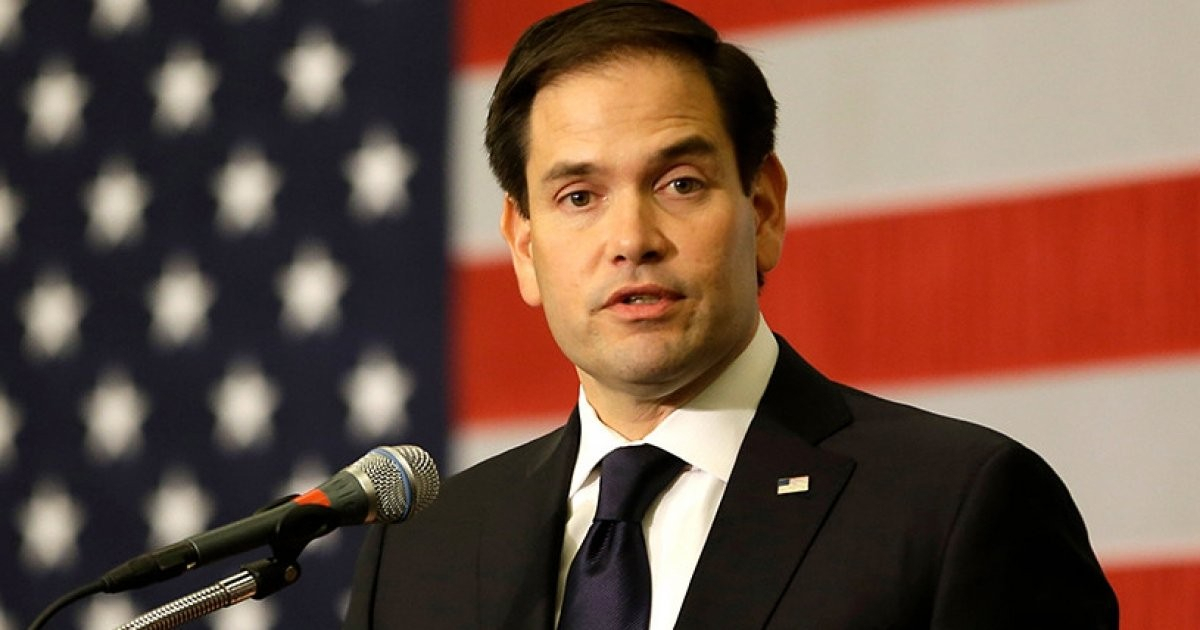
This Tuesday's publication is part of a sustained U.S. pressure campaign against GAESA throughout 2026. In May, Secretary of State Marco Rubio announced new sanctions against the conglomerate and its leadership under Executive Order 14404 signed by President Trump.
In June, Washington extended sanctions to affiliated entities including RAFIN S.A., Banco Financiero Internacional, Almacenes Universales S.A., GeoMinera S.A., and Antillana de Acero.
Rubio has characterized GAESA in the Senate as a "state within a state" that controls approximately 70% of Cuba's GDP and hoards between $14 billion and $17 billion in assets, while Cubans lack basic necessities such as electricity, food, and medicine.
Analysts estimate that only $43 million annually would suffice to supply 63 essential medicines in Cuba, and around $250 million could stabilize the national power grid—figures that represent a mere fraction of what the military conglomerate hoards without accountability.
Understanding GAESA's Economic Influence in Cuba
What is GAESA and why is it significant in Cuba?
GAESA, or Grupo de Administración Empresarial S.A., is the economic arm of Cuba's Revolutionary Armed Forces and dominates key sectors of the Cuban economy. It is significant because it controls a large portion of the island's GDP and holds substantial financial reserves.
How does GAESA's control affect the Cuban economy and its people?
GAESA's control over the economy allows it to capture foreign currency revenues, which the regime does not distribute to the population. This contributes to the lack of basic services and goods for ordinary Cubans, despite GAESA's considerable financial reserves.
What actions has the U.S. taken against GAESA?
The U.S. has implemented sanctions targeting GAESA and its affiliates, including actions announced by Secretary of State Marco Rubio in 2026, to increase pressure on the conglomerate and highlight its role in Cuba's economic issues.