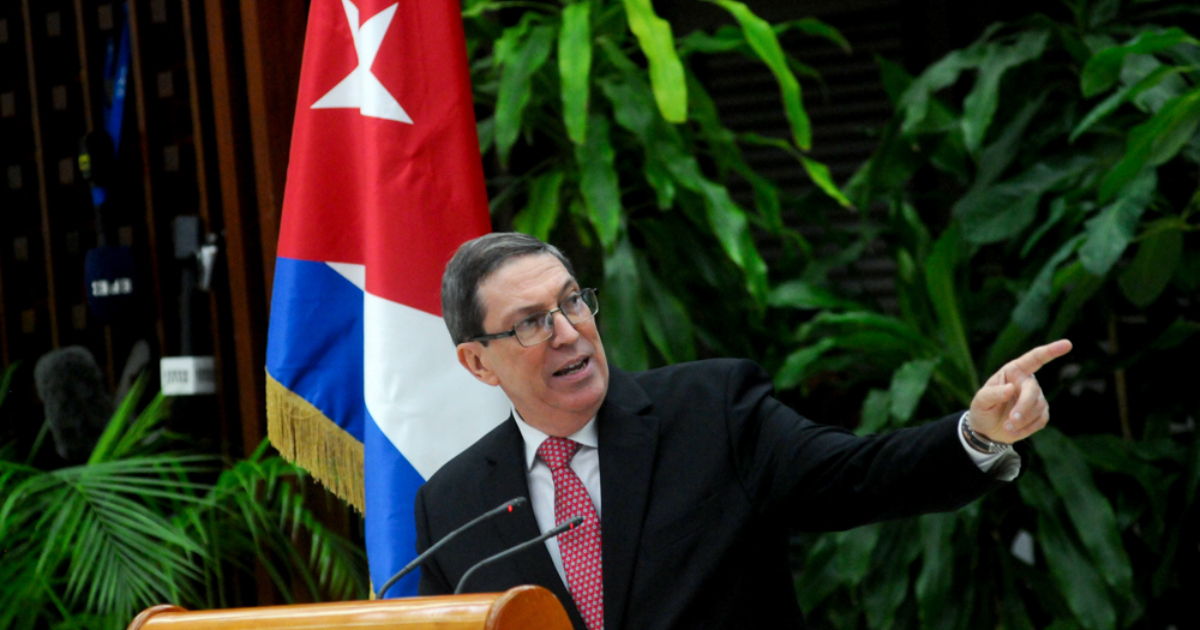
The Cuban Foreign Minister, Bruno Rodríguez Parrilla, has once again attributed the collapse of the country's electrical system, which has led to widespread blackouts, to the U.S. embargo.
"The disconnections from the national electrical system (SEN) are direct consequences of the genocidal blockade by the United States against Cuba, particularly the energy siege," Rodríguez stated in a social media post.
According to Rodríguez, the U.S. embargo not only hinders the free importation of fuels but also "blocks the entry of essential parts for the SEN, prevents collaboration with experts from other countries, and complicates access to international financing."
These statements followed the sixth total collapse of the SEN in 2026, which occurred on Sunday, August 2. On Monday, Havana woke up to only 14% of its power supply restored.
U.S. Perspective on the Energy Crisis
On Monday, Joshua Treviño, the Senior Director of the Western Hemisphere Initiative, stated on Fox News that the blackouts could be resolved immediately: "The lights could be turned on tomorrow if they chose to loosen their grip on power."
Treviño also linked Cuba's energy crisis to the capture of Nicolás Maduro on January 3, noting that "many of the combat troops that U.S. forces faced in Caracas were Cuban. The Cuban dictatorship was the main backer of Maduro's regime."
In May 2026, Secretary of State Marco Rubio refuted the notion that the oil blockade was to blame for the blackouts in Cuba. He pointed out that the island was reselling 60% of the free Venezuelan oil it received. The real issue arose when that supply vanished following Maduro's fall.
Rubio labeled the Cuban government as a "failed state" led by "incompetent communists" who "do not know how to fix" the country's dire situation.
The State of Cuba's Electrical Infrastructure
Beyond fuel shortages, Cuba's power plants are in a dire technical state. The Antonio Guiteras thermoelectric plant, the largest in the country, has experienced at least 17 unplanned shutdowns in 2026 and has not undergone major maintenance since 2010.
On July 30, Energy Minister Vicente de la O Levy acknowledged before the National Assembly that some communities have endured up to 105 consecutive days without electricity, and admitted that the crisis "has no short-term solution."
Treviño further remarked on Monday that it is impossible for the United States to predict when the blackouts in Cuba will end. "There is no limit to the amount of suffering that the Cuban communist regime is willing to inflict on its own people," he said.
FAQs about the Cuban Energy Crisis
What is causing the electrical blackouts in Cuba?
The Cuban government blames the U.S. embargo for hindering fuel imports and essential maintenance. However, the lack of maintenance and technical failures in power plants are also significant contributors.
How has the international community responded to Cuba's energy crisis?
The U.S. has criticized the Cuban regime for mismanaging resources and maintains that the power issues could be resolved if the government relinquishes control. Other nations have not intervened significantly.
Is there a timeline for resolving the energy crisis in Cuba?
According to Cuban officials, there is no short-term solution in sight, and the timeline for ending the blackouts remains uncertain.