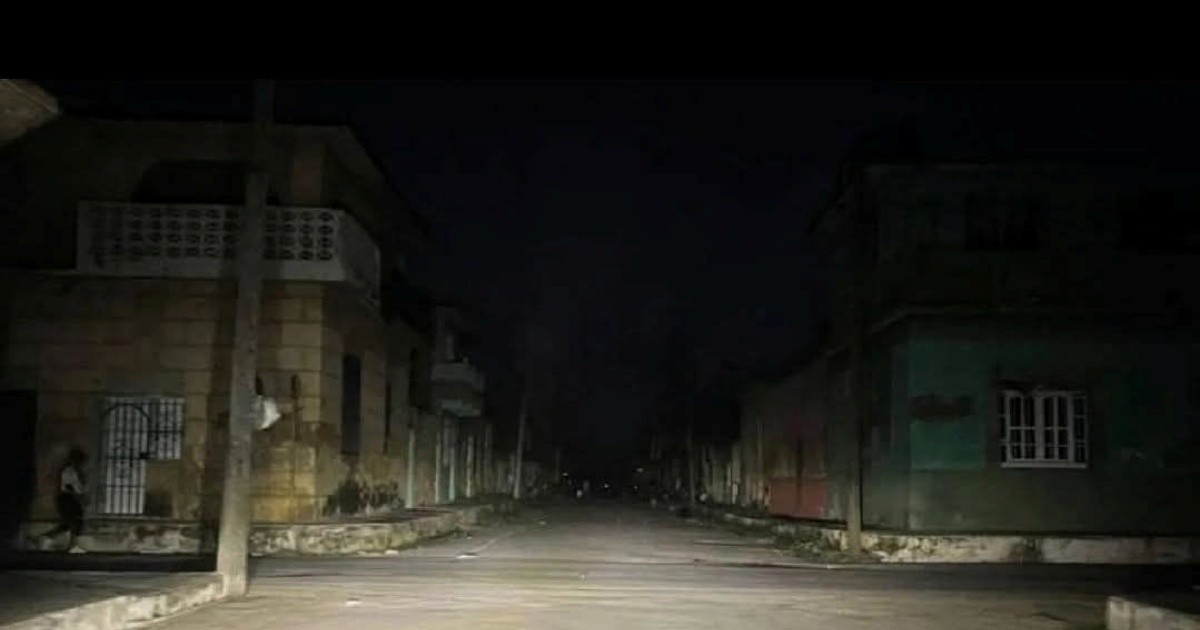
On Tuesday morning, Cuba woke up to the chaos of its seventh nationwide blackout of the year, with the National Electric System (SEN) completely down. The state-run Electric Union (UNE) shared updates on Facebook regarding the progress of the reconnection efforts.
The UNE reported that the power grid was reconnected from the westernmost province to the central-eastern region of the island.
"The system is now interconnected from Pinar del Río to Holguín. Work continues to integrate the provinces of Santiago de Cuba, Guantánamo, and Granma," the UNE stated in their announcement.
By 8:22 AM, the organization further noted a specific advancement in power generation: "Unit 6 of the CTE Diez de Octubre is online, increasing load."
However, the gap between official statements and the reality experienced by millions of Cubans was evident in the comments on these posts.
The Cause Behind the Seventh Blackout
The collapse occurred in two phases. On Sunday, August 3, at 10:43 PM, the UNE confirmed a total disconnection of the SEN, marking the sixth nationwide blackout of the year.
Efforts to recover the system had just begun when a frequency fluctuation led to another collapse on Monday, resulting in the seventh blackout of 2026.
At that moment, Havana had only restored 14% of its power: 87,480 customers, 78.51 MW, 12 substations, and 29 circuits were energized, prioritizing 19 hospitals and two water pumps.
The UNE attributed this second failure to weather conditions: "Current meteorological events have caused disruptions in the network, directly impacting the generating units that were online."
Official journalist Lázaro Manuel Alonso summarized it on social media: "A few minutes ago, there was another disconnection of the National Electric System. Despite today's progress, a fluctuation caused the system to fall."
The Antonio Guiteras thermoelectric plant, the largest in the country located in Matanzas, attempted a cold start at 10:17 AM on Monday, with hopes of syncing with the SEN by nightfall. However, the new collapse thwarted these plans. The plant has experienced at least 17 unscheduled shutdowns in 2026 and hasn't received major maintenance since 2010.
Voices of Frustration: Prolonged Power Outages
Comments on UNE's posts painted a vivid picture of the disaster that official data failed to capture.
"In Consolación del Sur, we've been without power for three days; it's very difficult for children and the sick," a resident wrote.
In Bauta, Artemisa, locals were without electricity for 72 hours, calling the situation "shameful." In Güines, Mayabeque, the blackout extended to 66 hours, also affecting water supply. In Cifuentes, Villa Clara, nearly 72 hours; in the Tejas neighborhood, San Miguel del Padrón, 52 hours; in Minas, Camagüey, over 48 hours.
The perception of territorial inequality fueled further discontent. "Guantánamo, as always, among the last to receive service," one user commented. Another sarcastically asked, "Did they connect Pinar del Río to Holguín without passing through the other provinces?" A phrase summed up the widespread skepticism: "The system is connected, but the electrons aren't flowing."
The crisis also impacted telecommunications: ETECSA reported generator failures affecting numbers with prefixes 52, 509, 598, and 599.
Seven Blackouts in Eight Months
By 2026, Cuba has experienced seven total collapses of the SEN: two in March (16 and 21), three in July (6, 10, and 14), and two in August (3 and 4).
This series of breakdowns occurs amidst a structurally deteriorated electrical system, with outdated plants, chronic fuel shortages, and a lack of investment in maintenance—direct consequences of decades of mismanagement by the Cuban regime.
While the UNE works to include Santiago de Cuba, Guantánamo, and Granma into the SEN, millions of Cubans wait without knowing when electricity will return to their homes.
Understanding Cuba's Power Grid Crisis
What caused the seventh blackout in Cuba in 2026?
The seventh blackout was caused by a frequency fluctuation that occurred shortly after an initial system recovery from a previous blackout. The Electric Union attributed the failure to adverse weather conditions affecting the network.
How has the Cuban government responded to the power outages?
The Cuban government, through the Electric Union, has been working on reconnecting the power grid across the island. However, the outages highlight deeper issues within the country's aging and poorly maintained power infrastructure.
What are the long-term implications of these blackouts for Cuba?
The recurring blackouts underscore the fragility of Cuba's electrical system, which suffers from outdated technology, insufficient maintenance, and fuel shortages. These issues are likely to persist unless there is significant investment and reform in the energy sector.