The recent announcement by the United States Southern Command (SOUTHCOM) regarding the activation of the Joint Task Force Western Hemisphere (JTF-WHEM) introduces what is being described as a fresh initiative to tackle drug cartels and other transnational threats.
However, the scope of this development extends far beyond a simple military restructuring or a rebranding from the previous Southern Spear Task Force.
Strategic Shift: A New Focus on the Western Hemisphere
In light of recent policy directions from Washington, the establishment of the JTF-WHEM signifies the latest step in a strategic pivot that repositions the Western Hemisphere at the heart of U.S. security strategy.
This shift is not solely about fighting drug trafficking but also involves a broader redefinition of threats that the Trump administration claims are impacting U.S. national security today.
A Long-Standing Transformation
The transformation did not begin with SOUTHCOM's announcement. It can be traced back to December 2025, when the White House released the new National Security Strategy (NSS 2025). This document broke from the global focus of previous administrations by once again prioritizing the Western Hemisphere in U.S. foreign and security policy.
The NSS emphasizes that safeguarding U.S. territory starts with ensuring its stability and influence in its geographic surroundings. Consequently, Latin America and the Caribbean regain strategic importance not seen for decades.
Two months later, the Pentagon expanded on this vision through the new National Defense Strategy (NDS 2026), translating political priorities into tangible military objectives: increasing U.S. presence in the hemisphere, securing strategic routes, bolstering regional alliances, and curbing the influence of adversarial powers such as China, Russia, and Iran.
The Role of JTF-WHEM: A Visible Shift in Doctrine
The activation of JTF-WHEM is perhaps the most visible consequence of this doctrinal shift. Previously, Southern Spear functioned as a military campaign focused on operations against transnational criminal organizations.
Now, the Joint Task Force Western Hemisphere transforms that campaign into a permanent structure within the Southern Command. It is equipped to coordinate naval, air, land, intelligence, and special operations forces alongside a coalition of 18 countries across the continent.
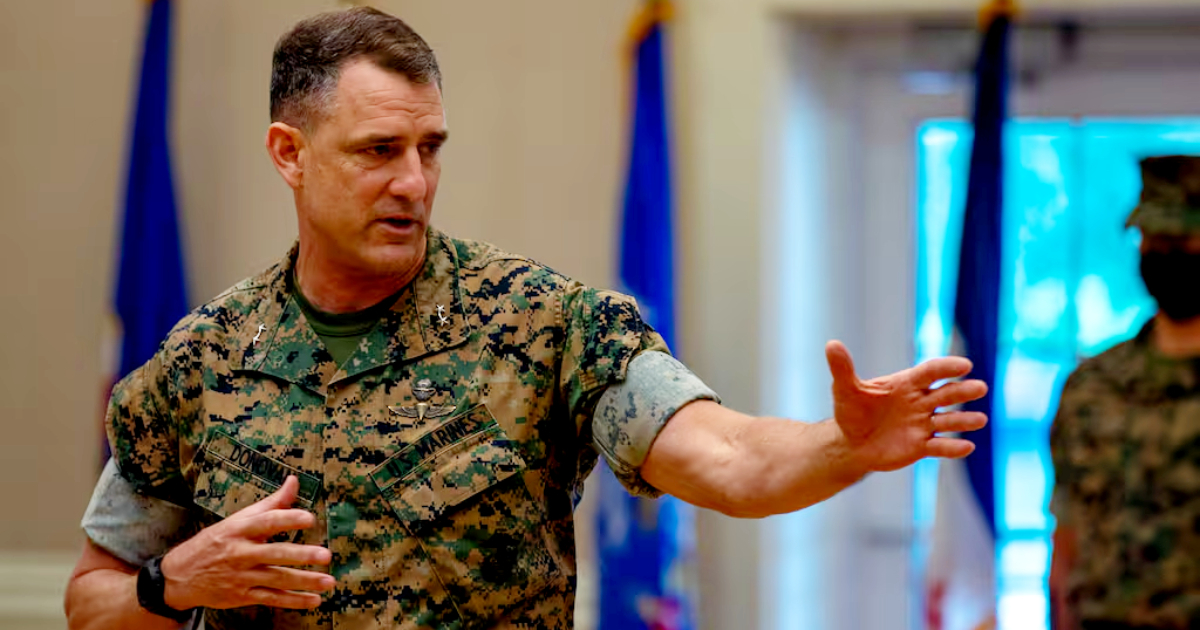
During its activation ceremony, SOUTHCOM Commander General Francis L. Donovan stated that the new force will apply "total systemic friction" against networks threatening the United States and its regional partners, describing it as "the action arm of the Southern Command."
Broader Threats and Strategic Interests
This reorganization is not just about combating cartels. Over recent months, various U.S. institutions have crafted a much broader definition of threats affecting the hemisphere. The NSS 2025 identifies the influence of rival powers in Latin America as a top national security issue.
Meanwhile, the NDS 2026 incorporates this assessment into military planning. The Pentagon has publicly hardened its stance on the Cuban regime. During a House hearing, acting Deputy Assistant Secretary of Defense Joseph Humire stated that Cuba remains "one of the strongest intelligence adversaries" faced by the U.S., highlighting Havana's influence over governments and security institutions throughout the hemisphere.
Subsequently, the State Department released a detailed report accusing the Cuban regime of a long-standing strategy of espionage, infiltration, subversion, and political influence against the U.S., serving as a platform for Chinese and Russian interests in the region.
Additionally, mounting economic sanctions and statements from Secretary of State Marco Rubio advocating for democratic transition in Cuba, along with U.S. media reports on contingency planning related to Cuba, emphasize the significance of these developments. The Pentagon insists these exercises are part of routine military planning and do not imply any decision to intervene in Cuba.
FLEX2026 and the Modernization of Southern Command
The creation of JTF-WHEM aligns with a significant modernization of SOUTHCOM itself. During the FLEX2026 exercises conducted this year in the Florida Straits and the Caribbean, the U.S. Navy tested a new operational model based on artificial intelligence, drones, autonomous platforms, and surveillance systems capable of real-time maritime target detection and interception.
These maneuvers demonstrated how SOUTHCOM is integrating new capabilities for sustained operations in the hemisphere. The new joint force now provides the command structure necessary to incorporate these capabilities into a continuous campaign.
Implications for Cuba
Although the official mission of JTF-WHEM does not specifically mention Cuba or outline operations targeting the Cuban regime, its creation cannot be separated from the strategic context Washington has built over recent months.
The White House has repositioned the Western Hemisphere at the center of its security strategy, and the Pentagon has reinforced SOUTHCOM's role within this new doctrine. The Department of Defense publicly identifies the Cuban regime as one of the United States' main intelligence adversaries in the region.
The State Department maintains that Havana continues to play a significant role within networks of influence, espionage, and cooperation with governments deemed rivals of Washington. While JTF-WHEM is not established solely to confront this threat, it forms part of a security architecture designed to address a range of challenges the Trump administration perceives as present in the Western Hemisphere.
Viewed from this perspective, the new military force represents much more than an administrative change. It consolidates a strategy that combines diplomatic pressure, intelligence, regional cooperation, and a permanent military presence in the Caribbean and Latin America. Although Cuba is not a declared target of this new structure, the hardening of U.S. policy towards Havana inevitably renders its creation a decision of particular interest to the Cuban regime and the future strategic balance of the region.
Understanding the New Joint Task Force Western Hemisphere
What is the purpose of the Joint Task Force Western Hemisphere?
The Joint Task Force Western Hemisphere (JTF-WHEM) aims to combat drug cartels and transnational threats while also addressing broader strategic challenges in the Western Hemisphere.
Why did the United States establish the JTF-WHEM?
The U.S. established the JTF-WHEM as part of a strategic pivot to prioritize the Western Hemisphere in its security strategy, focusing on transnational threats and the influence of rival powers.
How does the JTF-WHEM affect U.S. relations with the Cuban regime?
While the JTF-WHEM does not specifically target Cuba, its creation is part of a broader U.S. strategy that includes heightened scrutiny and pressure on the Cuban regime.