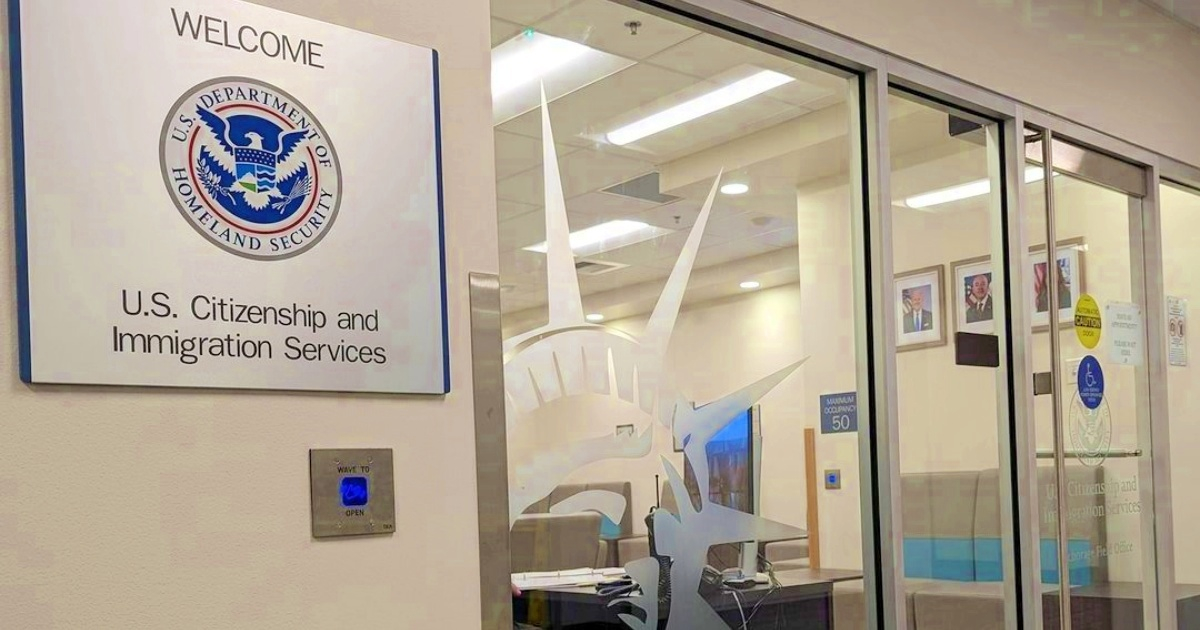
When it comes to securing permanent residency in the United States, not every path involves the well-known visa options. Among the myriad of immigration processes, there exists a lesser-known form that may be crucial for various migrants, including some Cubans.
The Form I-360 is a petition designed for specific cases that can initiate the process toward obtaining a green card and securing employment authorization.
The Role of Form I-360 in Immigration
The U.S. Citizenship and Immigration Services (USCIS) offers Form I-360 as an entryway to permanent residency and work permits without needing a visa stamped in the passport. However, this applies strictly to very particular immigration categories.
This process, officially termed the Petition for Amerasian, Widow(er), or Special Immigrant, serves as the necessary preliminary step in a more extensive procedure.
It's crucial to understand that the I-360 alone does not provide residency or employment authorization. According to USCIS, it is simply the initial requirement to embark on this journey, necessitating further steps.
Eligibility and Further Steps
Upon approval of the I-360, applicants must file Form I-485 to adjust their status and Form I-765 to obtain a work authorization.
Who is eligible to submit Form I-360? Only individuals fitting specific categories outlined by the immigration agency can apply. The primary categories include:
- Amerasians born between December 31, 1950, and October 23, 1982.
- Widows or widowers of U.S. citizens, with a two-year timeframe following the spouse's death.
- Self-petitioners under the Violence Against Women Act (VAWA): spouses, children, or parents abused by a citizen or permanent resident.
- Religious workers.
- Special Immigrant Juveniles (SIJ), who must file the petition before turning 21 years old.
- Members of the U.S. Armed Forces.
- Afghan and Iraqi translators or collaborators with the U.S. government.
Considerations for Widows and VAWA Protection
For widows, an important update since 2009 is the removal of the requirement that a marriage lasts at least two years to qualify. The two-year period now pertains to the time allowed to file the petition after the spouse's death.
Those who remarry before completing the process lose eligibility.
Under VAWA, there is significant protection for victims of domestic violence. Federal law allows abuse victims to file their petitions independently. As per USCIS, the request can be submitted "without the knowledge or consent of the abusive relative."
This pathway is available to spouses or ex-spouses of abusive citizens or permanent residents, the children of those citizens or residents, and parents of a citizen child over 21 who is the aggressor.
An added benefit is that VAWA beneficiaries and SIJs are exempt from the new public charge assessment effective September 2026, shielding them from one of the year's most restrictive immigration changes.
Critical Deadlines for Special Immigrant Juveniles
For minors classified as SIJ, timing is critical. The petition must be submitted before the individual turns 21, and they must be physically present in the U.S. and remain single.
In cases of potential time constraints, USCIS allows in-person filing of the I-360 at a local office within two weeks before the 21st birthday. To secure an expedited appointment, applicants should call 800-375-5283.
Fees and Subsequent Steps
The standard fee for filing the I-360 is $515, but it is entirely waived for VAWA applicants, SIJs, and Amerasians. These fees are final and non-refundable.
Once the I-360 is approved, the process progresses with visa availability verification in the Department of State's Visa Bulletin and the submission of Form I-485 to adjust status if the individual is in the U.S.
For the Cuban community, the I-360 can be particularly significant in instances of domestic violence, vulnerable minors, or widows of U.S. citizens, although the primary residency path remains the Cuban Adjustment Act.
Key Questions About Form I-360
What is the primary purpose of Form I-360?
Form I-360 is utilized to initiate a process that can lead to obtaining a green card and work authorization for specific immigration categories such as Amerasians, widows, and special immigrant juveniles, among others.
Can Form I-360 alone grant permanent residency?
No, Form I-360 alone does not grant permanent residency. It is the initial step in a broader process that requires additional forms like I-485 for status adjustment and I-765 for work authorization.
Who qualifies to file Form I-360?
Eligibility for Form I-360 is limited to certain categories including Amerasians, widows, VAWA self-petitioners, religious workers, special immigrant juveniles, U.S. Armed Forces members, and certain Afghan and Iraqi collaborators.