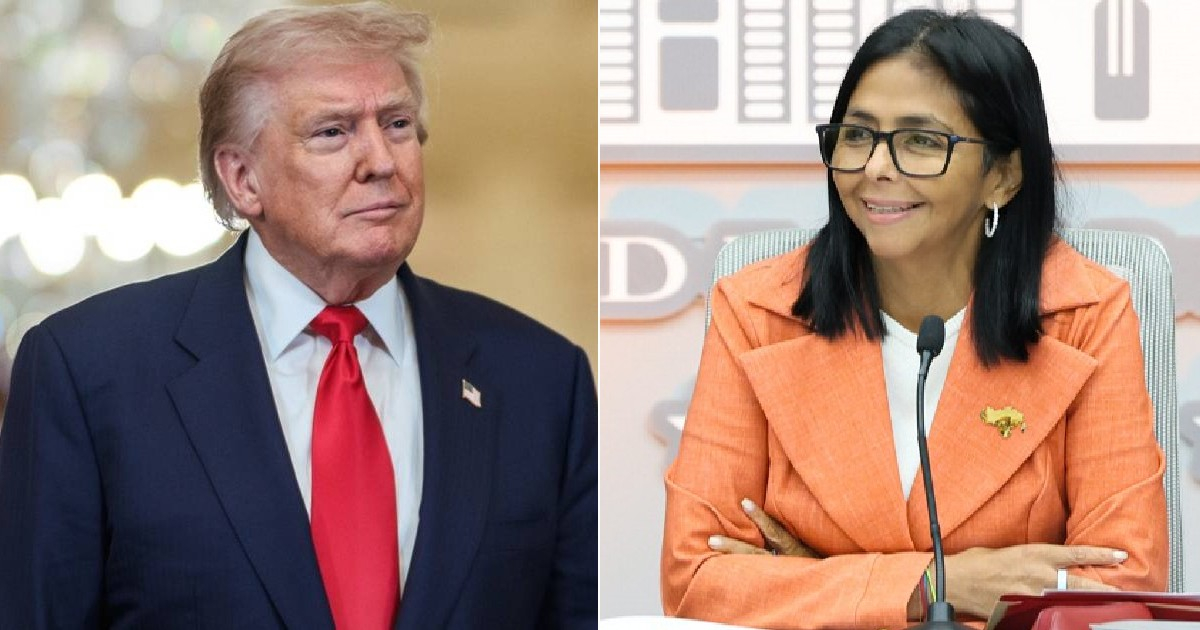
On Monday, the U.S. State Department expressed its approval of the initiation of dialogue between the Venezuelan government and a segment of the opposition, endorsing the discussions as part of its strategy to promote democratic transition in Venezuela.
Tommy Pigott, the spokesperson, conveyed Washington's stance through the U.S. Embassy in Caracas. This response followed statements made on Saturday by the 2015 Venezuelan National Assembly, led by Dinorah Figuera, and the interim Venezuelan government.
"The United States welcomes the statements made on August 1 by the 2015 Venezuelan National Assembly, headed by Dinorah Figuera, and the interim government," Pigott stated in a communiqué titled "Continuing the Advancement of Venezuela's Institutional Democratic Transition."
Washington framed the dialogue within its three-phase plan for Venezuela—stabilization, economic recovery, and political reconciliation leading to democratic elections—a roadmap unveiled by Secretary of State Marco Rubio in January 2026, which has seen progress through various diplomatic milestones.
"This process significantly contributes to the three-phase plan supported by the United States to achieve stabilization, economic recovery, and political reconciliation, as well as a transition to democratic elections," Pigott affirmed.
The formal talks commenced on Saturday in Caracas, with Jorge Rodríguez representing the government and Figuera leading the opposition delegation.
Initial topics of agreement include humanitarian aid for victims of the June 24 twin earthquakes—which resulted in approximately 3,811 deaths and over 16,000 injuries in the northern and northwestern regions of the country—the strengthening of democratic institutions, and the expansion of political rights and guarantees.
This process unfolds in an unprecedented political context: following the capture of Nicolás Maduro by U.S. forces on January 3, 2026, Delcy Rodríguez has been serving as the acting president of Venezuela.
Notably absent from the dialogue table are María Corina Machado and Edmundo González Urrutia, who have distanced themselves from the mechanism, although they issued a conditional statement of support on July 26.
On the same Saturday, Chavista factions protested in Caracas against the dialogue, condemning U.S. interference, while on Sunday, Maduro sent a message from prison in favor of the process.
Pigott concluded the statement with a message of optimism about the outcomes: "We are confident that this work can deliver tangible results for the Venezuelan people."
Key Details on Venezuelan Dialogue and U.S. Involvement
What is the purpose of the dialogue between the Venezuelan government and opposition?
The dialogue aims to facilitate a democratic transition in Venezuela, addressing issues such as humanitarian aid, democratic institution strengthening, and the expansion of political rights.
How does the U.S. view the current Venezuelan political process?
The U.S. supports the process as part of its three-phase plan for Venezuela, which includes stabilization, economic recovery, and political reconciliation leading to democratic elections.
Who are the key figures involved in the Venezuelan dialogue?
Jorge Rodríguez represents the government, while Dinorah Figuera leads the opposition delegation. María Corina Machado and Edmundo González Urrutia have distanced themselves from the talks.