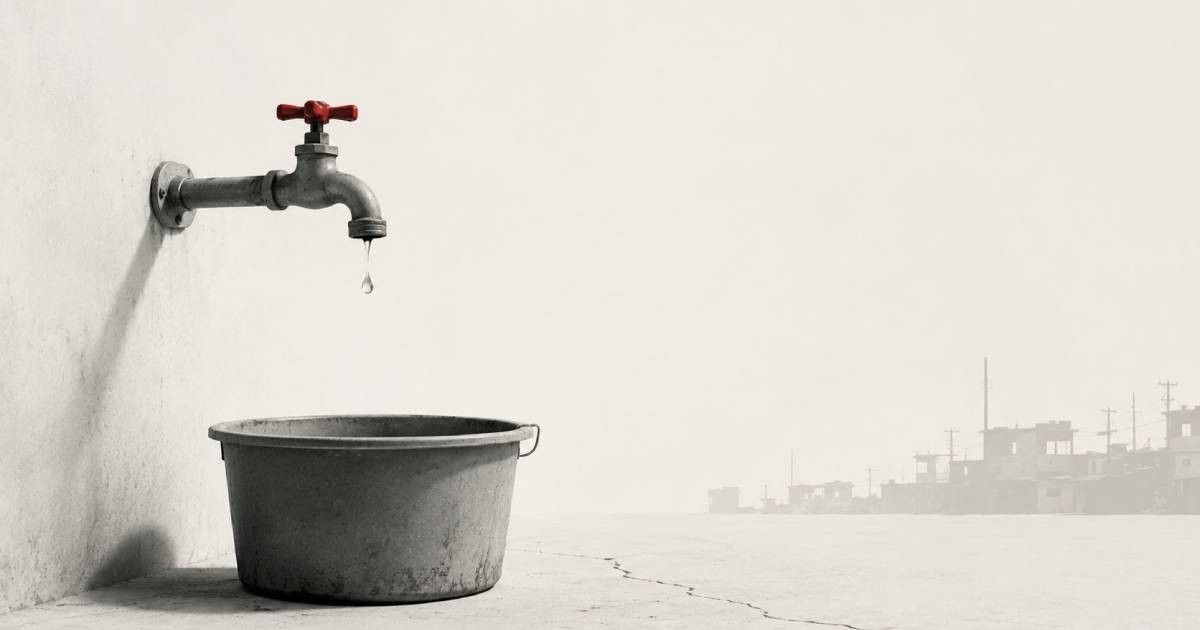
On Monday, the state-run platform Cubadebate published an extensive report on the water crisis in Puerto Rico, where thousands of residents have been without running water for over 100 days. The response from Cubans was swift and cutting: within two hours, more than a thousand comments filled with sarcasm and irony highlighted the state media's hypocrisy.
Authored by Patricia Vélez and reprinted from El País, the article details how residents of Machuchal neighborhood and Loíza Street in San Juan have logged exactly 118 days without water in 2026, using a digital journal maintained by nearly 100 residents. The original report appeared in the Spanish newspaper on August 1, two days before the official Cuban outlet picked it up.
The irony was glaring: the very site that routinely ignores Cuba's own water crisis devoted a thorough report to the water issues of a U.S. territory.
"Which province is Puerto Rico in? I must be bad at Geography," one user joked. Another quipped, "They should rename it PuertoRicoDebate." A third added, "For a moment, I thought I was reading about Cuba."
Parallel Realities: Cuba vs. Puerto Rico
Inevitably, comparisons to Cuba's situation emerged. "I can tell you about a place in Cuba that's been without water for over ten years, and it's central," one commenter noted. "Guanajay's been like this for over a year. Focus a bit on our people!" another demanded. Many echoed a common sentiment: "Look at your own backyard, not your neighbor's."
The irony is rooted in hard facts. As of May 2026, around 2.7 million Cubans face severe water shortages, with over 500,000 Havana residents experiencing supply issues. The pumping system operates with a mere 37% of the necessary fuel, and 87% of stations rely on electricity, meaning each blackout—which in 2026 can last 12 to 20 hours—also cuts off water.
One comment captured the situation succinctly: "Water shortages happen due to a broken pipeline, but there's no shortage of water trucks. In Cuba, that's not the case. They have power cuts too, but not 24 or 60-hour ones like here."
Recurring Criticism of Cubadebate
This incident is not isolated. Throughout 2026, Cubadebate has faced similar criticism: in February, for comparing foreign special forces; in May, for publishing about U.S. debt; and in July, for downplaying hepatitis cases. The pattern is consistent: highlighting external issues while ignoring the internal crisis.
"This is my favorite humor page. They always make me smile with their jokes," one user wrote. Another added, "I don't think I've ever seen a more subversive report than this," perhaps the most accurate comment of all.
Puerto Rico Takes Action
The Puerto Rican citizen coalition "Demand Water" has organized a protest for Tuesday in San Juan, while Governor Jenniffer González announced infrastructure improvement projects valued at no less than $7 billion. Unlike Cuba, Puerto Rico has accountability measures: San Juan's mayor sued the water company, and citizens freely organized to demand solutions.
Understanding the Criticism of Cubadebate's Coverage
Why did Cubans react negatively to Cubadebate's report on Puerto Rico?
Cubans criticized Cubadebate for highlighting Puerto Rico's water crisis while ignoring similar or worse conditions within Cuba itself. The reaction was seen as highlighting the hypocrisy of the state-run media.
What are the water issues facing Cuba?
Cuba is experiencing severe water shortages affecting approximately 2.7 million people. Issues include inadequate fuel for pumping systems and extended power outages, which impact water supply.
How does Puerto Rico address its water crisis compared to Cuba?
Puerto Rico has accountability mechanisms, such as legal actions against the water company and citizen-led protests, alongside planned infrastructure improvements. In contrast, Cuba lacks similar transparency and accountability.