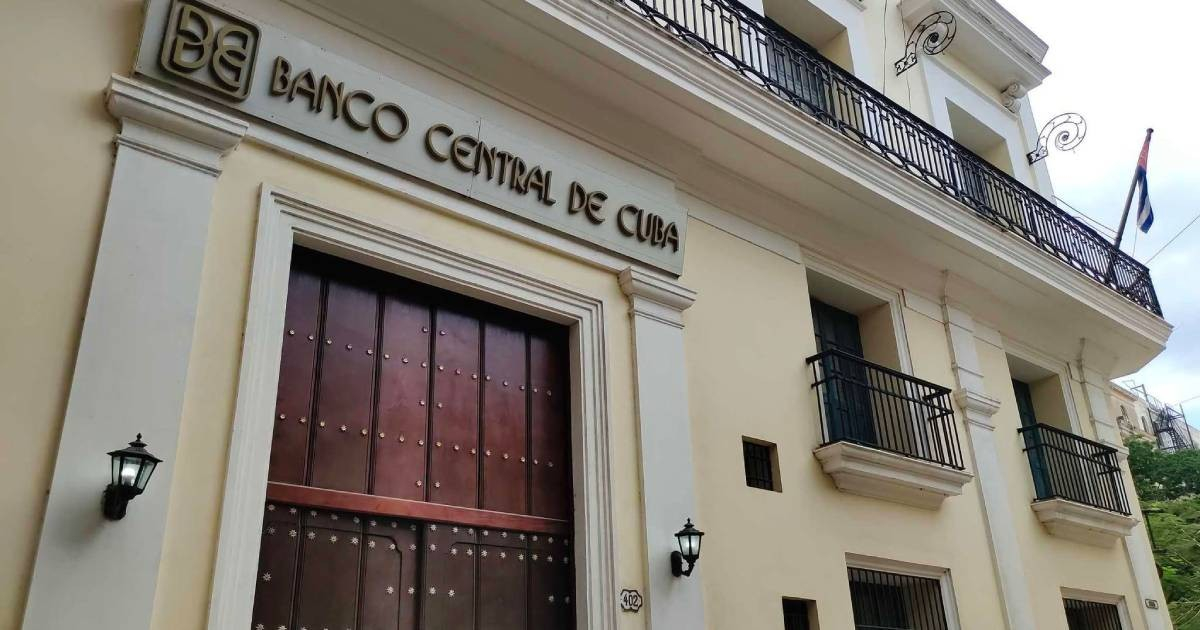
The National Bank of Cuba (BNC) has been ordered to pay over £18.1 million (approximately €21.2 million) to investment fund CRF I Limited following a default judgment by the London Commercial Court on July 31, 2026, as reported by Telemundo 51 on Monday.
Judge Mr. Justice Andrew Baker delivered the ruling, which includes £18,034,078.32 in damages and £89,804.96 in legal costs.
The judgment was issued by default because the BNC failed to respond to CRF's claim for damages assessment, effectively waiving its right to defend itself at this stage of the proceedings.
Background of the Legal Dispute
This legal battle traces back to two commercial loans agreed upon in 1982 and 1984 by the then National Bank of Cuba with European banks—Crédit Lyonnais Bank Nederland and Istituto Bancario Italiano—denominated in German marks, with the Republic of Cuba as the guarantor.
Cuba ceased payments on these obligations in the mid-1980s. CRF I Limited, a fund established in 2009 in the Cayman Islands, acquired these credits on the secondary market and filed a lawsuit in London in February 2020, seeking approximately €72.1 million in unpaid sovereign debt.
Legal Proceedings and Attempts for Negotiation
The case has gone through various judicial stages. In April 2023, Judge Sara Cockerill acknowledged CRF as the legitimate creditor of BNC.
The Court of Appeal upheld this position in November 2024, and the United Kingdom's Supreme Court dismissed BNC's final appeal on March 31, 2025, clearing the way for the damages phase.
On Monday, CRF highlighted that the Cuban regime ignored numerous negotiation attempts before the verdict.
The fund claimed to have pursued constructive dialogue with both the Cuban government and the National Bank of Cuba to settle the commercial debt under terms fair to creditors, commercially viable for Cuba, and conducive to the country's eventual return to international financial markets.
The most recent effort was a purported letter sent directly to President Miguel Díaz-Canel on June 22, 2026, just weeks before the final ruling.
In this letter, CRF proposed confidential talks and offered concrete solutions: growth-linked instruments, debt-for-equity swap arrangements, and structures designed to preserve Cuba's short-term liquidity. However, they assert that neither the Cuban government nor the BNC responded.
CRF President David Charters confirmed on July 31 that the fund had received no reply to their proposals. In a statement, he noted that litigation "was never their preferred option" and suggested that a negotiated resolution was still possible, provided there was "a serious and constructive attitude from Cuba and the BNC."
Key Developments in the CRF vs. National Bank of Cuba Case
This is a complex case that has been unfolding over several years. To provide readers with a clearer understanding, here is a brief timeline of the significant events:
- January 17, 1982: The National Bank of Cuba (BNC) signs a first loan with Crédit Lyonnais Bank Nederland, guaranteed by the Republic of Cuba.
- January 30, 1984: BNC secures a second loan with Istituto Bancario Italiano, also backed by the Cuban state.
- Mid-1980s: The Fidel Castro government halts payments on both debts, declaring the external debt "unpayable," effectively cutting Cuba off from international credit markets.
- 2013: CRF I Limited begins acquiring Cuban debt on the secondary market and initiates negotiations with Havana for restructuring.
- February 18, 2020: CRF files a lawsuit in the High Court of Justice of England and Wales to claim €72.1 million related to these loans and accrued interest.
- April 4, 2023: Judge Sara Cockerill recognizes CRF I Limited as the legitimate creditor of the National Bank of Cuba, allowing the litigation to proceed.
- November 14, 2024: The Court of Appeal of England and Wales confirms the first instance ruling, affirming CRF as the legitimate creditor.
- March 31, 2025: The UK Supreme Court rejects BNC's final appeal, solidifying CRF's status as a creditor and paving the way for damage assessment.
- June 22, 2026: CRF sends a final negotiation proposal to President Miguel Díaz-Canel, offering alternatives for debt restructuring. According to the fund, the Cuban government did not respond.
- July 31, 2026: The London Commercial Court orders the National Bank of Cuba to pay £18.1 million (approximately €21.2 million) after issuing a default judgment, as the BNC did not present any arguments in the final stage of the process.
The ruling comes amid an unprecedented Cuban external debt crisis.
In January 2026, Cuba admitted it could not normalize its external debt service in the short term. The accumulated debt with the Paris Club nears $4.8 billion, while defaults with Brazil exceed $676 million and with Mexico reach $1.5 billion.
Understanding the CRF vs. Cuban National Bank Decision
What was the outcome of the London Commercial Court ruling?
The court ruled that the National Bank of Cuba must pay over £18.1 million to CRF I Limited, following a default judgment.
Why was the judgment issued by default?
The judgment was issued by default because the BNC did not respond to CRF's claim for damages assessment, effectively waiving its right to defend itself.
What was CRF's approach before the ruling?
CRF attempted to engage in constructive dialogue with the Cuban government and the BNC, proposing solutions such as debt restructuring and growth-linked instruments, but did not receive any response.