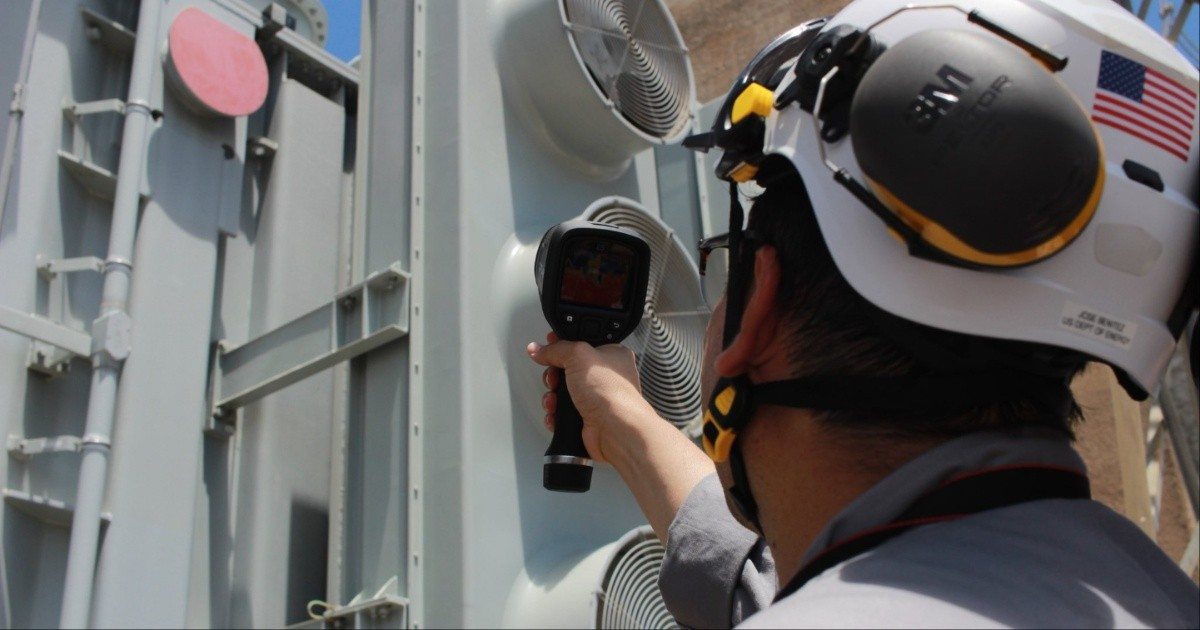
This Monday, technical specialists from the U.S. Department of Energy visited Venezuela's largest hydroelectric facility, the Guri Dam (Simón Bolívar Hydroelectric Plant), to conduct an assessment that will lay the groundwork for updating the National Electric System. This initiative was announced by the U.S. Embassy in Caracas through its official channel on X.
John M. Barrett, who has served as the Charge d'Affaires at the U.S. Embassy in Caracas since April 2026, accompanied the technical team during their visit to the dam, which is situated in Bolívar state along the Caroní River.
The endeavor was carried out in partnership with Venezuela's Ministry of Electric Energy and the state-owned Corpoelec, with the backing of the Department of State.
Barrett described the initiative as a "contribution towards charting a path for the modernization of the National Electric System," aligning it with a three-phase plan devised by President Trump and Secretary of State Marco Rubio to aid Venezuela's recovery.
This strategy involves an initial stabilization phase, followed by economic recovery—where the nation currently stands—and ultimately, a political transition with legitimate elections.
Venezuela's electric sector was deemed a strategic priority from the outset, as stable electricity is crucial for reviving oil production, the country's primary economic asset.
The U.S. Department of Energy had previously labeled Venezuela's electric system as "deteriorated and fragile," identifying it as the "most critical bottleneck" in the country's recovery. The cost for a complete overhaul is estimated to be between $15 billion and $40 billion, potentially taking five to 15 years to accomplish.
The Guri Dam, with an installed capacity of 10,235 MW, alongside the Caruachi and Macagua dams, generates approximately 70% to 80% of the nation's electricity. However, the system operates well below its potential, with available capacity around 12,000-12,500 MW compared to a demand of 15,500-15,700 MW, resulting in chronic shortages that lead to blackouts and rationing.
The visit on Monday is part of a series of tangible actions the U.S. has supported since Delcy Rodríguez became acting president following Nicolás Maduro's capture in January 2026.
In February of that year, Energy Secretary Chris Wright traveled to Venezuela to meet with Rodríguez at the Miraflores Palace to discuss both the reactivation of the oil sector and the modernization of the electrical grid.
By April, Venezuela was negotiating with Siemens and General Electric to address the crisis in Zulia state.
On June 15, the Venezuelan government signed a memorandum of understanding with GE Vernova and Corpoelec to add 1,000 MW within 24 months and more than 5,000 MW over four years, as reported by Reuters.
The situation is further complicated by the devastating earthquakes on June 24, 2026, with magnitudes of 7.1 and 7.5, resulting in over 5,398 deaths and damages estimated by the World Bank at $19.6 billion, adding more strain to the already fragile infrastructure.
Rubio, who advocated on Sunday for a transition that would allow investments and foster prosperity in Venezuela, encapsulated Washington's stance: "The role the United States government can continue to play is that of a facilitator for all of this."
Key Insights into Venezuela's Electrical System Overhaul
Why is the modernization of Venezuela's electrical system important?
Revamping Venezuela's electrical system is crucial as stable electricity is essential for reactivating the nation's oil production, which is the mainstay of its economy.
What challenges does Venezuela face in modernizing its electrical infrastructure?
The Venezuelan electrical system is seen as deteriorated and fragile, with estimates suggesting a full rehabilitation may cost $15 billion to $40 billion and take up to 15 years, compounded by recent natural disasters.