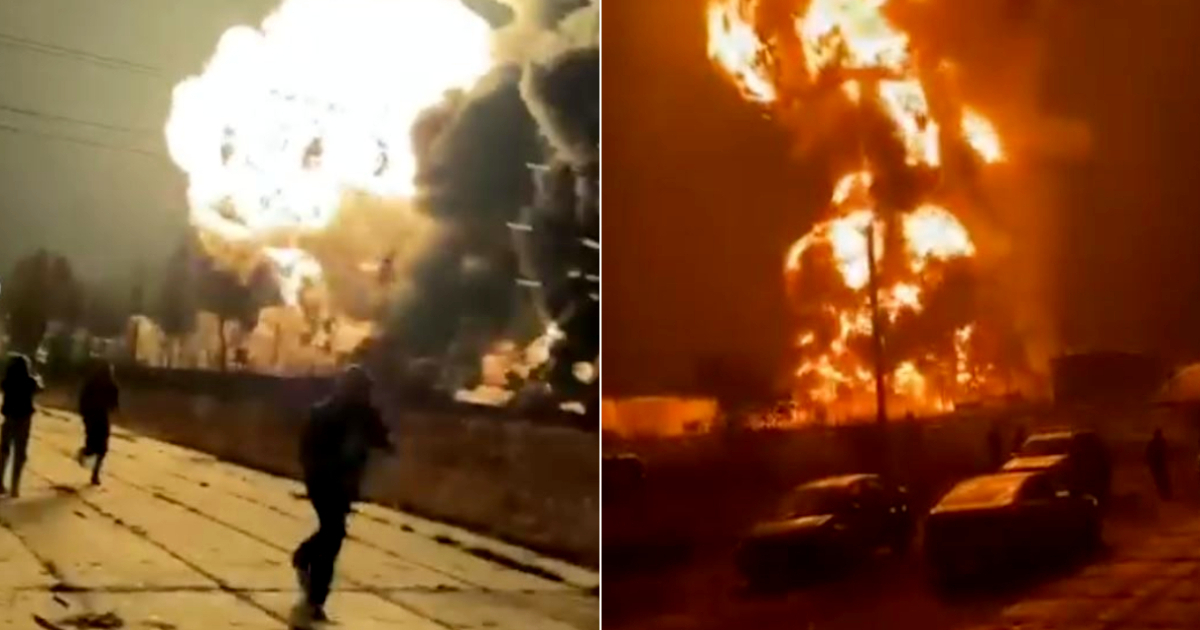
Ukrainian attacks on Russian refineries, terminals, and fuel depots are significantly reducing the energy surplus that Moscow might send to Cuba. The Cuban economy critically depends on regular imports of oil and its derivatives to sustain electricity generation, transportation, and agriculture.
Throughout 2026, Kyiv's long-range campaign reached an unprecedented scale, forcing several major Russian refineries to either halt or limit their operations entirely.
In July, the Institute for the Study of War (ISW) recorded attacks on facilities such as the Ilsky, Saratov, and Syzran refineries, along with the Ust-Luga terminal, a key Russian hub for hydrocarbon processing and exportation.
Impact on Russian Fuel Supply
At the Saratov refinery, a drone inflicted damage on the plant's sole primary refining unit, leading to a shutdown. This facility had previously ceased production following attacks in March and May.
The Syzran refinery, located approximately 800 kilometers from the front line, has the capacity to process about 8.5 million tons of oil annually. It produces gasoline, diesel, aviation fuel, and other derivatives used by Russian forces, as reported by the ISW.
Russia's Domestic Supply Struggles
The cumulative impact of these strikes compelled the Russian government to acknowledge supply issues. Deputy Prime Minister Alexandr Novak admitted that certain refineries had partially halted production due to Ukrainian drones, describing the situation at gas stations as complex.
In July, Russia temporarily banned diesel exports to enhance domestic availability and announced plans to import fuel. This measure followed reports of drivers facing long lines and difficulties in obtaining gasoline and diesel across various regions. Moscow also tapped into federal reserves and deliveries from Belarus to mitigate the shortage.
Russia's Export Challenges
Russian maritime exports of diesel and gas oil fell to approximately 1.8 million tons in June, marking a 39% decrease from May and a 46% drop compared to June 2025.
Between July 1 and 8, shipments averaged around 214,000 barrels per day, a stark contrast to the 793,000 barrels per day exported during the same period the previous year, according to data from Kpler cited by Reuters.
The Russian government later extended restrictions on gasoline and diesel exports until January 2027, although exceptions remain for certain producers, intergovernmental agreements, and shipments classified as humanitarian aid.
Cuba's Struggle for Fuel
These exceptions suggest possibilities for occasional shipments to Cuba but do not ensure a consistent or adequate supply. The crisis forces the Kremlin to prioritize distribution of a reduced volume of refined fuels.
First in line are the needs of the Russian Armed Forces and war logistics, followed by the domestic market, agriculture, transportation, and occupied Ukrainian regions. Subsidized or politically motivated shipments to allies like Cuba are secondary, especially since Havana has limited capacity to pay market prices.
Cuba's Energy Dependency
This situation presents an additional problem for the island, which requires between 90,000 and 110,000 barrels of oil and derivatives daily but produces only about 40,000 barrels of heavy crude, insufficient for economic and power plant needs.
Cuba's reliance on Russia increased after Venezuelan supplies were disrupted, and Mexican deliveries were suspended.
Energy and Mines Minister Vicente de la O Levy acknowledged the necessity for roughly eight fuel tankers per month to meet basic requirements. He also noted that Cuba distributes about 800 tons of diesel daily, merely half of the 1,600 tons needed for normal operations.
Russian Oil Shipments Fall Short
In late March, the Russian tanker Anatoly Kolodkin unloaded around 100,000 tons of crude in Matanzas, equivalent to approximately 700,000 to 730,000 barrels. Although a substantial shipment, it covered less than ten days of Cuba's total needs.
Cuba was tasked with processing this oil to produce fuel oil for electricity generation, as well as diesel, gasoline, and other derivatives. This operation requires time and relies on Cuban refineries suffering from technological decay, lack of maintenance, and frequent interruptions.
For this reason, receiving unprocessed crude is not equivalent to receiving direct shipments of diesel, gasoline, or power plant fuel.
Indirect Threats to Cuba's Energy Supply
The reduction in Russian production of derivatives is particularly damaging, as it limits the availability of fuels Cuba can use immediately.
Strikes on refineries do not inherently mean a halt in Russian crude oil extraction. When a refinery is shut down, some unprocessed oil might, in theory, be available for export. However, this possibility is constrained.
Ukraine has also targeted maritime terminals, storage facilities, pumping stations, tanker trains, and ships used for transporting oil and derivatives. In July, the ISW reported Ukrainian forces attacking dozens of vessels used by Russia in the Sea of Azov for fuel transport and sanction evasion.
If refineries and export routes are simultaneously damaged, storage facilities can fill up, forcing oil companies to temporarily cut back on extraction.
Additionally, shipping crude from Russia to Cuba involves long journeys, vessels willing to take risks, insurance, payment mechanisms, and access to internationally monitored ports.
The Western pressure on the so-called Russian "ghost fleet" adds another challenge. In June, CiberCuba reported the interception of the tanker Smyrtos by the United Kingdom as part of a European offensive against vessels used by Moscow to evade sanctions.
There is currently no public evidence linking the cancellation of a specific Cuban-bound shipment to a particular Ukrainian attack. The relationship is broader and cumulative: less refining capacity results in less available gasoline and diesel; scarcity forces Russia to limit exports; and these restrictions reduce the ability to assist an ally that cannot regularly afford its imports.
Moscow may still order exceptional shipments to Cuba for political and strategic reasons. Russian Ambassador to Havana Viktor Koronelli assured that his country would maintain its oil assistance, although he also urged other allied governments to contribute to the effort.
Nonetheless, Ukrainian attacks, sanctions on tankers, Russian budgetary challenges, and the priority given to the domestic market make these shipments increasingly costly and uncertain.
For Cuba, the outcome is a reliance on sporadic shipments that fall short of ensuring the stability of its electrical system. As long as Ukraine continues to exert pressure on Russia's refineries and oil routes, Moscow will find it harder to translate its political support for the Cuban regime into a steady energy supply.
Frequently Asked Questions About Russian Fuel Supplies to Cuba
Why is Russia struggling to supply fuel to Cuba?
Ukraine's attacks on Russian refineries and transport routes have significantly reduced Russia's capacity to export refined fuels, forcing a prioritization of domestic and military needs over international shipments, including those to Cuba.
How does the situation affect Cuba's energy supply?
Cuba relies heavily on imported oil and derivatives to meet its energy needs. The reduction in Russian fuel exports leaves Cuba dependent on sporadic shipments that are insufficient to maintain its electric grid's stability.
What measures has Russia taken in response to fuel shortages?
Russia has temporarily banned diesel exports to boost domestic supply, began importing fuel, and tapped into federal reserves and deliveries from Belarus to address shortages.