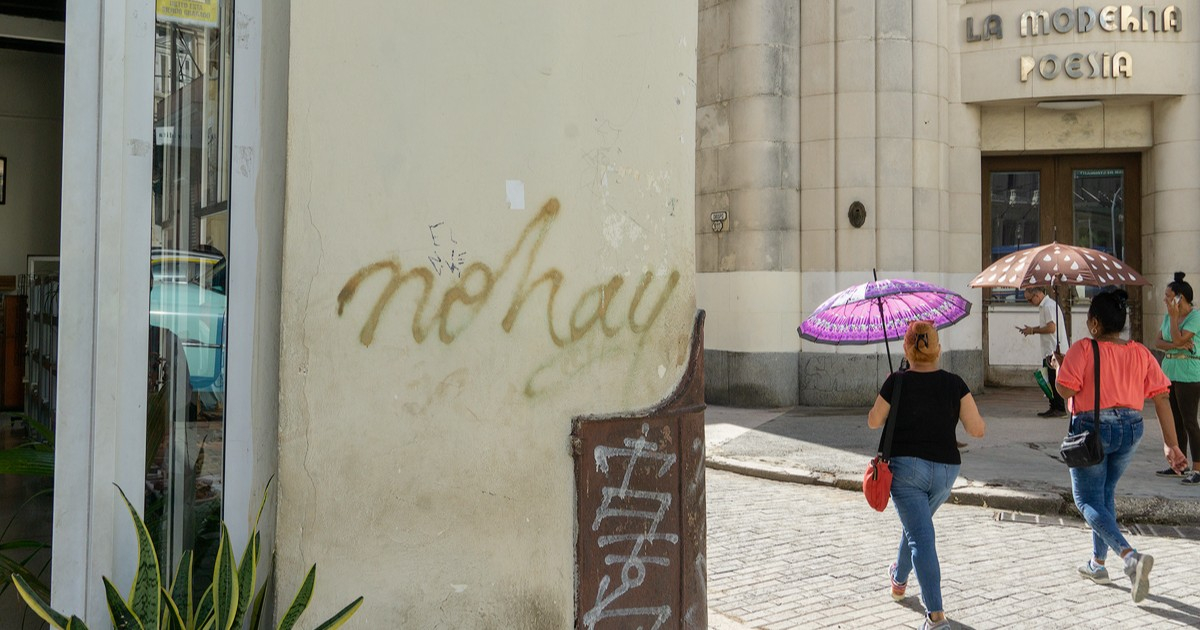
On Sunday, Cuban professor and legal expert René Fidel González García, from Santiago de Cuba, posted a fiery message on Facebook. He directly challenged the Cuban Communist Party, questioning whether its members will support what he describes as a process of privatization and impoverishment affecting the Cuban populace.
González García, a Doctor of Legal Sciences and former full professor at the University of Oriente, expressed his "frustration" at the outset of his post. He posed a series of rhetorical questions aimed at the heart of the socialist model the regime claims to uphold.
Questioning the Role of the Communist Party
"Will the Cuban Communist Party, its leaders, and members politically support the restoration of capitalism, privatization, and the commodification of socioeconomic and cultural rights? Will they endorse the dismantling of public institutions and the impoverishment of the Cuban people through a ruthless, import-driven, profitable, corrupt, unchecked, and authoritarian exploitation of man by man?" the jurist wrote.
González García further questioned whether the Communist Party of Cuba (PCC) would ignore the drastic inequality in wealth distribution, the lack of transparency, and the manipulation involved in awarding licenses and public assets without bidding. He also criticized the accumulation of capital by economic, business, and political elites in Cuba, questioning their transition into a public, legal, and visible ownership of a victorious social class.
Exposing Social Inequality
His denunciation extends to those who, he claims, turn a blind eye to the misery: "Will they do all this while ignoring the poor Cubans, as many already do, avoiding encountering them on the streets and in the dumps where they survive and eat?"
The jurist categorically criticized the nature of power in Cuba: "They can no longer even claim to be a dictatorship of the proletariat. It is against the proletarians, at the expense of the proletarians, without the proletarians."
Political Reforms and Contradictions
This statement comes shortly after the regime concluded a parliamentary session approving 176 economic transformations, including private banking, private exchange houses, and the conversion of state enterprises into commercial companies. During the session, Prime Minister Manuel Marrero Cruz insisted to the National Assembly that Cuba remains committed to the socialist model.
Miguel Díaz-Canel closed the session on July 30, claiming that these reforms do not signal a shift to capitalism but rather a continuation of socialism, although he acknowledged concerns over "the growth of private capital, concentration of wealth, and rising inequalities." A deputy even admitted during the debate that, although it might seem like capitalism, "this is what we are doing."
Speaking Out Against Repression
González García did not shy away from addressing repression, stating bluntly: "Why must we continue to endure exclusion, persecution, and punishment for political ideas in Cuba? Yes, that is what they do. That's why they are oppressors."
The jurist is well-acquainted with the consequences of political dissent. He was dismissed from the University of Oriente in November 2016 after publishing critical articles in independent media. According to an investigation by El Toque, the university claimed his writings "lacked scientific character" and "negatively influenced the comprehensive training of professionals," although González García and human rights organizations denounced the dismissal as political retribution.
The repressive context surrounding his publication is equally severe: Prisoners Defenders reported 1,306 political prisoners in Cuba as of July 2026, and the Cuban Observatory of Human Rights recorded 332 repressive actions in May alone, including 55 arbitrary detentions.
González García concluded his post with a reflection that encapsulates his view on power in Cuba: "Our recent history—and its upcoming chapters—is, in reality, a history of love for power. There is no epic. There is no honor. There is not a single drop of decency in it." He ended with a call to resistance: "We continue. We must continue. We will continue."
Understanding the Current Political Climate in Cuba
What are the concerns about privatization in Cuba?
The concerns revolve around the potential shift towards capitalism, privatization of public assets, and increased socioeconomic inequality, which could undermine the socialist ideals the regime claims to uphold.
How has René Fidel González García been affected by his political views?
González García faced political retribution, losing his position at the University of Oriente in 2016 after publishing critical articles. This dismissal was seen by many as a result of his outspoken political views.
What is the current state of political repression in Cuba?
Political repression remains severe, with over 1,300 political prisoners reported in July 2026, alongside numerous repressive actions, including arbitrary detentions, highlighting the regime's intolerance for dissent.