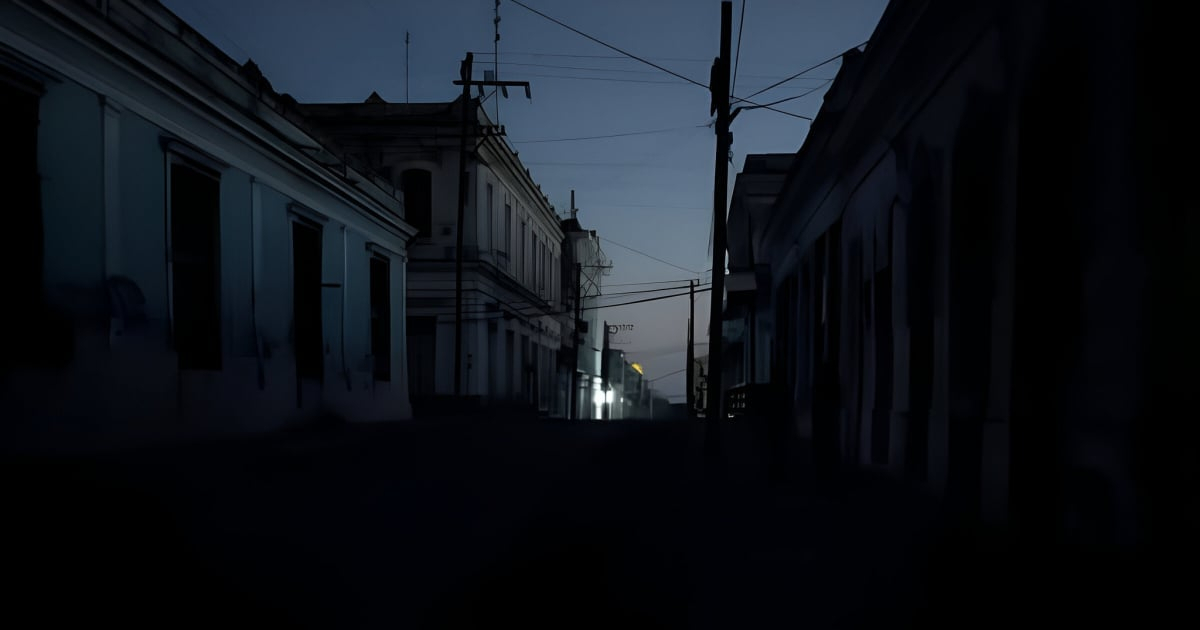
A technical malfunction in two major high-voltage transmission lines originating from Matanzas led to a power outage on Saturday, affecting five provinces in western Cuba. This marks the latest partial collapse of the National Electric System (SEN).
The Electric Union (UNE) released a statement indicating that, at 6:07 PM, "a simultaneous trip occurred in the 220 kV lines from Matanzas to Cienfuegos and from Matanzas to Santa Clara, causing a division in the SEN and subsequently leading to a blackout in the western region."
As a result, the provinces of Pinar del Río, Artemisa, Mayabeque, Havana, and Matanzas were left without power.
Understanding Simultaneous Line Trips
A simultaneous trip in 220 kV lines occurs when a fault activates protection relays at both ends of the line simultaneously, automatically opening circuit breakers to isolate the affected segment. Although this mechanism is designed to protect the equipment, the simultaneous disconnection of two main corridors from Matanzas was enough to isolate the western subsystem from the rest of the network, resulting in its collapse.
Impact on Highly Populated Areas
The affected area hosts the country's highest population density. At the time of the statement, the UNE was working on restoring service.
This event is part of an ongoing energy crisis, with record deficits throughout 2026. For instance, on July 29, the UNE estimated a 2,380 MW deficit during peak hours, with several thermal power units offline, including Unit 1 of the Antonio Guiteras plant in Matanzas, the largest in the country.
Historical Context of SEN Failures
This Saturday's incident is not the first SEN collapse this year. A general blackout on March 16 lasted 29 hours and 29 minutes. Another total disconnection occurred on July 6, lasting nearly 24 hours, with an estimated demand of 3,100 MW compared to just 1,000 MW available.
On July 11, a failure in the 220 kV line between Santa Clara and Sancti Spíritus caused another total collapse of the SEN, and during restoration, a voltage collapse in the western microsystem complicated recovery efforts. The national grid also fell for the third time on July 14 that month.
Root Causes of the Energy Crisis
The structural causes behind this accumulated crisis include aging and poorly maintained thermal power units, lack of investment, and chronic fuel shortages—issues the regime has failed to address over two years of sustained energy collapse.
On July 30, the UNE had already anticipated 2,280 MW outages for that day, highlighting the system's extreme fragility leading up to Saturday's event.
Frequently Asked Questions about Cuba's Energy Crisis
What caused the power outage in western Cuba on Saturday?
The outage was caused by a simultaneous trip in two 220 kV transmission lines originating from Matanzas, which led to a division of the SEN and a blackout in the western region.
Which provinces were affected by the blackout?
The provinces of Pinar del Río, Artemisa, Mayabeque, Havana, and Matanzas were left without power.
What are the main causes of Cuba's ongoing energy crisis?
The crisis results from aging and poorly maintained thermal power units, lack of investment, and chronic fuel shortages.