In a recent Facebook post, a Cuban doctor now living in Dubai has challenged the optimistic view that often surrounds emigration from Cuba. Alejandro Terry, who left the island four years ago, offers an honest and nuanced perspective on a question many Cubans ponder before boarding a plane.
"Leaving was the biggest mistake of my life," Terry begins. He then continues, "Because it was also the best decision I ever made. And both things are true at the same time. Nobody tells you that."
The post, divided into three segments, first describes the initial encounter with everyday capitalism: the credit system, app-based transportation, and the overwhelming selection of goods in a supermarket.
"Capitalism has its own language, and it teaches it to you without a translator, laughing at you," he writes. For Terry, the first month as an immigrant boils down to "surviving the day-to-day": tasks that are automatic for locals but feel like "journeys into the unknown" for newcomers.
The Emotional Toll of Distance
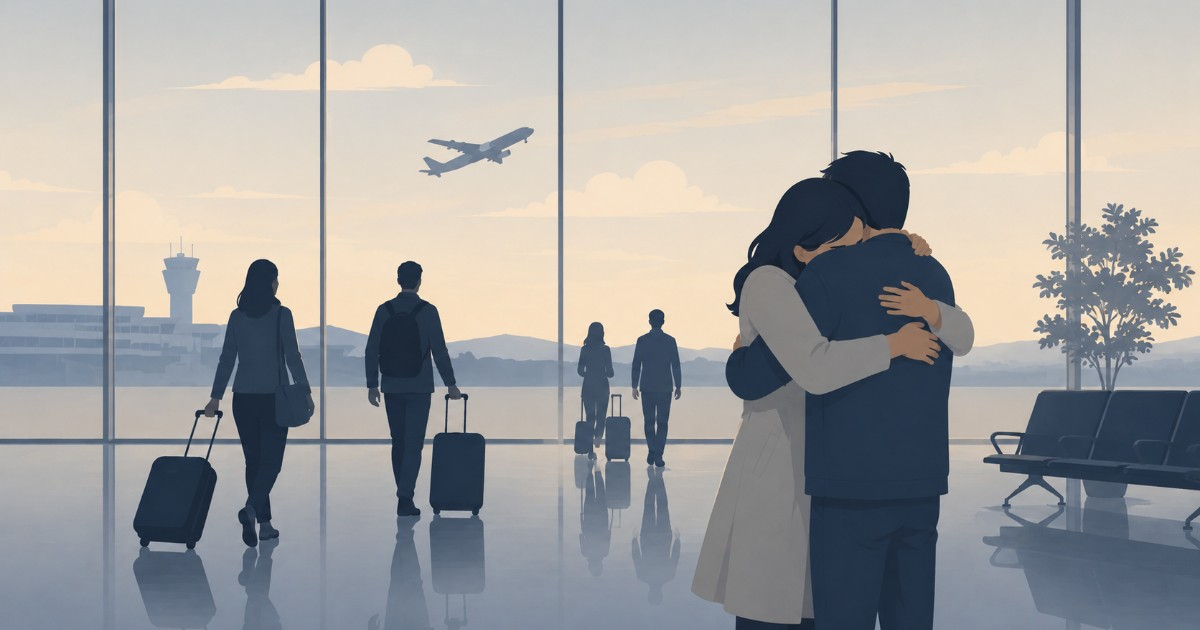
The second part shifts to a more serious tone. Terry discusses the silent mourning that goes unphotographed: "Your mother ages on a six-inch screen."
He introduces the psychological concept of ambiguous loss—the grief for someone who is neither dead nor present—to explain his feelings when seeing his ill father through a poor-quality video call, unable to hold his hand.
"The worst part isn't the physical distance. The worst is the disconnect. You change here, they change there, and when you see each other—if you do—you might feel like strangers who love each other a lot."
Terry points out that research from universities like Harvard and the London School of Economics shows that immigrants' first year abroad can cause stress levels comparable to major traumatic events. "It's not weakness. It's biology," he explains.
Terry, who graduated from the University of Medical Sciences of Havana in 2018 and is the son of a former director of the official newspaper Granma, left Cuba in February 2022 with a job offer in Dubai.
Starting from Scratch
In the third segment of his post, Terry discusses the challenges of starting anew without a support network. "You arrive at a place where you are nobody. Not in the deep existential sense. In the most basic and brutal way possible. You have no references. No history. No friend who knows a friend to do you a favor."
Everything built in Cuba—reputation, contacts, street smarts—stays behind.
Despite the weight of these challenges, Terry's answer to the question posed in the title is affirmative: emigrating is worth it if one seeks true freedom, the opportunity to build something personal, and a range of options.
He also supports those who remain in Cuba and those who emigrate for political or economic reasons without needing to justify themselves. "The Cuban emigrant doesn't abandon their family. They support them from afar with an effort that also goes unphotographed."
His story illustrates that even those with certain privileges within the system chose to leave during this period.
His conclusion is straightforward: "Emigrate knowing what you're leaving behind, not running away from what you don't want to see. Because if you emigrate with open eyes, fully aware of what it entails—family, starting from zero, the chaos of the first year—you have a much better chance of landing on your feet."
Terry's testimony is part of an unprecedented exodus. According to Cuba's National Office of Statistics and Information, 251,221 Cubans emigrated in 2024, causing the island's population to drop to 9,748,007, nearly 308,000 fewer than the previous year.
The United Nations has warned that if the trend continues, Cuba's population could dwindle to 5.6 million in the coming decades.
Key Questions About Cuban Emigration
What challenges do Cuban emigrants face?
Cuban emigrants often face challenges such as adapting to a new culture, language barriers, and starting from scratch without a support network. The first year can be particularly stressful and comparable to major traumatic events.
Why do some Cubans choose to emigrate?
Many Cubans emigrate in search of greater freedom, better economic opportunities, and the ability to build a life with more options. Political and economic pressures also drive emigration.
How does emigration impact families left behind in Cuba?
Families in Cuba may experience emotional distance and disconnect with their loved ones abroad. Emigrants often support their families financially from a distance, which is a significant effort that often goes unnoticed.