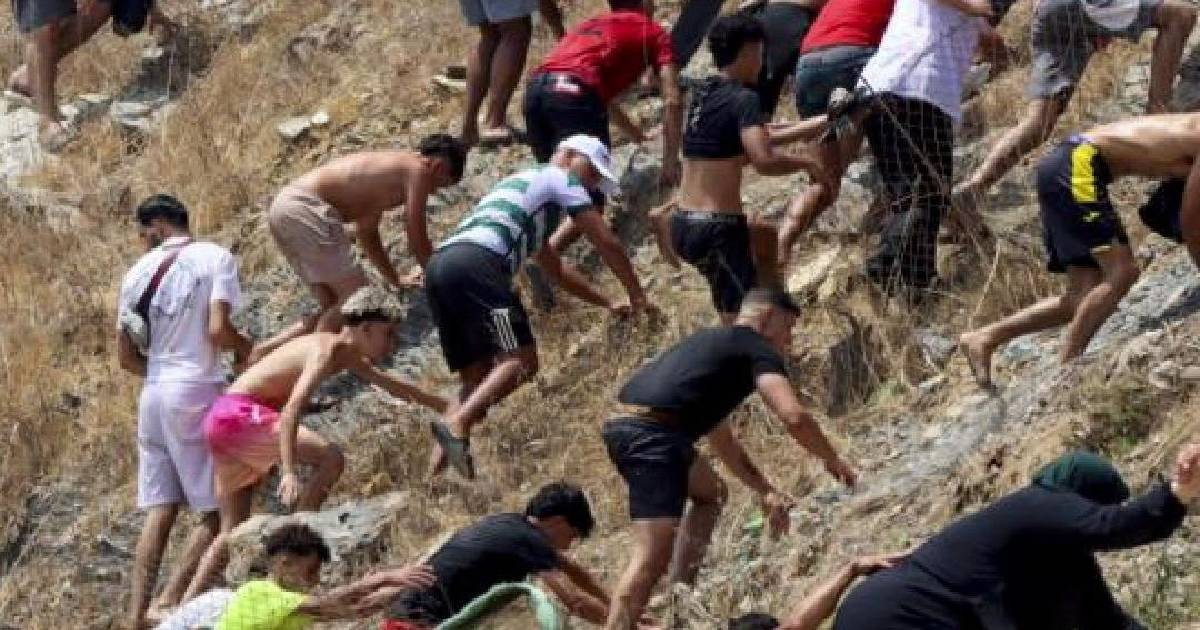
The U.S. Department of State has elevated the travel advisory for Ceuta to Level 3 — "Reconsider Travel" — in response to the escalating migration crisis affecting the Spanish autonomous city since late July. This level is the second highest in their four-tier alert system.
Announced via the official @TravelGov account on X, the advisory cautioned that the "massive and uncontrolled influx of migrants from Morocco into Ceuta may lead to unpredictable and dangerous security situations" for American citizens.
The notice highlights that Spain has deployed its Armed Forces, National Police, and Civil Guard in reaction to what is described as a "serious situation," urging Americans to "reconsider travel to the area due to safety risks."
Elsewhere in Spain, the alert remains at Level 2, so the heightened alert specifically applies to Ceuta.
The crisis began on July 30 when tens of thousands of people crossed from Morocco into Ceuta, primarily via the Tarajal breakwater, both on foot and by swimming.
The reported number of arrivals varies by source: Spanish police noted over 20,000 entries, the Interior Ministry estimated about 50,000, and the local government counted more than 60,000 people.
Juan Jesús Vivas, the President of the Autonomous City, described the situation as a "humanitarian and social emergency" and demanded an urgent response from the central government.
The death toll quickly rose: from at least 18 deaths reported on July 30, subsequent reports increased the number to at least 57 bodies found along the Ceuta coast.
Following agreements between Madrid and Rabat, approximately 53,000 individuals were returned to Morocco on Friday, July 31, according to El País.
A day before the formal elevation to Level 3, the U.S. Embassy in Madrid had already issued a specific security alert for Ceuta and Melilla, warning of the risks associated with the mass arrival of migrants.
Analysts point to a key legal factor that may have facilitated the crisis: Spanish Supreme Court ruling 814/2026, issued on June 29, which prohibited "hot returns" of migrants intercepted swimming into Ceuta and Melilla, requiring full legal procedures.
The crisis had immediate repercussions across the European Union. Italy temporarily suspended the Schengen agreement and, along with Finland and Denmark, called for Spain's expulsion from the Schengen area following the incidents.
Former President Donald Trump seized the opportunity to make political statements, labeling the events as an "invasion" and a "disaster."
Washington's concern over the situation in Spain's autonomous cities is not new; in May 2026, the U.S. increased diplomatic pressure on Spain regarding migration issues, placing Ceuta and Melilla under scrutiny.
The July-August 2026 crisis is considered the most severe migration emergency in Ceuta since May 2021, when approximately 10,000 individuals crossed from Morocco in a single day, significantly straining diplomatic relations between Spain and Morocco.
Understanding the U.S. Travel Advisory for Ceuta
What is the current U.S. travel advisory level for Ceuta?
The U.S. travel advisory for Ceuta is currently at Level 3, which advises travelers to reconsider their plans due to safety concerns.
Why has the travel advisory for Ceuta been raised?
The advisory has been raised due to a large, uncontrolled influx of migrants from Morocco into Ceuta, which has resulted in unpredictable and potentially dangerous security situations.
How have Spanish authorities responded to the migration crisis in Ceuta?
In response to the crisis, Spain has deployed its Armed Forces, National Police, and Civil Guard to address the situation.