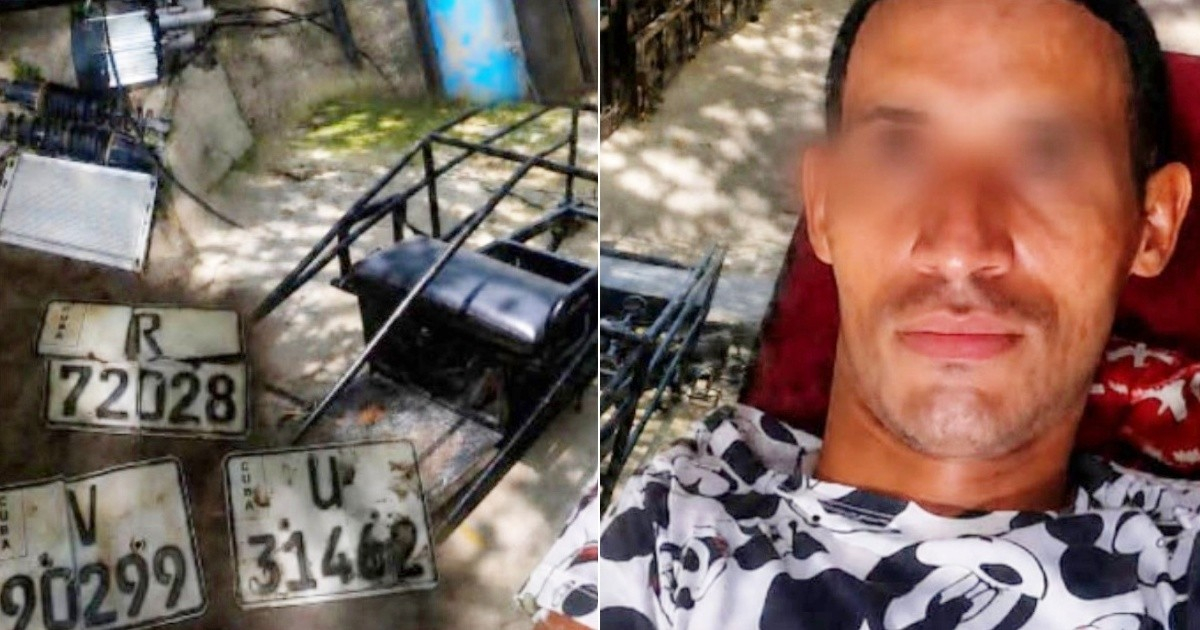
An individual has been apprehended in the Guantanamo area following the discovery of a stolen electric tricycle at his residence, along with evidence linking him to the theft of at least five other vehicles. This information was shared by the pro-government Facebook page "Guantánamo and Its Truth," affiliated with the Ministry of the Interior.
A Stolen Tricycle Sparks Investigation
The investigation was triggered when the victim reported the theft of his tricycle on various Facebook groups. The incident took place outside the Ministry of the Interior's processing unit at the corner of 18 Norte and Beneficencia, in the Caribe district.
The widespread sharing on social media provided crucial leads for the authorities, who were already probing past incidents in the vicinity. Equipped with this information, law enforcement searched a home in the Los Cocos de Confluentes neighborhood, where they found the tricycle dismantled into several parts, seemingly ready for sale.
Uncovering a Broader Crime Network
The most significant discovery was not the tricycle itself. The same premises housed numerous parts and at least five license plates from other reported stolen vehicles, suggesting a pre-existing network of criminal activity.
While the source confirms ongoing investigations to determine further involvement, specifics on the number of vehicles or additional suspects remain undisclosed.
Missing Details from Official Reports
The Ministry of the Interior's report omits crucial information: it does not specify the exact date of the theft or arrest, nor does it disclose the suspect's identity, age, or criminal history. Additionally, it fails to mention the value of the recovered tricycle or the condition of its parts.
This lack of transparency is typical of "Guantánamo and Its Truth," a platform known for its propagandistic tone and systematic omission of details that would allow for independent verification.
The report ends with a call to action for the public: "If you see something suspicious, report it — your involvement helps protect what is ours and ensures justice."
Public Outcry and Speculations of Accomplices
The publication ignited a storm of comments filled with outrage and skepticism. Many demanded severe punishment: "30 years without parole, damn it!" one user exclaimed. Another remarked on the leniency of penalties allowing criminals to reoffend.
Another contentious point was the decision to obscure the suspect's face in photos. "If they hide his face, we can't identify him," protested one commenter. Another questioned, "Why protect his identity if he's already been caught?"
Significant suspicion centered on the involvement of accomplices. "He wasn't acting alone; he must have had several accomplices," one user speculated, a sentiment echoed in various forms. "They need to investigate if he was working with others," insisted another. The presence of license plates from at least five different vehicles in one location fuels these suspicions.
Rising Crime and Public Discontent
This incident is not isolated. In recent months, Guantanamo has seen several high-profile operations: in June, three gangs involved in nighttime robberies were dismantled, resulting in 11 arrests. A fuel theft network was also broken up, leading to seven arrests.
Electric tricycles have become highly coveted items in Cuba, with prices ranging from $2,350 to $4,500.
The pattern of dismantling vehicles for parts is a recurring theme: in April 2026, a driver was murdered in Santiago de Cuba during a robbery for his battery and charger.
Nationally, the Cuban Anti-Corruption Observatory documented 2,833 verified crimes in 2025, marking a 115% increase from 2024, with theft being the most prevalent offense.
"The population is tired of so much crime," summarized one commentator, capturing the frustration felt by many Cubans.
Key Questions about Guantanamo Theft Case
What evidence was found linking the suspect to multiple thefts?
Authorities discovered numerous vehicle parts and at least five license plates from other reported stolen vehicles at the suspect's residence.
Why did the report from the Ministry of the Interior lack specific details?
The report from "Guantánamo and Its Truth" often omits details such as dates, identities, and values, which would allow for independent verification, maintaining a propagandistic tone.
How has the community reacted to the arrest and ongoing investigation?
The community responded with outrage and skepticism, demanding harsh penalties and questioning the decision to obscure the suspect's identity, while speculating about the involvement of accomplices.