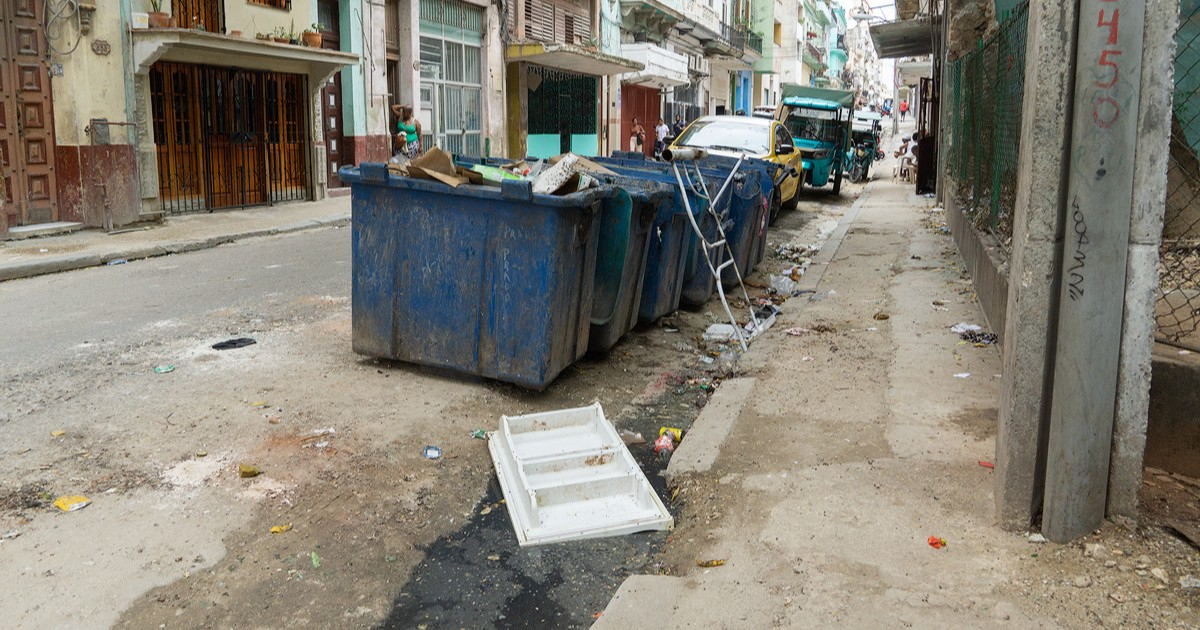
Fabio Fernández Batista, a historian and professor in the Department of Cuban History at the University of Havana, as well as a member of the National Committee of the Union of Cuban Historians, shared a poignant piece on Facebook titled "Zombie Apocalypse." In this post, he paints a stark picture of the everyday struggles in a Cuban city—likely Havana—amidst an ongoing crisis.
Unlike dissidents or outspoken opponents, Fernández Batista is an academic functioning within the official system, which lends his words significant symbolic weight. When someone in his position describes Cuba as a "zombie apocalypse," the imagery is impossible to ignore.
"The city is ablaze. The sun beats down relentlessly on streets where dust mingles with sewage. Trash is omnipresent, occasionally smoldering at street corners, releasing the unsettling stench of decay," the historian wrote.
His account details the arduous task of securing transportation across the city—a ride in a private car that could consume nearly an entire minimum wage salary. As of early July 2026, the minimum wage was set at 3,210 pesos, yet basic living expenses for an individual are estimated to require around 96,060 pesos monthly, approximately 14 times the average state salary.
"You have to find a car to traverse the city. The journey will be long, nearly equivalent to a minimum wage. Fellow travelers crowd together, and a shared outcry emerges: How long will this last?" Fernández Batista recounted.
During the trip, he observes, "a queue for bread, time to witness an elderly man rummaging through trash, time to see a child sacrificed at the altar of street vending," just before passing through the tunnel.
Once inside the vehicle, the conversation among passengers shifts to power outages and water shortages. Fernández Batista highlights a revealing aspect: "No one talks about Trump, Rubio, or the blockade." Instead, the populace attributes their daily hardships to the immediate realities they endure, rather than the U.S. embargo.
This observation starkly contrasts with the official narrative of the regime, which habitually blames the embargo for the nation's woes. Foreign Minister Bruno Rodríguez has even denied the existence of a humanitarian crisis in Cuba, though he did acknowledge the severe hardships faced by the population.
Fernández Batista's writing joins a wave of public outcries from Cuban intellectuals and writers. On July 26, Holguín writer José Poveda Cruz disclosed that a sack of charcoal costs 2,500 pesos, while rice and beans are priced at 400 pesos per pound, with the minimum pension of 4,000 pesos equating to just seven to nine dollars. "Tonight, the blackout will return. The darkness, punctual as a model bureaucrat, will take over the house," wrote Poveda Cruz.
All of these grievances unfold against the backdrop of an energy crisis plaguing Cuba: in July 2026, blackouts averaged over 20 consecutive hours, with some areas enduring more than 72 hours without power and Matanzas reaching 87 hours. Cuba has experienced at least five total collapses of the National Electrical System this year, three of which occurred this month.
The historian's description of garbage accumulation has a concrete explanation as well: less than half of the 106 garbage trucks in Havana were operational in 2026. Disturbing testimonials from Cubans claiming to live like animals are repeatedly shared on social media, no longer surprising but still profoundly affecting.
Back in March 2026, Fernández Batista had already noted that Cuba was facing "very complex circumstances," marked by public fatigue, negative perceptions of government management, and bureaucratic inefficiency. His latest publication suggests that not only has the situation failed to improve, but it has deteriorated further.
Understanding Cuba's Current Crisis
What does Fabio Fernández Batista's "Zombie Apocalypse" metaphor signify?
The "Zombie Apocalypse" metaphor used by Fernández Batista illustrates the dire and deteriorating conditions in Cuban cities, particularly highlighting the decay, neglect, and struggle faced by everyday citizens.
How does the energy crisis impact daily life in Cuba?
The energy crisis in Cuba leads to prolonged blackouts, sometimes lasting more than 20 hours at a stretch, severely disrupting daily activities, and creating additional hardships for the population.
Why are Fernández Batista's observations significant?
Fernández Batista's observations are significant because, as an academic within the official system, his critique and vivid depiction of the crisis in Cuba carry symbolic weight, challenging the regime's narrative.