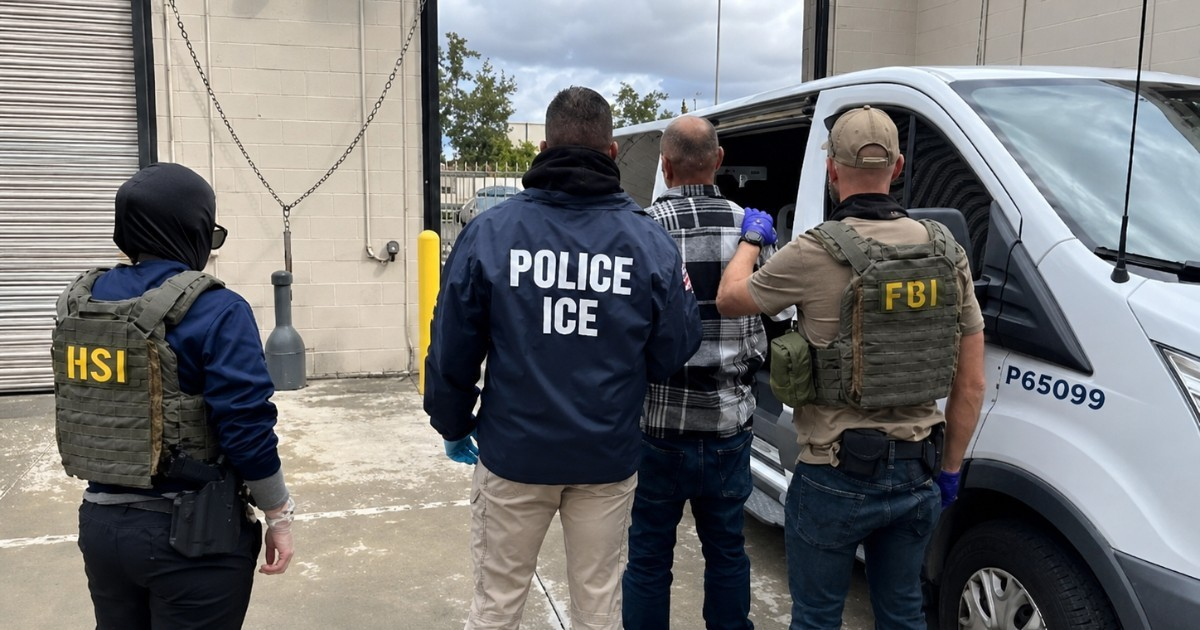
The U.S. Immigration and Customs Enforcement (ICE) agency has recorded the processing of nearly 6,000 individuals in Miami-area detention centers throughout July, as it plans to open four additional facilities with a combined capacity for 5,500 detainees, according to documents reviewed by NBC News.
An ICE spokesperson mentioned that as of July 26, about 4,300 individuals were being held in custody in the Miami region, highlighting the extensive scale of immigration operations in the area.
Expanding Detention Facilities
In pursuit of new facilities, federal documents reveal that ICE is searching for a Miami center capable of holding at least 700 detainees within a 50-mile radius of its local office. Additional facilities are slated for Denver, Seattle, and Philadelphia.
The Department of Homeland Security anticipates awarding contracts in the fourth quarter of fiscal year 2026, ending on September 30. The facilities must be operational within 30 days after the contracts are assigned.
Community Concerns and Activism
Immigrant advocacy groups have raised alarms about the uptick in arrests in South Florida, advising those without legal status to avoid unnecessary travel.
Yareliz Méndez-Zamora from the American Friends Service Committee urged, "We ask those without immigration status to please refrain from traveling unless absolutely necessary."
Thomas Kennedy from the Florida Immigrant Coalition described the scene as "immigration enforcement operations are visible throughout South Florida, in areas like Miami-Dade and Homestead."
Detention Conditions Under Scrutiny
The ICE processing center in Miramar, originally intended for routine immigration appointments, has effectively become a temporary detention site, as reported by activists and lawmakers.
Sylvia Muñoz from the Miramar Circle of Protection was blunt: "The conditions inside are deplorable."
Javier García visited the center to deliver clothing to two detained friends. He reported that both mentioned restricted access to showers.
Congresswoman Debbie Wasserman Schultz made an unannounced visit to the Miramar facility in early July. She reported finding around 150 detainees spread across four holding areas, each equipped with a single exposed toilet.
According to her account, about 70 men were cramped into a space approximately 15 by 15 feet, while roughly 40 women were in another area measuring about seven by 14 feet.
"You have to make your way to the corner to use the bathroom in front of others; for women, it's in front of about 50," Wasserman Schultz stated.
Impact on Families
The consequences of these detentions extend to children. Lindsey McElroy from the Guatemalan Maya Center shared a case of a girl whose father was deported a month earlier and whose mother was detained that morning.
The organization has facilitated the return of 45 children to their parents' home countries amid the family separations caused by detentions and deportations.
Broader Immigration Challenges
The pressure on immigrant communities intensified with the expiration of Temporary Protected Status (TPS) for over 300,000 Haitians in the United States. This protection lapsed on July 27 following a brief judicial extension.
Florida was home to approximately 158,000 Haitian TPS recipients, according to estimates from January 2026.
The Miami ICE office, overseeing Florida, Puerto Rico, and the U.S. Virgin Islands, has become the epicenter of immigration detentions nationwide. This office recorded more than 41,000 detentions since January 2025, including nearly 9,880 in the early months of 2026, surpassing any other ICE office in the country.
The Cuban community has been notably impacted, with Cuban immigrant detentions rising by 463% between October 2024 and January 2026.
Furthermore, 42,084 Cubans had pending final deportation orders, as per data from the Department of Homeland Security as of November 2025.
Frequently Asked Questions About ICE Operations in Miami
Why is ICE expanding its facilities in Miami?
ICE is expanding its facilities in Miami to accommodate the growing number of detainees processed in the region. The expansion includes plans for new centers to manage the increasing immigration enforcement activities.
What impact do these detentions have on families?
The detentions often result in family separations, affecting children whose parents are deported or detained. Organizations are working to assist affected families, sometimes by helping children return to their parents' home countries.
How are community organizations responding to increased ICE operations?
Community organizations are raising awareness about the heightened ICE activities and advising undocumented individuals to avoid unnecessary travel. They are also advocating for better conditions in detention facilities and supporting affected families.