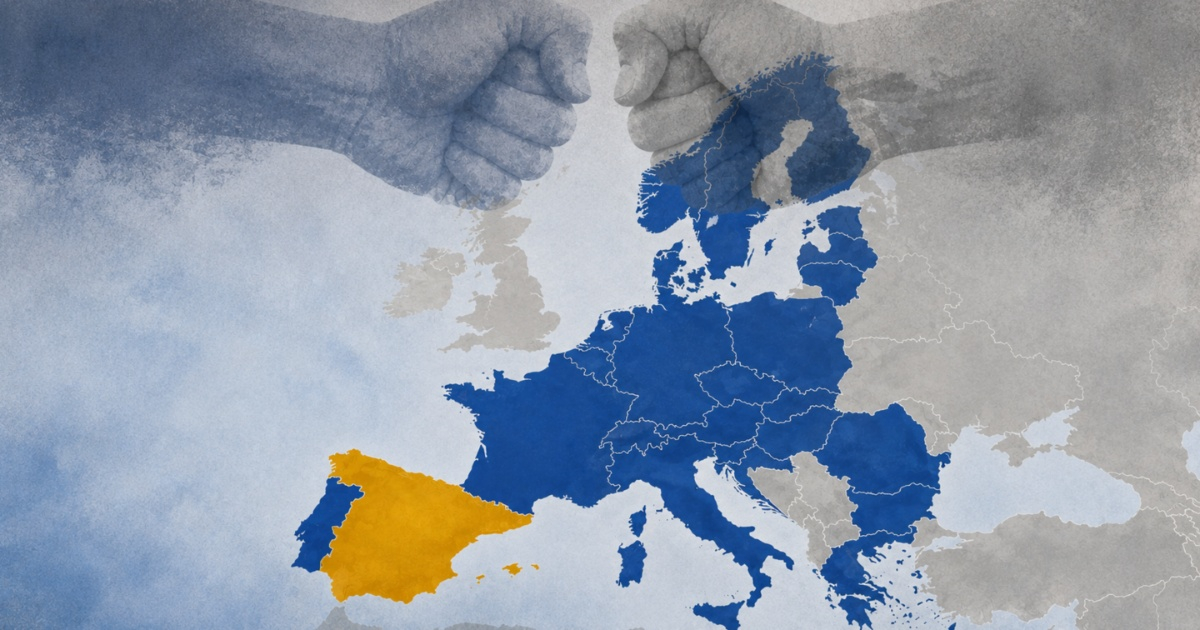
On Friday, Italy announced the reinstatement of border checks at ports and airports for travelers coming from Spain, citing a temporary suspension of the Schengen free movement agreement. This move comes in response to the recent migration crisis in Ceuta, where tens of thousands entered from Morocco.
According to EFE, Italy's Interior Minister, Matteo Piantedosi, made this decision following a meeting of the Committee on Immigration and Border Security Analysis.
Details on the duration of these checks and their exact implications for travelers remain unclear. However, it is likely that authorities will conduct random document inspections to minimize long wait times at entry points.
Antonio Tajani, Italy's Deputy Prime Minister and Foreign Minister, supported the decision on social media.
“The temporary suspension of the Schengen area with Spain is necessary to ensure the security of our citizens and protect European borders. This measure is provided for in treaties and has become unavoidable today,” he stated.
Nevertheless, legal experts and senior European figures quickly pointed out that Italy's rhetoric exceeds what EU law permits. Josep Borrell, former High Representative of the EU for Foreign Affairs, was clear on X: “Under EU law, no member state can unilaterally suspend another's participation in Schengen.”
Marie-Laure Basilien-Gainche, a law professor at the University Lyon 3, echoed this sentiment to AFP: “The Schengen framework has no provision for such unilateral action. A state cannot expel another from the space on its own.”
European regulations do allow for the temporary reintroduction of border controls in the face of a severe threat to internal security or sudden, unauthorized large-scale movements of third-country nationals, which is what Italy has activated. However, their official statement referred to a “border closure,” a term criticized as inaccurate by Jordi Barcia, Radio Nacional de España’s correspondent in Rome: “Italy cannot close its borders to another Schengen country.”
Finland and Denmark joined the discussion. Finnish Interior Minister Mari Rantanen and Danish Prime Minister Mette Frederiksen suggested the possibility of excluding Spain from the free movement area, though legal authority for such action is lacking, according to Cadena SER analysis.
Meanwhile, Italy and France have agreed to enhance control at their shared land border. French Interior Minister Laurent Nuñez announced additional resources, planning to triple personnel to 334 agents and deploy drones for surveillance.
The crisis erupted Wednesday when massive numbers arrived in Ceuta from Morocco. Police estimated over 20,000 entries in one day, with Moroccan media suggesting more than 30,000.
The legal trigger was a June 29 Spanish Supreme Court ruling prohibiting immediate returns of those swimming into the territory.
As of Friday evening, Spain's Interior Ministry reported that around 48,300 of the estimated 50,000 individuals had returned to Morocco, while RTVE noted at least 19 fatalities during the incident.
European Commission President Ursula von der Leyen condemned the scenes in Ceuta as “unacceptable” and offered Spain support through Frontex. German Chancellor Friedrich Merz backed Spain's intention to prevent irregular entries into Europe.
Currently, enhanced checks are already in place at the internal borders of Austria, France, Germany, Italy, the Netherlands, Poland, Sweden, Denmark, and Norway due to immigration or security reasons, yet none of these countries have been excluded from Schengen nor have excluded their neighbors.
Understanding the Schengen Agreement and Current Border Control Measures
What prompted Italy to suspend the Schengen Agreement with Spain?
Italy's decision to suspend the Schengen Agreement with Spain was triggered by the migration crisis in Ceuta, where a large number of individuals entered from Morocco.
Are other European countries involved in the Schengen issue with Italy?
Yes, Finland and Denmark also discussed the possibility of excluding Spain from the Schengen area, but they lack the legal authority to do so. France is cooperating with Italy to strengthen their shared border control.