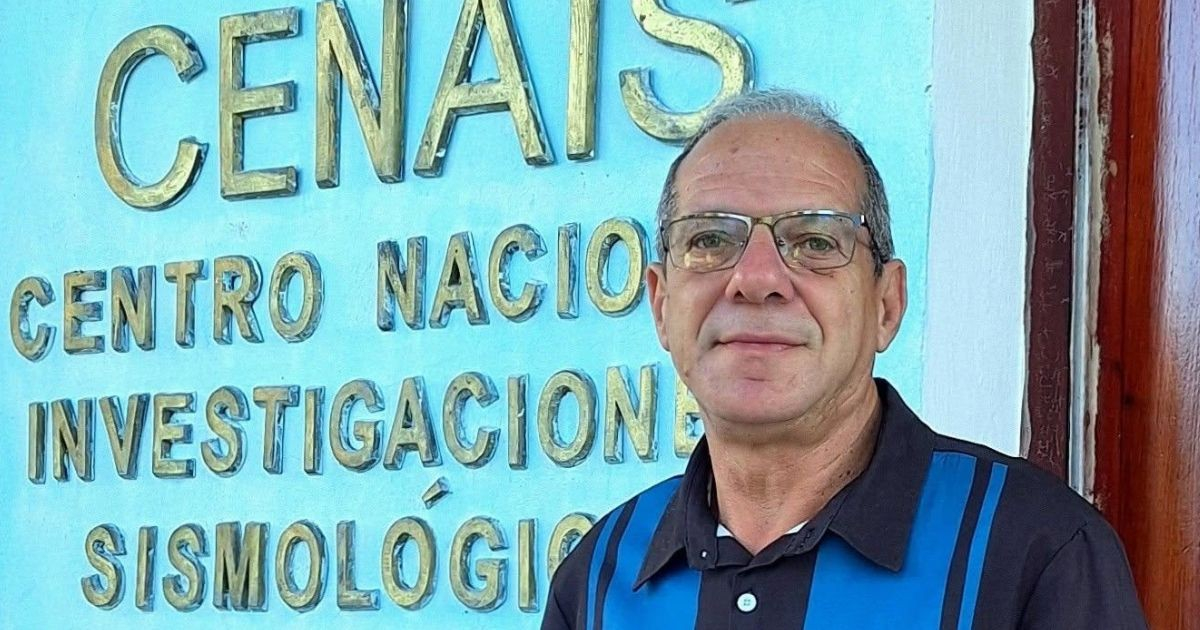
Enrique Diego Arango Arias, an esteemed Doctor of Science and the technical deputy director of the National Center for Seismological Research (CENAIS), as well as the head of Cuba's National Seismological Service, has strongly criticized the decision to dissolve the Ministry of Science, Technology, and Environment (CITMA). This decision, sanctioned by the National Assembly of People's Power, has been labeled by Arango as a "grave error."
In a detailed post on Facebook titled "A Dark Day for Cuban Science," Arango put forth several arguments highlighting the detrimental impact of this decision:
The dissolution of CITMA occurred without any consultation or dialogue with its employees and experts. There were no technical studies presented to justify the restructuring or its purported benefits. A well-established institution with over three decades of national and international recognition is being dismantled. The decision undermines the sense of belonging and motivation among scientists and researchers. Arango argues that amidst Cuba's current crisis, such a significant reorganization is ill-timed. He criticizes the lack of clarity regarding the future roles and functions of the affected institutions. The new structure, he warns, might weaken key areas of science, environmental management, and risk handling. He labels the decision as flawed both in its execution and in its essence, due to the absence of consensus.
On Thursday, the Cuban parliament passed the Law on the Organization of the Central State Administration, which reduces the number of central government bodies from 27 to 21, effectively abolishing the Ministry of Science, Technology, and Environment. Its responsibilities will be divided between two new ministries: the Ministry of Higher Education, Science and Innovation; and the Ministry of Environment, Habitat, and Water Resources.
The regime presented this as part of an initiative to "restructure, resize, and perfect" the state apparatus, as stated by José Amado Ricardo Guerra, the Secretary of the Council of Ministers, in front of the parliament. The Prime Minister, Manuel Marrero Cruz, announced the elimination of over 92,000 positions across four ministries.
Arango, a leading figure in Cuba's seismology community, denounced both the substance and method of the decision.
"This unilateral decision, made behind our backs as if we were mere pawns in a game, has hurt many of us at CITMA," he expressed.
The seismologist criticized the absence of engagement with the ministry's staff and leaders in deliberating the measure, and the lack of a scientific study that could substantiate its benefits.
"Most of our organization's employees are unaware of CITMA's dissolution," he warned, noting that he had previously communicated these concerns to the National Assembly without receiving any response.
Among the technical inconsistencies pointed out by Arango is the classification of CENAIS solely as an "Early Warning" institution, ignoring its role as a Science, Technology, and Innovation Entity.
He also highlighted a contradiction in the allocation of core competencies: while the control of peaceful nuclear energy use would remain under the Ministry of Higher Education, the Center for Radiation Protection and Hygiene, responsible for radiological safety, would be transferred to the Ministry of Environment.
"Those making these decisions seem unaware of the mission and roles of the institutions previously under CITMA," he asserted.
The legislative proposal was opened for public consultation on June 8, 2026. However, Arango criticized this process as "very rushed" and insufficiently communicated to the ministry's own staff.
"This has been a significant error, both in form and substance, and we must now anticipate its consequences. Currently, there are no objective or subjective factors justifying these changes," he concluded.
CITMA was established on April 21, 1994, during the Special Period, under the initiative of Fidel Castro. Its first minister was Rosa Elena Simeón.
Key Concerns and Implications of CITMA's Dissolution
What was the main criticism by Enrique Arango regarding CITMA's dissolution?
Enrique Arango criticized the dissolution as a "grave error" due to the lack of consultation with employees and experts, absence of technical studies supporting the decision, and potential weakening of key scientific and environmental areas.
How will the functions of CITMA be distributed after its dissolution?
The responsibilities of CITMA will be divided between the Ministry of Higher Education, Science and Innovation, and the Ministry of Environment, Habitat, and Water Resources.
Why does Arango believe the timing of CITMA's dissolution is inappropriate?
Arango argues that the reorganization is ill-timed due to the ongoing crisis in Cuba, which makes such significant structural changes untimely and potentially harmful.