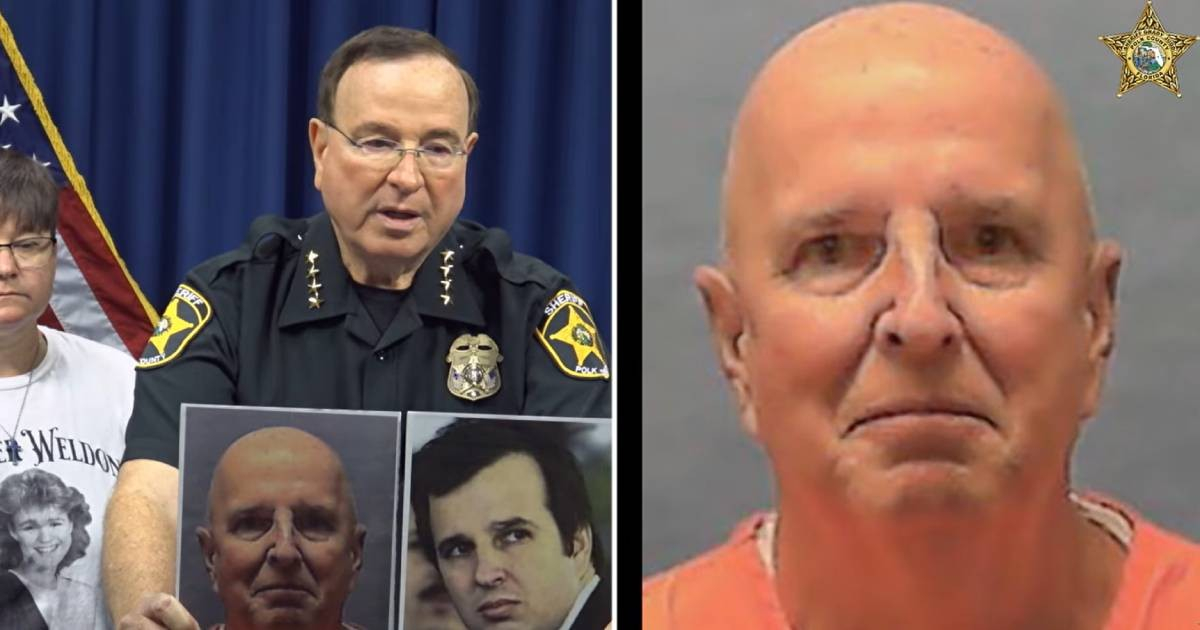
Polk County Sheriff Grady Judd revealed on Thursday that the long-unsolved murder of 14-year-old Jeanifer Weldon, who vanished in September 1987, is connected to James Duckett. Duckett, a former Florida police officer, was executed last Tuesday for the kidnapping, rape, and murder of another young girl in the same year.
In a press briefing, the Polk County Sheriff's Office (PCSO) emphasized that Duckett had been the sole suspect in Jeanifer's murder for nearly forty years, though conclusive forensic evidence was never found to charge him.
"We never had a shred of evidence suggesting anyone other than James Duckett committed this crime. Not ever," stated Judd.
Unresolved Tragedy: The Details of Jeanifer's Disappearance
Jeanifer Weldon disappeared on the night of September 19, 1987, while walking from a friend's home in Lakeland to her own house, a little over two miles away. She never made it home.
Her remains were discovered on October 2, 1987, by a phosphate mine worker at Garden Mines in Fort Meade. The discovery was prompted by the sight of a pair of shoes and a strong odor of decomposition along a dirt path. An autopsy confirmed that she had been strangled, and the case was classified as a homicide.
Mounting Circumstantial Evidence Against Duckett
Despite a lack of DNA evidence to formally charge him, investigators assert that substantial circumstantial evidence consistently pointed to Duckett over the years.
The investigation revealed that Duckett, then a police officer, left his home five hours before his shift at the WR Grace mines and drove along Highway 98 North, the same route Jeanifer was traveling when she disappeared. Investigators noted Duckett arrived at work two hours late, visibly sweaty and upset.
Upon returning home, he handed his wife a green bag with a gray stuffed cat, identical to one Jeanifer had purchased earlier that day during a trip to Tampa. Duckett's residence was just 1.8 miles from where Jeanifer's body was eventually found. His wife, Carla Duckett, also reported seeing scratches on his back that night.
Over nearly 38 years, investigators sent more than ten pieces of the victim's clothing to various labs for DNA testing, but none yielded conclusive results.
Waiting for Justice: The Execution of James Duckett
Sheriff Judd disclosed that charges for Jeanifer's murder were not filed while Duckett was on death row for the case of Teresa McAbee, an 11-year-old girl who was also raped and murdered in 1987. The aim was to avoid any risk that could potentially impact the existing death sentence.
In the days leading up to Duckett's execution, detectives approached the prison to offer him a final chance to confess. "He didn't want to see us. He didn't want to talk. He was a psychopathic, child-molesting, self-centered, vicious killer to the very end," stated Judd.
Duckett, aged 68, was executed by lethal injection on July 29, nearly 38 years after the crime for which he was sentenced. His death marked the first double execution in Florida since 1964.
Family's Closure: "The Right Person Was Executed"
Jeanifer Weldon's family and friends attended the press conference. Mindy Oakley, Jeanifer's best friend, was also present at the execution and shared a poignant memory. "We shared everything. That was my shirt and shoes she wore the night she was killed," she recalled.
Hope Limansah, Jeanifer's younger sister born after the murder, spoke about the void left in their family. "It's a big role being the first child born after the last was taken," she expressed.
Amy Weldon, another sister, expressed certainty about the execution. "I'm sure they executed the right person. I don't like how long it took, but I'm 100% sure the right person died," she declared.
Sheriff Judd announced that the case file will now be forwarded to the State Attorney's Office for final review and closure through an "exceptional clearance," the procedure used when the authorities identify a suspect who passed away before prosecution.
Key Questions About the Jeanifer Weldon Case
What led investigators to suspect James Duckett in Jeanifer Weldon's murder?
Investigators suspected James Duckett due to circumstantial evidence, including his route matching Jeanifer's the night she disappeared, his late arrival to work, and the discovery of an item owned by Jeanifer in his possession.
Why weren't charges filed against Duckett for Jeanifer's murder earlier?
Charges were not filed earlier to avoid jeopardizing Duckett's existing death sentence for another case, as there was no conclusive forensic evidence in Jeanifer's case.