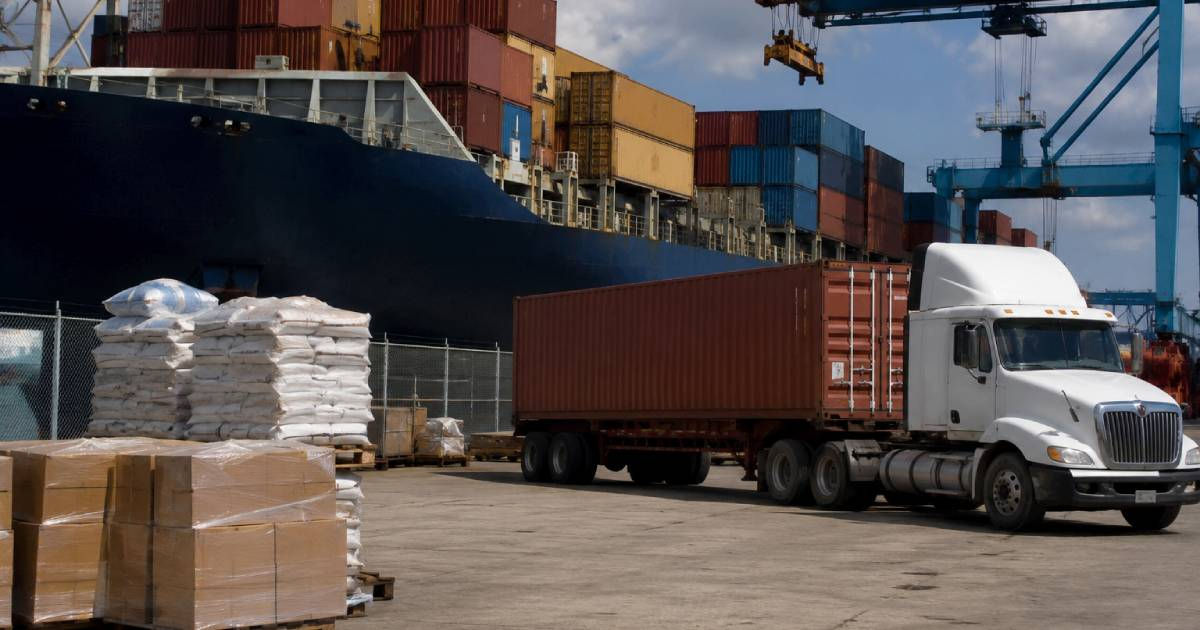
In May 2026, the United States experienced a 13.2% surge in its food and agricultural exports to Cuba, driven by rising demand from the island's private sector. This occurs amidst Washington's tightening sanctions on Cuban government-controlled entities. The increase highlights a growing trend: while state-run enterprises face mounting pressure, private business licenses continue to facilitate a considerable influx of goods to Cuba.
According to the Economic Eye on Cuba bulletin, issued by the Cuba-U.S. Trade and Economic Council, U.S. sales to Cuba reached $42.19 million in May, up from $37.24 million in the same month in 2025. This marks the first significant year-over-year growth in 2026, although the cumulative total for the year remains below the previous year's figures.
From January to May, exports totaled $189.03 million, a 7.7% decrease from the $204.93 million during the same period in 2025. Despite this, Cuba slightly improved its ranking as a market for U.S. agricultural exports, moving up to 51st out of 219 destinations, compared to 52nd the previous year.
Private Sector Vehicles and Food
One of the standout figures for May wasn't a food product but rather the impressive volume of vehicle exports, including parts, motorcycles, and bicycles, totaling $15.74 million. These items are authorized through licenses from the Department of Commerce's Bureau of Industry and Security (BIS) and are destined for Cuba's private sector.
Food exports remained a key component. Shipments included $3.6 million in fresh eggs, $1.47 million in hatching eggs, along with cane and beet sugar, solar cells, and even an RV valued at $14,360.
The report also details the top food products sold to Cuba in May. Frozen chicken leg quarters led at $9.72 million, followed by frozen chicken meat ($6.83 million), chicken legs ($3.39 million), fresh eggs ($3.32 million), and frozen pork ($3.13 million). These ten leading products accounted for 78.6% of all U.S. agricultural exports to Cuba that month.
Fuel Exports Approved Under "Support for the Cuban People"
In addition to food and consumer goods, the Trump-Vance administration authorized fuel exports worth $23.89 million to Cuba's private sector in May. These transactions fall under the "Support for the Cuban People" exception, explicitly excluding the Cuban state, military, and state-run enterprises to directly benefit independent entrepreneurs and citizens.
The growth in vehicle exports underscores a significant shift in trade between the two nations since 2022, when the first licenses for such operations were issued. Since then, cumulative sales of vehicles, trucks, motorcycles, bicycles, and parts have surpassed $285 million, while the total value of exports linked to the resurgence of Cuba's private sector exceeds $485 million. In 2026 alone, these operations have already amounted to over $90 million.
The report attributes this growth to the expansion of small private businesses, which require equipment, transportation, and supplies to sustain their activities.
Trade Amid New Sanctions
These figures emerge during a time of apparent contradiction in U.S. policy toward Cuba. While Washington keeps licenses open for exports aimed at the private sector, the Trump-Vance administration has intensified sanctions against regime-controlled companies. On July 24, the Office of Foreign Assets Control (OFAC) added Mariel Container Terminal S.A., a major entry point for goods from the U.S., to its list of blocked entities.
This action presents new logistical challenges for bilateral trade that continues to grow in certain sectors despite increasing restrictions.
Legislation Permitting Trade
U.S. food and agricultural exports to Cuba occur under the Trade Sanctions Reform and Export Enhancement Act (TSREEA) of 2000, which allows direct sales under specific conditions. Meanwhile, healthcare products fall under the Cuban Democracy Act (CDA) of 1992. In May, this category accounted for just $9,240 in exports.
The fiscal year 2025 concluded with a record $490.1 million in U.S. agricultural and food exports to Cuba, reinforcing the island's role as a small but significant market for American exporters.
FAQs on U.S. Exports to Cuba
What caused the increase in U.S. food exports to Cuba in May 2026?
The rise in exports was driven by heightened demand from Cuba's private sector, despite tighter U.S. sanctions on Cuban government entities.
Which products were most exported to Cuba in May 2026?
Frozen chicken leg quarters, chicken meat, and eggs were among the top food exports, along with significant vehicle and parts shipments.
How does the "Support for the Cuban People" exception work?
This exception allows U.S. exports to Cuba's private sector while excluding state-controlled entities, aiming to benefit independent entrepreneurs.
What legislative acts govern U.S. exports to Cuba?
Exports are regulated by the Trade Sanctions Reform and Export Enhancement Act (TSREEA) of 2000 and the Cuban Democracy Act (CDA) of 1992.