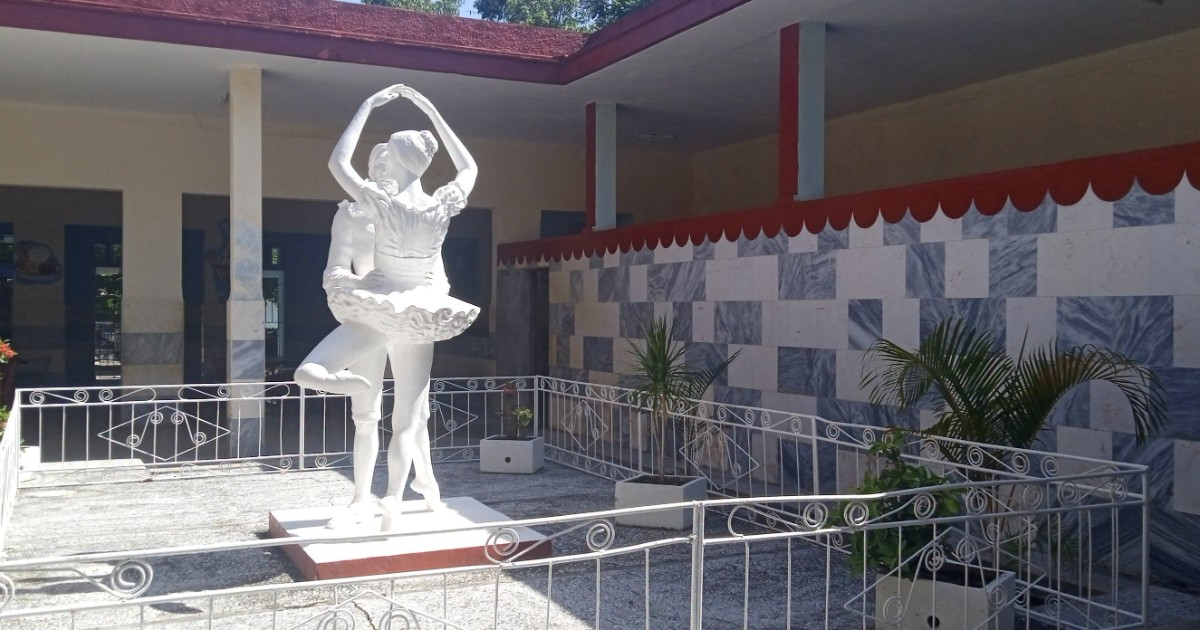
A private family business is set to take charge of the culinary offerings at one of the most iconic spots in the Special Municipality.
The Carmenates family's business, known as Hakuna Matata, has entered into an administrative contract with the Isla de la Juventud's Commercial Enterprise to oversee the production and sales at the local Coppelia.
Through a collaborative production model involving both state and private sectors, the microenterprise will soon offer residents a variety of ice creams, yogurt, cheese, and other dairy products.
The location is currently undergoing a preparatory phase, which includes painting, cleaning of dining halls and green areas, and bathroom renovations in anticipation of its reopening.
Hakuna Matata SRL, established on May 5, 2025, lists its primary business as the production and retail sale of food, beverages, and tobacco.
The company already operates on the Isle of Youth, notably in the Día y Noche space on José Martí Street in Nueva Gerona, where it has earned a reputation for high-quality products and professional service.
This partnership emerges over a year after Nueva Gerona’s Coppelia reopened in March 2025 with a limited offering—open only on weekends, allowing just two specialties per customer, and prohibiting take-home ice cream.
This alliance between Hakuna Matata and the state-run commerce entity is part of a broader trend that has spread across various Cuban provinces throughout 2026.
Recently, Sancti Spíritus's Coppelia reopened in June with support from a local microenterprise, while similar revivals were reported in Trinidad and Cienfuegos during the same month.
One of the earliest examples of this model dates back to 2022, when the microenterprise Helados AlasK started supplying Matanzas's Coppelia with 300 daily 240-milliliter tubs through a partnership with Mercabal.
The legal framework for these partnerships was established by Decree-Law 114/2025, published in the Official Gazette on March 3, 2026, and effective since early April of that year. This was the first regulation to govern collaborations between state entities and private microenterprises in Cuba, allowing for four types of cooperation.
The state's inability to sustain these culinary venues has made the private sector the driving force behind their revival, highlighting the worsening economic crisis the Island has faced after decades of centralized management.
Frequently Asked Questions About Private Sector Involvement in Cuba's Gastronomy
What is the significance of Hakuna Matata's contract with the Isla de la Juventud?
Hakuna Matata's contract represents a shift towards private sector involvement in Cuba's food service industry, highlighting the state's reliance on private entities to sustain operations.
How does Decree-Law 114/2025 facilitate private-public partnerships in Cuba?
Decree-Law 114/2025 establishes legal guidelines for collaborations between state and private microenterprises, allowing for four distinct types of partnerships to foster economic activity.