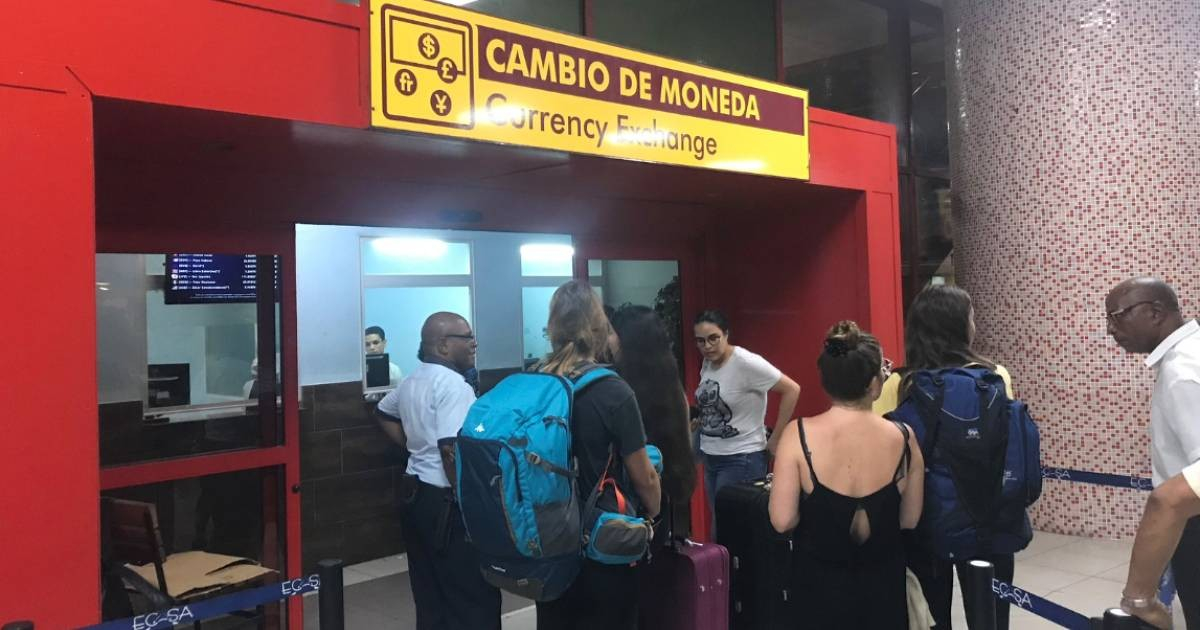
On Wednesday, Prime Minister Manuel Marrero Cruz addressed the National Assembly of People's Power, announcing that Cuba's first private currency exchange is set to begin operations as a pilot project. This comes after the regulatory framework was approved, allowing such entities to operate under a license from the Central Bank of Cuba.
Instead of celebrating, the immediate reaction on social media was one of widespread skepticism. Many Cubans took to platforms like CiberCuba, questioning with irony who might truly own this entity.
"Whose is it? The Machi's, the Crab's, or Marrero's sister's?" one user sarcastically commented on Facebook.
Another pointedly asked, "Private, and it's owned by the Central Bank?"
Summing up the distrust, a third user posed a rhetorical question: "Who believes it's private? No words. If it were an ice cream factory or a pizzeria, I might understand, but a currency exchange?"
Skepticism Rooted in Past Experiences
This distrust has a clear precedent. Ever since the regime authorized small and medium-sized enterprises (mipymes) in 2021, there has been a persistent public suspicion that some of these entities serve as fronts for officials or their relatives. One comment expressed this bluntly: "Like the mipymes, whose are they?"
Others directly targeted the political elite. "Guess who the owner is? How creative!" one user wrote. Another simply stated, "Curtain up, curtain down."
Lack of Transparency Fuels Doubt
The criticism also extended to the absence of concrete information. Marrero failed to disclose the name of the entity, its owners, location, applicable rates, or the exact start date of operations. "A lot of talk and nothing about where or how much," a user summarized.
Speaking to lawmakers gathered at the Palace of Conventions in Havana, Marrero stated, "The regulatory framework has been approved for the authorization, under license from the Central Bank of Cuba, of private currency exchanges. The first private exchange is ready to start operations as a pilot project."
Economic Context Intensifies Public Doubt
The announcement is part of a package of 176 economic transformations approved on June 18 in an extraordinary session of the National Assembly. This includes authorization for private banking, private remittance operators, and a real-time digital currency market.
The context of this announcement has heightened public skepticism. On Wednesday, the dollar was trading at around 673 Cuban pesos in the informal market, compared to an official rate of 601 CUP in Segment III, after reaching a high of 695 CUP in June.
This gap has fueled a parallel market for converting bank transfers into cash with informal commissions of up to 40% in cities like Santiago de Cuba, where the National Revolutionary Police arrested individuals in May charging between 35% and 50% for this service.
Government's Response to Cash Crisis
Marrero acknowledged the severity of the cash problem, warning that "there needs to be more enforcement, more confrontation, and measures in line with the seriousness of this issue," referring to those charging fees for accepting transfers or demanding high-denomination bills.
The head of government admitted that the process now enters its "most important and difficult" stage: ensuring the effective implementation of measures, evaluating their real impact, and timely correcting any deviations. For many Cubans on social media, this sounded more like an acknowledgment of past failures than a promise of real change.
FAQs on Cuba's First Private Currency Exchange
Why is there skepticism about the private currency exchange?
The skepticism arises from a historical distrust in government transparency, especially since similar private ventures have been suspected of being fronts for government officials or their relatives.
What economic changes are included in the new package approved by the National Assembly?
The package includes 176 economic transformations, such as the authorization of private banks, private remittance operators, and a real-time digital currency market.
How does the current exchange rate affect public perception?
The disparity between the official exchange rate and the informal market rate has led to public skepticism, as it underscores the challenges and inconsistencies within Cuba's financial system.