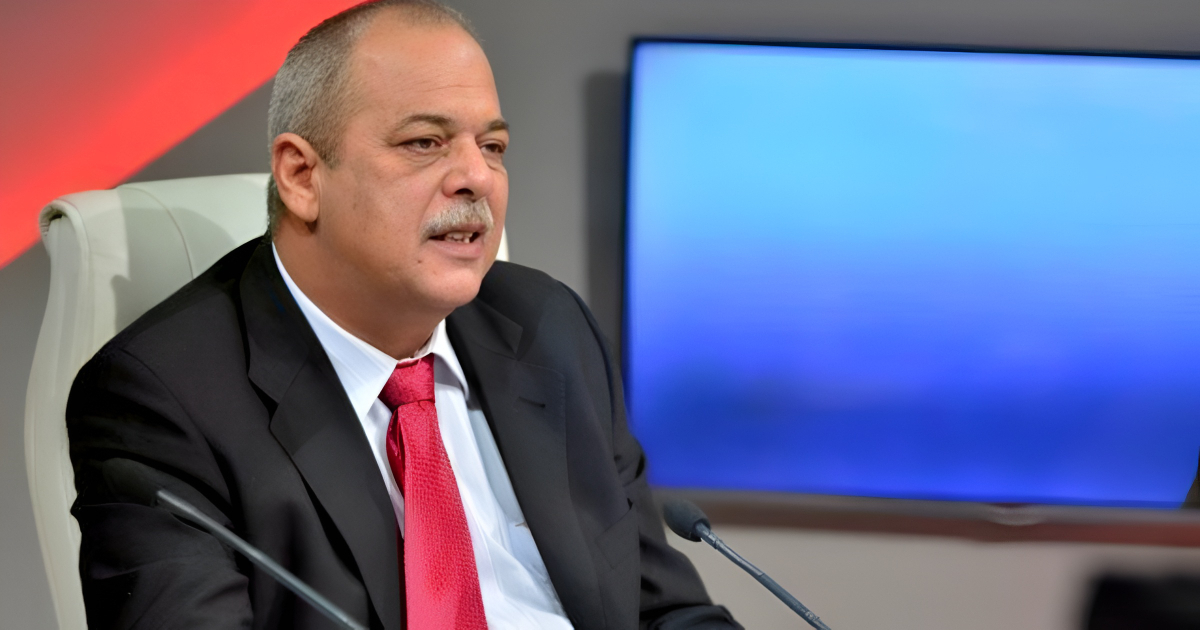
The Cuban Minister of Energy and Mines, Vicente de la O Levy, appeared on state television to justify the distribution of power outages across the country. He asserted that discrepancies between provinces and circuits are due to operational system failures rather than unequal treatment.
"There is no inequality, only errors," De la O Levy stated, as reported by TV Cubana on Wednesday amidst one of the most severe electrical crises Cuba has faced in recent years.
The minister also acknowledged the lack of any generation reserve in the country, bluntly stating, "we don't have any," without offering a timeline for a resolution.
As a rare positive note, he mentioned a reduction in outage duration from over 40 hours to less than 20 hours in Pinar del Río and Guantánamo, though he did not specify the timeframe of this improvement.
Current Energy Crisis Deepens
The minister's statements sharply contrast with the extensive energy collapse affecting the island. On Wednesday, EFE news agency reported a new record: 74% of the nation was simultaneously without power during peak demand hours.
The Electric Union forecasted a demand of 3,200 MW for that day, while only 1,070 MW were available, resulting in a deficit exceeding 2,130 MW.
Recurring Total Blackouts
In July alone, the National Electric System experienced at least five total disconnections. On July 6, a massive blackout left approximately 9.6 million people without electricity, and another total outage occurred on July 14, linked to the sudden shutdown of a thermoelectric plant.
De la O Levy's claim that the issues are mere "errors" rather than inequality contradicts documented data from several provinces. In Holguín, residential circuits received only three hours of service for every 39 or 40 hours of outages. In Santiago de Cuba, an electrical company executive admitted that "we might not even get two hours of service." Some areas in Matanzas endured up to 87 consecutive hours without electricity.
Government's Implicit Acknowledgment
The regime's leadership had implicitly recognized this differential treatment. In May, Prime Minister Manuel Marrero Cruz ordered a "better distribution" of blackouts in Havana, and in July, President Miguel Díaz-Canel called for "better organization" of outages during the crisis.
De la O Levy, who has held his position since October 2022, has frequently appeared in public to admit failures without any improvement in the situation.
Recurrent Admissions of Failure
In September 2024, he admitted the summer blackout reduction strategy had failed; in October 2025, he acknowledged the system was "on the brink of collapse"; and in May 2026, he confessed that Cuba had run out of diesel and fuel oil reserves.
In April of that year, the minister blamed the U.S. embargo for hindering repairs and access to technological supplies for thermoelectric plants.
A video broadcast by TV Cubana featured an on-screen caption summarizing the situation with a diminutive phrase: "THERE'S A TINY ENERGY RESERVE."
Understanding Cuba's Energy Crisis
What are the main causes of the power outages in Cuba?
The primary causes include operational failures in the energy system, lack of generation reserves, and the impact of the U.S. embargo, which hampers repairs and access to necessary technology.
How has the Cuban government responded to the energy crisis?
Government officials, including the Minister of Energy, have admitted failures but have yet to provide an effective solution. They have also acknowledged the need for better distribution and organization of power outages.
What impact have the power outages had on Cuban provinces?
Provinces like Holguín and Santiago de Cuba have experienced severe electricity shortages, with some areas receiving minimal hours of service compared to extended outages.