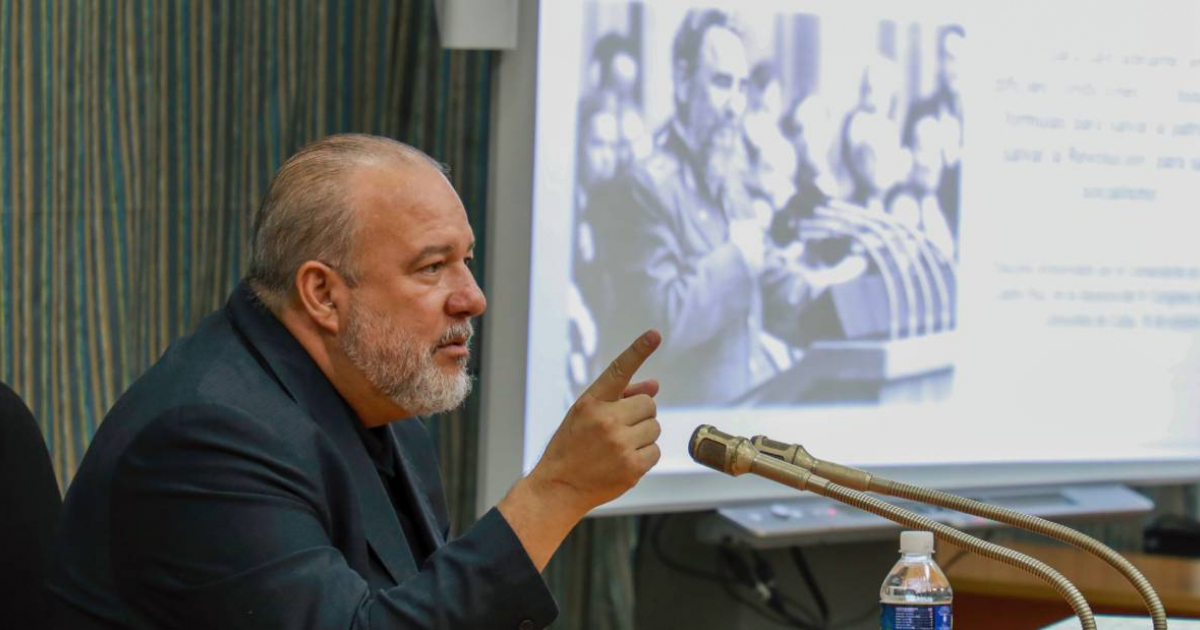
On Wednesday, Prime Minister Manuel Marrero Cruz addressed the National Assembly of People's Power, emphasizing that extended power outages remain the most pressing challenge facing Cuba. The session was convened to assess the progress of economic transformations set in motion just six weeks ago.
Marrero presented a review of the reform package approved during an extraordinary session on June 18, acknowledging that the electric crisis persists despite efforts to implement new measures.
Efforts in Renewable Energy
In the energy sector, the government leader reported the installation of 1,464 MW from renewable sources, accounting for 13.8% of the nation's electrical generation. Additionally, 4,292 photovoltaic systems have been installed in vital centers and residences.
Furthermore, over 11,000 solar systems have been allocated to homes of individuals with chronic illnesses, as well as medical professionals, educators, and scientists. The regulations for importing and marketing fuels by foreign companies have been made more flexible.
Current State of the Electrical Grid
The prime minister's admission comes amidst a backdrop of ongoing collapse: the National Electric System has experienced five total blackouts in 2026 alone. A record deficit of 2,341 MW was recorded on July 10, with power generation availability barely reaching 1,000 MW against a demand of 3,100 MW.
In Havana, power cuts averaged 15 hours daily, while in Matanzas, interruptions lasted up to 87 continuous hours.
Progress of Economic Reforms
Regarding the general progress of reforms, Marrero noted that of the 121 transformations planned for June and July, 110 have been approved, representing 90.9% of the total planned. Five others are advancing partially.
Among the most significant changes is the approval of a decree law regulating the socialist state enterprise, granting companies autonomy in setting their own wage systems, engaging in any lawful activity, and deciding on labor relationships. Marrero described this regulation as "the most significant transformation in work and salary organization in recent years."
Social and Economic Developments
The government also announced that the country now has over 15,000 micro, small, and medium-sized enterprises (MSMEs) and non-agricultural cooperatives, following the approval of all pending authorizations. Decree 160, which removes 46 prohibitions for the non-state sector and modifies 36 others, became effective this Tuesday.
On the social front, Marrero reported that profiling vulnerable individuals in provinces and municipalities identified more than 876,000 people in vulnerable situations. He announced the launch of a digital social assistance application through the Soberanía platform.
The prime minister also confirmed the approval of over 92,000 job reductions in the ministries of Public Health, Education, Culture, and Sports, primarily targeting vacant administrative positions. The remaining organizations will complete this process by September.
Marrero acknowledged that the transformation process was designed based on directives from Raúl Castro, agreements from the Party's Central Committee, and 165 out of 171 proposals from parliamentarians, indicating that strategic decisions remain concentrated at the highest levels of power.
Concluding his address, the prime minister warned that the immediate challenge is not to approve more measures but to ensure their effective implementation: "The implementation of the transformations enters its most important and difficult stage."
Frequently Asked Questions about Cuba's Power Outages and Reforms
What is the main issue causing concern in Cuba according to Prime Minister Marrero?
Prime Minister Marrero has identified prolonged power outages as the primary issue currently troubling Cuba.
What measures has Cuba taken to address its energy crisis?
Cuba has installed 1,464 MW from renewable sources, representing 13.8% of the nation's electricity generation, and has placed numerous solar systems in critical areas and homes.
How is the Cuban government addressing social vulnerabilities?
The government has identified over 876,000 individuals in vulnerable situations and launched a digital platform for social assistance applications called Soberanía.