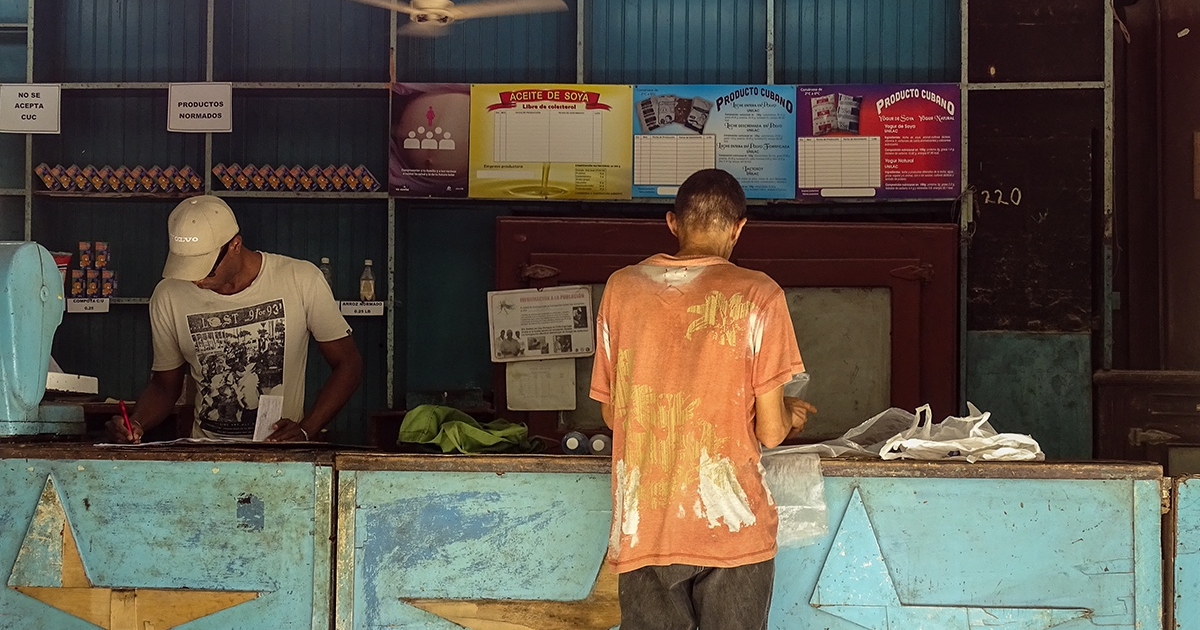
One of the great myths perpetuated by Cuban socialism is the notion that poverty is solely the result of the American embargo. However, historical evidence reveals that economic decline began well before the sanctions reached their current level. The root of the issue lies in a model that subjugated all economic activity to a singular aim: the preservation of political power.
The Erosion of Private Enterprise
In the early years following the 'Revolution,' private initiative vanished. Thousands of small business owners, farmers, industrialists, and independent professionals were absorbed by a state promising to better manage national wealth. What unfolded was quite the opposite.
When the government acts as the sole employer, investor, exporter, and importer, competition evaporates. Without competition, innovation ceases. Productivity then declines, and as productivity wanes, poverty becomes a system rather than an anomaly.
The Transformation of Wages and Dependence
In Cuba, wages ceased to reflect the value of work. Instead, they became a political allocation. Citizens no longer thrive through their own efforts but through the state's permission, transforming workers into subjects of the state.
The ration book is perhaps the clearest symbol of this relationship. Introduced as a temporary measure in 1962, it still exists over six decades later. What was meant to be an emergency solution turned into a mechanism for managing scarcity.
Financial and Agricultural Dependency
To this food dependency was added a deeper financial reliance. For years, the Cuban economy survived on substantial foreign subsidies—first from the Soviet Union, then from Venezuela. Instead of using these resources to modernize national production, the regime entrenched an unproductive model propped up by external aid.
Each time an international benefactor disappeared, the Cuban economy plunged into another crisis. This happened after the Soviet collapse and recurred with the end of Venezuelan subsidies. History shows that a system unable to sustain itself inevitably depends on others.
The Decline of Cuban Agriculture
Centralized planning also devastated Cuban agriculture. A country once known for exporting sugar, coffee, and various agricultural products now imports much of its food supply. The land did not stop producing due to infertility; it ceased because those working it lost the incentive to do so.
The Consequences of Economic Mismanagement
The economy stopped catering to citizens' needs, focusing solely on political apparatus priorities. This led to a society where food, medicine, transportation, housing, and even hope are in short supply.
Mass migration today is the most compelling evidence of economic failure. Millions of Cubans have left the island in search of what their country no longer provides: opportunities.
Ironically, the same system that condemned private property for decades now relies on remittances sent by those who emigrated to market economies. It is precisely the Cubans thriving under different economic models who support many families still on the island with their hard work.
The Broader Lesson for Latin America
The message for Latin America is clear: when the state consolidates all economic power, it inevitably consolidates political power too. When citizens depend on the government for employment, food, entrepreneurship, or prosperity, freedom becomes a privilege rather than a right.
The Cuban experience demonstrates that no nation achieves social justice by destroying economic freedom. Prosperity stems not from absolute control but from robust institutions, stable rules, legal security, private initiative, and a citizenry capable of shaping its own destiny without seeking permission from those in power.
The economy should lead to citizens' independence, never become a tool to ensure their obedience. This is perhaps one of the most vital lessons Cuba offers to all of Latin America today.
Understanding Cuba's Economic Challenges
What is the primary cause of Cuba's economic issues?
The primary cause is a model that prioritizes political power over economic vitality, eliminating competition and innovation.
How has Cuba's reliance on foreign subsidies affected its economy?
Instead of modernizing national production, Cuba relied on foreign aid, leading to economic crises whenever subsidies ended.
Why is the ration book still in use in Cuba?
Initially introduced as a temporary solution in 1962, the ration book became a permanent mechanism for managing scarcity.