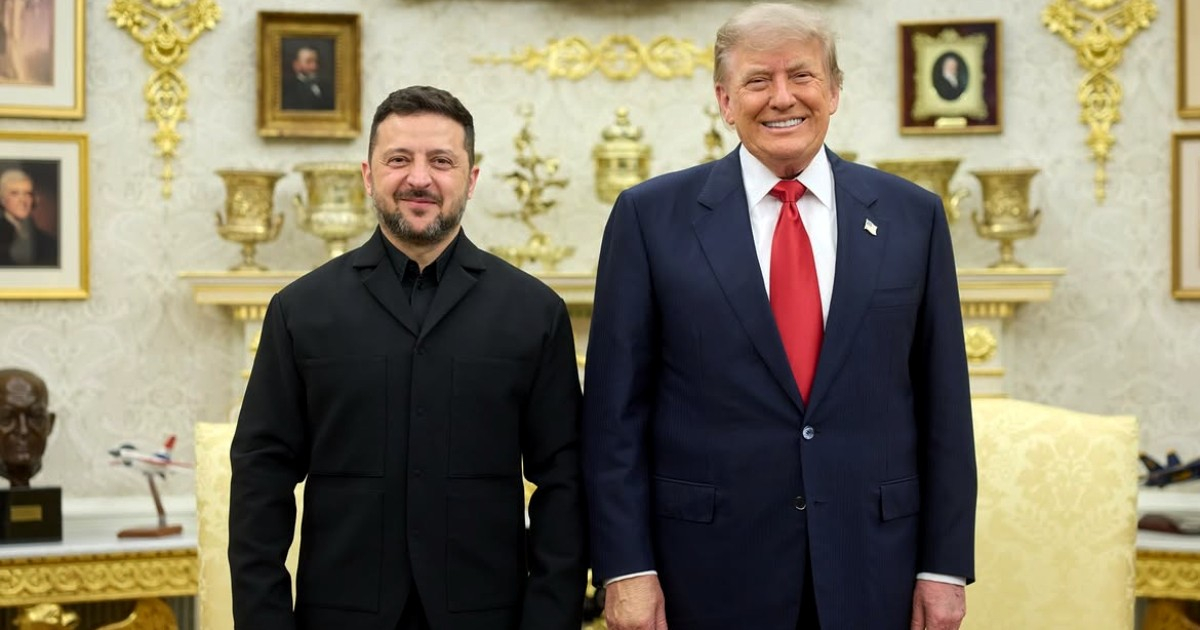
On Tuesday, Volodymyr Zelenski met with Donald Trump in the Oval Office for a diplomatic discussion centered on two key issues: the production licenses for Patriot interceptors and the pressing need to revive peace negotiations with Russia, as confirmed by the Ukrainian leader via social media.
The meeting commenced with Zelenski offering personal condolences to Trump over the passing of Senator Lindsey Graham, who died on July 12 due to an aortic dissection at the age of 71. "He was a true friend of Ukraine," Zelenski expressed, describing Graham as "a genuine champion of freedom." Graham, who had visited Ukraine ten times since the 2022 Russian invasion, was seen as Kiev's primary contact in the U.S. Senate.
Military Conversations and Defense Production
On the military front, the leaders discussed the Patriot interceptor manufacturing licenses, which Trump had announced on July 8 during the NATO summit in Ankara. The U.S. president had stated, "We will grant you a license to produce Patriots. We will guide you on the process." Experts cautioned that it might take between six months to a year merely for paperwork, with additional years needed for actual production.
Zelenski mentioned they also considered "other ideas that could be beneficial," though no further concrete commitments were made. Teams from both governments were tasked with coordinating the specifics.
"Revitalizing the diplomatic process is essential," emphasized Zelenski, especially as the Kremlin declared on July 16 that there was no immediate prospect for resuming formal peace talks.
Strategic Military Context
The backdrop to Zelenski's visit to Washington was particularly significant. On July 23, a Russian Su-57 fighter jet—the most advanced fifth-generation stealth aircraft valued at around $100 million per unit—crashed in the Odintsovo district, west of Moscow. Russia attributed the crash to a "technical failure" during a training flight, but Ukrainian sources and military analysts suggested a more unsettling scenario: Ukraine's Security Service (SBU) might have hacked into the Russian air defense network, causing a surface-to-air missile to down the aircraft.
Two days later, on July 25, Ukraine launched long-range attacks in the Caspian Sea against vessels involved in military cargo transport between Iran and Russia. Iran accused Kiev of the attack, reported one sailor dead, and warned of repercussions.
Colonel Hamish de Bretton-Gordon, in an analysis for The Telegraph, argued these incidents could represent a pivotal turning point: "If the Kremlin cannot ensure the security of its own capital or protect its most sophisticated aircraft from destruction in its own airspace, then the aura of invincibility that has upheld Putin's regime for a quarter of a century starts to fracture."
Changing Diplomatic Dynamics
The tense February 2025 meeting between Trump and Zelenski, which concluded without agreement and led to a pause in U.S. military aid, marked the lowest point in bilateral relations. However, this Tuesday's tone was markedly different. "I am grateful to the United States for its unwavering support," Zelenski expressed at the conclusion of the meeting.
De Bretton-Gordon compared the current situation to a historical event: "Napoleon's fate was sealed at Waterloo. Putin's Waterloo may not be in the eastern steppes of Ukraine but much closer to home, in Moscow itself."
Key Questions About the Su-57 Incident and U.S.-Ukraine Relations
What were the main topics discussed during Zelenski's visit to the White House?
The discussions focused on production licenses for Patriot interceptors and the need to restart peace negotiations with Russia.
Why is the crash of the Su-57 significant?
The crash of the Russian Su-57 is significant because it raises questions about Russia's military capabilities and security, especially if it was caused by Ukrainian interference.
How did Iran react to the attacks in the Caspian Sea?
Iran accused Ukraine of launching the attacks, reported a casualty, and warned of potential consequences.