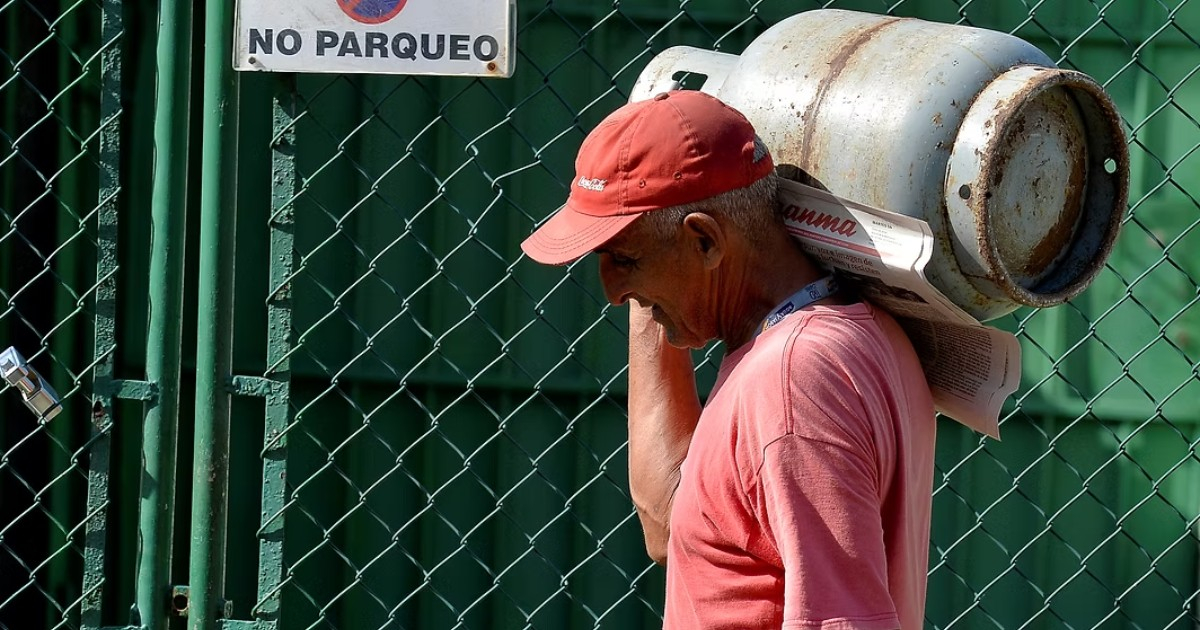
The Cuban government has substantially raised the official price of a 10-kilogram liquefied petroleum gas (LPG) cylinder to 350 Cuban pesos, marking a steep increase of nearly 64% from the 213 pesos cited by the independent Food Monitor Program (FMP).
This price hike, combined with the scarcity of this crucial fuel, is further deepening the hardships faced by Cuban families.
Outlined in Resolution 155/2026 and published in the Official Gazette, this increase comes at a time when millions of Cuban households are already spending nearly all their income just to survive.
Moreover, the sale of certain cylinders and accessories in dollars is set to intensify the trend of dollarizing essential goods.
The previous official price of the cylinder had been set at 225 Cuban pesos since March 2024, although FMP refers to a price of 213 pesos.
The historical trend shows a dramatic rise: from 110 pesos before 2021 to 180 pesos in March of that year, then 225 in 2024, and now 350, representing a tripling in just five years.
This fuel cost increase hits households that are already stretched to their limits. According to FMP's calculations in 2025, two adults living in Havana require approximately 41,735 Cuban pesos monthly to maintain even a minimally adequate diet.
And this estimate does not even include the costs of cooking or other basic services, which are often accessible only through the black market.
The reliability of LPG as a cooking option had waned long before this recent price increase.
Chronic disruptions in its distribution have forced thousands of families to rely on electricity for cooking, but frequent power outages, with blackouts lasting up to 20 and 24 hours daily in several provinces, have exacerbated the situation.
Faced with this dual hardship—lack of gas and electricity—many families have turned to charcoal and firewood, alternatives that are themselves hard to come by: a sack of charcoal can cost nearly half a monthly salary, with prices ranging from 3,200 to 5,000 pesos depending on the province, against an official average salary of 6,930 pesos.
In June, gas cylinders were being sold for 24 dollars on platforms like KMCero, and prices in the black market reached 50 dollars. By July, prices soared to 70,000 pesos in Sancti Spíritus, according to recent reports.
The broader food situation is dire. The FMP's 2025 National Food Security Survey, involving over 2,500 respondents across 16 provinces, revealed that one in three Cuban households had at least one member who went to bed hungry over the past year, worsening by 9.3 percentage points compared to 2024.
More than 60% of families have altered their diets and routines, with many eliminating one meal a day.
The dollarization of cylinders and accessories further excludes many. "For most families relying solely on state salaries or pensions paid in Cuban pesos, this represents a new access barrier," warns the observatory.
FMP concludes that "the rising cost of gas adds another link to a chain of expenses that makes something as fundamental as serving a hot meal increasingly difficult," in an economy where energy crises, inflation, and declining purchasing power simultaneously burden households that have no means to cope.
Understanding the Impact of Rising Cooking Costs in Cuba
Why has the price of LPG increased in Cuba?
The Cuban regime has raised the official price of LPG cylinders as part of a broader trend of increasing costs for essential goods, driven by economic pressures and the need to dollarize certain sectors.
How does this price hike affect Cuban families?
The increase exacerbates the financial struggles of Cuban households, which are already strained by high living costs and limited income, making it more difficult to afford basic cooking fuel.
What alternatives do families have for cooking fuel?
With unreliable LPG supply and frequent electricity outages, families often turn to charcoal and firewood, though these are also expensive and not easily accessible.