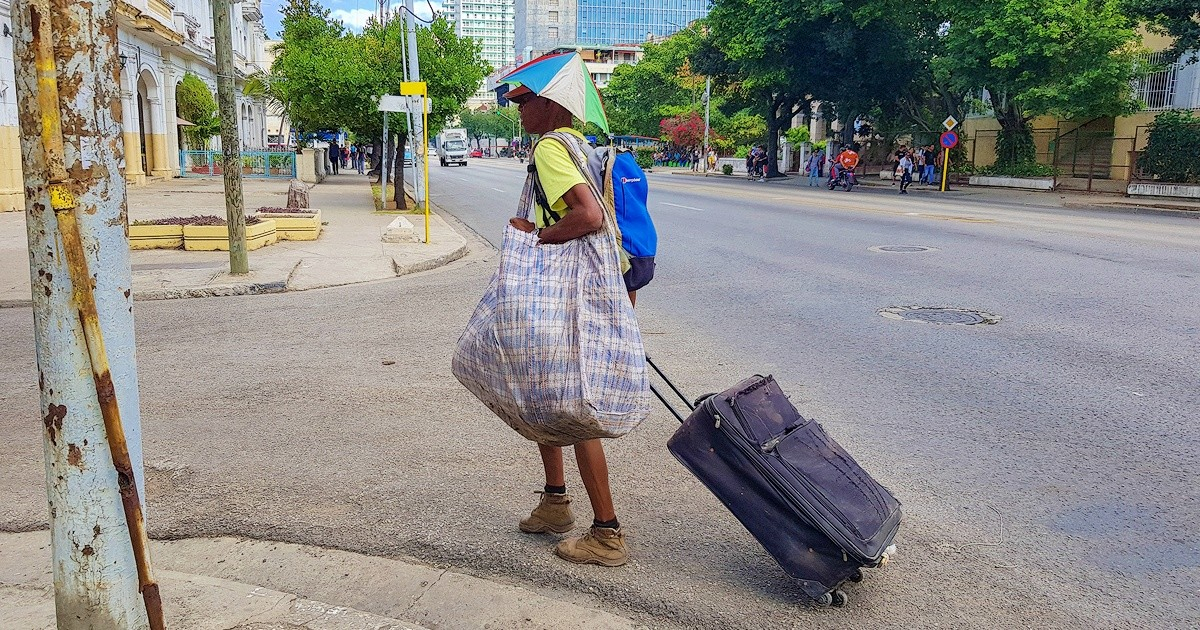
In the face of an unparalleled economic crisis, Cuba has announced a significant shift in its social welfare policy, aiming to concentrate state support on individuals deemed "in a state of vulnerability." This move comes at a time when the island's economic woes have drastically eroded purchasing power for a growing number of its citizens.
Details of this policy adjustment were shared by officials from the Ministry of Labor and Social Security (MTSS) during the state-run program "Cuadrando la Caja," with key points reported by Cubadebate.
Targeted Support for Those in Need
According to Vice Minister Ariel Fonseca Quezada, the focus must be on social transformations before economic ones to ensure the protection of individuals. He highlighted that the revamped model is designed to allocate public resources to those in most need.
Fonseca emphasized, "We must identify those requiring greater support and attention, those in a state of vulnerability." The official reiterated that social protection should reach those who truly need it, especially in a landscape of limited resources, where the state must prioritize those with the greatest needs.
Understanding Vulnerability in Today's Cuba
Fonseca clarified that the policy does not categorize individuals as inherently vulnerable but rather in a temporary state that could be alleviated through public policies. The intent is to help people transition out of this vulnerable situation.
This announcement arrives amidst an environment where economic vulnerability has become widespread, no longer confined to particular sectors. The cumulative effects of inflation following the unsuccessful Tarea Ordenamiento, real wage and pension devaluation, partial dollarization of commerce, food and medicine shortages, and frequent power outages have worsened living conditions for millions of Cubans.
From Universal Subsidies to Selective Aid
Transitioning from a universal subsidy model to one of selective aid, officials argue the new approach aims to achieve "equity" rather than "equalitarianism." This rationale has been used by the government to justify the gradual phasing out of universal subsidies in favor of targeted resource allocation.
Financial constraints have forced these changes. For decades, the regime touted its universal social welfare system as a hallmark achievement of the Revolution. However, the economic downturn, declining national production, and liquidity shortages have significantly hampered the government's ability to maintain this framework.
The diminishing role of the ration book, the expansion of hard-currency stores, and the shift of numerous products to the informal market have all increased the economic burden on Cuban families.
Challenges Highlighted by Experts
Economists caution that any targeting policy can only succeed with transparent criteria, adequate budgetary resources, and effective oversight mechanisms. Without these, there is a risk that families with genuine needs may be excluded from assistance due to administrative decisions or the state's financial incapacity.
Furthermore, defining a clear boundary between those who qualify for assistance and those who do not is challenging, given that many have seen their living standards decline in recent years. Economic hardship now stems from structural factors like inflation and scarcity, rather than just personal circumstances.
This policy shift implicitly acknowledges that the Cuban state can no longer uphold the level of social protection it once boasted as a primary achievement. While the government claims no one will be left unprotected, the practical implementation of this new system will be closely monitored by a population grappling with persistent inflation, shortages, and deteriorating public services.
FAQs on Cuba's New Social Welfare Policy
What is the new focus of Cuba's social welfare policy?
The new focus is to concentrate state support on individuals identified as being in a "state of vulnerability," ensuring that public resources are allocated to those who need them most.
How will the Cuban government determine who is in a state of vulnerability?
The government has not yet detailed the indicators or mechanisms that will be used to classify individuals as vulnerable, which remains a major question given the widespread economic hardship.
Why is Cuba moving away from universal subsidies?
Cuba is transitioning to selective aid due to financial constraints and aims to ensure equity by directing resources to those most in need rather than providing universal subsidies.