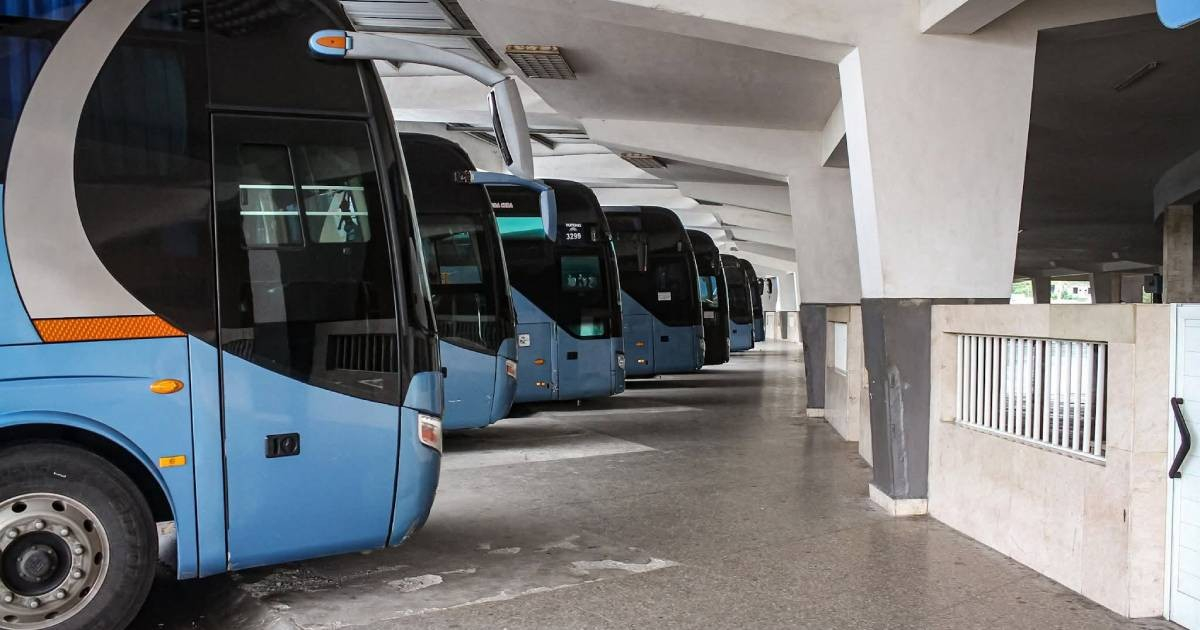
A fresh transportation option connecting Matanzas and Havana has been launched this Monday, but its fare is already stirring controversy. The microenterprise LCD Viajes has introduced a bus service priced at 3,000 Cuban pesos per trip, a rate that many perceive as unaffordable for the majority of the populace.
According to TV Yumurí, the service operates with a Yutong bus leased from the state-owned company Transmetro, under a collaboration scheme between state and microenterprise sectors promoted by the government.
This bus departs daily at 7:00 a.m. from the Matanzas Bus Terminal on Calzada General Betancourt, heading to Parque de la Fraternidad in Havana via Vía Blanca. Boarding begins half an hour prior and does not require reservations; passengers fill the seats on a first-come, first-serve basis until the bus reaches capacity.
The return journey leaves at 11:00 a.m. from Havana's Parque Central back to Matanzas.
Connecting Services for Colón Residents
For residents of Colón, the company has also established a service departing at 4:15 a.m. from Calle Mario Muñoz to connect with the main route.
Despite the introduction of a new alternative amid Cuba's transportation crisis, the fare price remains a hot topic.
According to data from the National Office of Statistics and Information (ONEI), the average monthly salary in Cuba reached 7,074 pesos in April 2026. This means that a single trip would consume roughly 43% of an average worker's monthly income.
For retirees, the impact is even greater.
"3,000 pesos. That’s half of my salary. And exactly what many retirees earn," commented a user on TV Yumurí's post.
Another user painted a more vivid picture: "The trip costs the entire monthly pension of any retiree."
A Costly Choice, Yet Cheaper Than Others
Despite the backlash, some users pointed out that the new service is still more affordable than other available options.
The so-called "private cars" can charge up to 4,000 pesos for the journey between Matanzas and Havana, while some travelers recalled that state-run transport sold tickets for up to 5,000 pesos this year due to limited capacity.
"It's a good option; the small cars charge 4,000," wrote one user, though she cautioned that arriving early is necessary to secure a seat.
Transportation Crisis in Cuba
The launch of this route comes amidst the severe deterioration of public transport in Cuba.
Since the start of 2026, Matanzas authorities have admitted that the provincial service has been nearly paralyzed due to fuel shortages. Nationally, state passenger transport has drastically reduced, and the frequency of interprovincial trips remains insufficient to meet demand.
In this context, the government has opted to lease state buses to microenterprises and private operators, a model under which LCD Viajes operates.
TV Yumurí noted that many Matanzas residents continue to flock to the Viaducto, a traditional departure point for informal transport to Havana, due to lack of awareness about the new route, encouraging its promotion so more people can benefit from it.
Nonetheless, a common concern emerged among comments: although the new service broadens mobility options, its price remains out of reach for many Cubans traveling for work, medical appointments, or essential errands.
FAQs about the Matanzas to Havana Private Bus Route
Why is the bus fare considered expensive?
The bus fare of 3,000 Cuban pesos is deemed expensive because it represents about 43% of the average monthly salary in Cuba, making it unaffordable for many, especially retirees who earn even less.
What alternatives do travelers have?
Travelers can opt for private cars which charge up to 4,000 pesos, or state transport that has even reached 5,000 pesos per trip due to limited availability.
How does LCD Viajes operate its service?
LCD Viajes operates by leasing a Yutong bus from the state company Transmetro, under a model that promotes collaboration between state and microenterprise sectors.