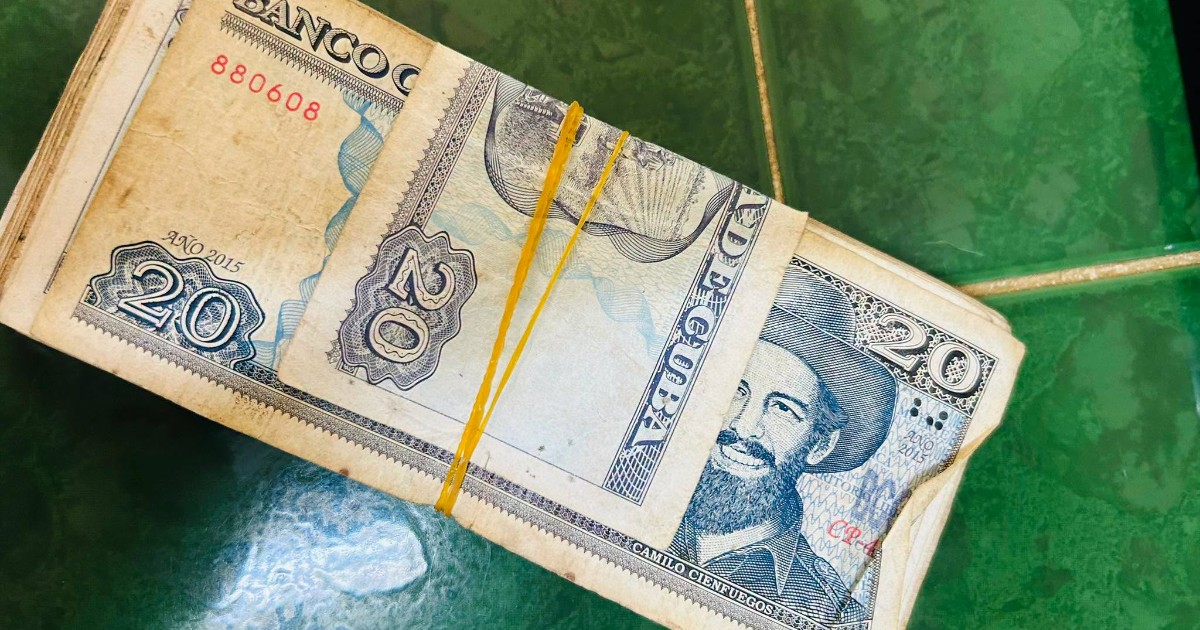
Yenney Caballero, an animal advocate based in San José de las Lajas, Mayabeque, took to Facebook to express her frustration over the refusal of the El Rodeo fairground to accept 20-peso Cuban bills and bank transfers for payment. This venue is where self-employed workers purchase their goods.
"I'm exhausted by the disrespect, lack of consideration, poor work ethic, and corruption rampant in this country," Caballero wrote. She vowed to continue using the money she has to buy food for herself and her animals, and she plans to file formal complaints if her payments keep being refused.
The activist highlighted a vicious cycle affecting many Cubans: those who sell U.S. dollars are paid with 20-peso bills, yet these same bills are not accepted where they need to buy food.
Economic Challenges in Cuban Markets
"When you buy American dollars, you're paid in 20-peso bills. You can't withdraw the needed amount from your bank card, and the microenterprise won't accept transfers, only up to 1,000 pesos in 20s," she elaborated.
According to Caballero, even the self-employed workers face the same issue at El Rodeo: "According to these workers, they can't buy anything with transfers or 20-peso bills when they get there."
Call for Accountability
Her complaint directly addresses those responsible at the El Rodeo fairground: "Those of you managing El Rodeo in San José de las Lajas, Mayabeque, who sell to self-employed workers, need to ease up on transfer restrictions and accept 20-peso bills."
Faced with the inability to access larger-denomination bills, Caballero was firm: "If 20-peso bills are no longer considered money, then remove them from circulation."
"The people are the ones suffering from all this; we need to eat," she stated, summarizing the plight of millions of Cubans caught between a dysfunctional banking system and businesses that operate outside legal boundaries.
She concluded with a warning that encapsulates the desperation of caring for animals without institutional support: "We and our own will not go without food."
Nationwide Monetary Issues
This issue is part of a growing problem across Cuba in 2025 and 2026, where more private businesses are rejecting lower-denomination bills, despite the Central Bank of Cuba recognizing them as legal tender with full liberating power.
Banks typically issue these bills when cash is withdrawn, but businesses refuse to accept them, effectively stripping the populace of their purchasing power.
Earlier this month, BANDEC in Ciego de Ávila demanded that microenterprises and self-employed workers stop rejecting five, ten, and 20-peso bills, labeling the practice illegal and warning of potential administrative penalties, including the revocation of licenses for repeated offenses.
Despite these warnings, reports of such rejections continue to surface across various provinces.
The introduction of new high-denomination bills—2,000 and 5,000 Cuban pesos—on April 1, 2026, paradoxically intensified the disdain merchants have for smaller bills, which previously circulated alongside the 1,000-peso bill as the highest denomination available.
Common Questions on Currency Acceptance in Cuba
Why are 20-peso bills being rejected in Cuba?
Many businesses in Cuba are refusing 20-peso bills due to a preference for larger denominations, despite these bills being legal tender. This issue is exacerbated by a dysfunctional banking system.
What actions are being taken against the rejection of 20-peso bills?
BANDEC has demanded that businesses stop rejecting small-denomination bills, warning of administrative penalties. However, reports of rejection persist across various provinces.
How is the introduction of new high-denomination bills affecting the situation?
The introduction of 2,000 and 5,000 peso bills has worsened the situation, as merchants now show even less interest in accepting smaller denominations, increasing the strain on customers.