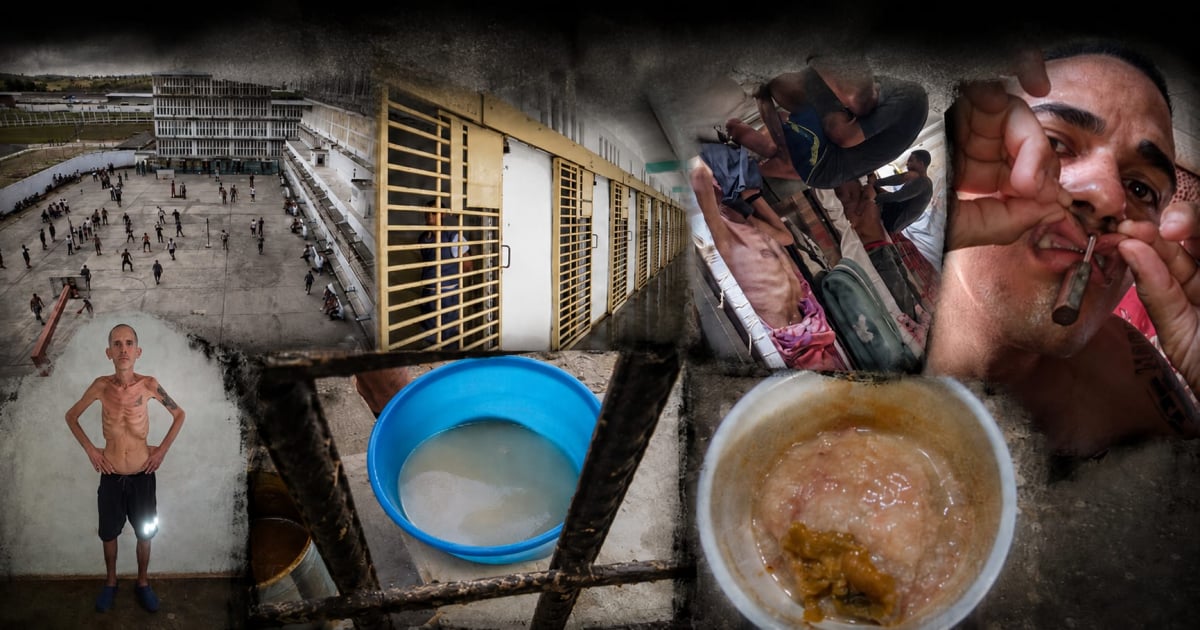
The Cuban prison system is a secretive and arbitrary network plagued by deep-seated corruption, where prisons operate as fiefdoms controlled by officials wielding significant power over the lives of inmates. Within these walls, prisoners face extreme hunger, malnutrition, unsanitary conditions, rampant diseases like tuberculosis and scabies, infestations of bedbugs and rodents, gastrointestinal illnesses, a severe lack of medication, and often inadequate medical care.
Violence is also pervasive, with physical and psychological torture, extended solitary confinement, sexual abuse, drug trafficking, and inmate-on-inmate violence either tolerated or encouraged by authorities, leading to deaths that go unpunished.
In this oppressive environment, those inmates who are resourceful and daring, and possess financial means, may procure various items. Common prisoners smuggle in marijuana, alcohol, food, and even arrange sexual encounters with female staff from the Ministry of the Interior and medical personnel. Within these oppressive confines, one might find a few inmates who appear robust, resembling bodybuilders, amidst thousands more who are emaciated as if they were prisoners from Auschwitz-Birkenau.
The Unique Plight of Political Prisoners
Not all political prisoners endure the same conditions. Their treatment hinges on a complex interplay of factors, including their public identity and reputation, their level of defiance, organizational abilities, family support, backing from opposition groups, the exile community, democratic nations, personal capabilities, and the prevailing political climate both domestically and internationally.
Prominent political prisoners, recognized internationally, who trigger outcries from governments, human rights organizations, and public figures, receive different treatment than those whose names are not widely known. Public visibility can offer some degree of protection by increasing the political cost of harming or killing them.
Resistance and Its Consequences
However, this protection is never absolute. A political prisoner could have widespread international support while maintaining the highest level of defiance within the prison. They may refuse to wear standard prison uniforms, ignore roll calls, reject formations, and use phone calls to expose the conditions inside, such as hunger, corruption, torture, and disease.
Such defiance can lead to severe repercussions, including beatings, isolation, threats, and deprivation of rights. Visits, correspondence, and phone calls might be cut off, food from family members confiscated, and violent guards or inmates used against them. The regime wages a relentless campaign to suppress their rebellious spirit, with external solidarity possibly preventing death but not torture.
When a defiant prisoner has a courageous family, active opposition, a mobilized exile community, and broad international support, their death may be avoided, though severe punishment continues. Without substantial support, the danger escalates, potentially leading to their physical and psychological destruction, starvation, or even murder.
The Crucial Role of Family Support
Family support is crucial. Even internationally recognized prisoners can be gradually isolated if they lack brave family members to expose abuses. A family that protests outside prisons, in the streets, or at Communist Party offices, engages with journalists, and rallies human rights organizations becomes the prisoner's first line of defense, complicating efforts to make them disappear within the system.
Prisoners who choose a less confrontational approach are not betraying their cause. Instead, they may retain their political beliefs while avoiding constant clashes with authorities to survive in a brutal environment. This strategy helps them avoid beatings, torture, isolation, loss of family-provided food, and physical or mental breakdown.
Survival Strategies and Political Considerations
Political prisoners with international recognition may receive some concessions from the prison system, such as more food, books, writing materials, phone calls, and visits, provided they do not instigate protests or turn the prison into another battleground. This does not imply collaboration; it is a survival strategy.
However, those lacking visibility, an active family, or external solidarity face a harsh reality. They may suffer hunger, theft, and abuse without the political police's concern, as they pose no significant political cost.
The intelligence and skills of a prisoner also play a role. Those who earn the respect of fellow inmates, form alliances, and connect with non-fanatical officials might clandestinely obtain or distribute food, medicine, information, and denunciations, despite isolation and surveillance. Yet, these abilities have limits, especially under constant watch.
Political timing affects treatment as well. Before significant visits or negotiations with foreign governments, the regime may temporarily reduce abuses. Conversely, when no concessions are expected, sadism, violence, and torture may intensify, reflecting the regime's fluctuating political interests.
Ultimately, understanding the Cuban prison system requires acknowledging its complexities and the varied experiences of political prisoners. Each individual's treatment depends on their identity, prison location, guards, behavior, family, and national and international support, as well as the regime's political objectives.
Critical Questions About Cuban Prisons
What are the conditions like in Cuban prisons?
Cuban prisons are characterized by extreme hunger, unsanitary conditions, rampant diseases, and a severe lack of medical care, along with widespread violence and corruption.
How does the treatment of political prisoners vary?
The treatment of political prisoners in Cuba varies based on their public visibility, level of defiance, support system, and the political interests of the regime at any given time.
How can family support impact a political prisoner's situation?
Family support is crucial, as it can provide a protective shield against the regime's attempts to isolate and silence the prisoner, making it harder for them to disappear within the system.