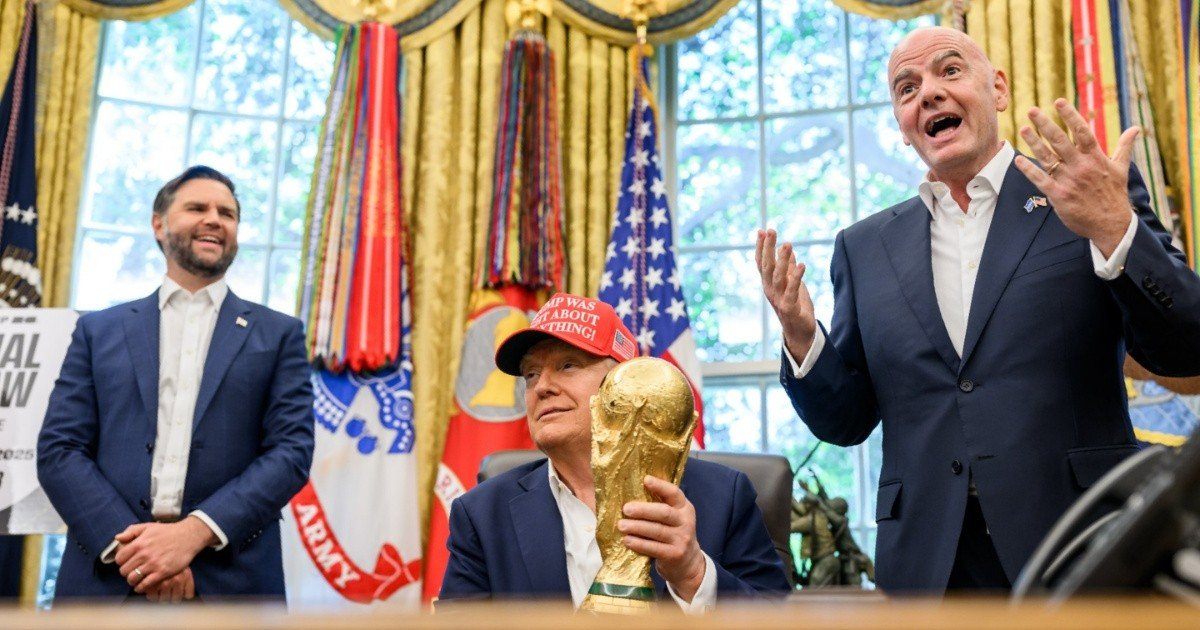
On Monday, FIFA President Gianni Infantino released a 900-word statement on his Instagram account and the organization's website, targeting critics of the 2026 World Cup. This statement came just a week after Spain claimed victory over Argentina in the final match.
Infantino's message, notably defensive, directly addressed journalists and commentators, lamenting, "I regret that your obsession with hate and criticism made you miss everything." He accused them of hiding "behind their pens and papers, behind their screens spreading hate and false rumors."
He portrayed the tournament as a source of "joy and unity," contrasting the enthusiasm of fans with the negativity of his detractors. "Every city was filled with fans from around the globe celebrating, while you were busy planting seeds of hate," Infantino stated.
Controversies and Criticisms
This statement follows a tournament marred by several high-profile controversies. The most notable was FIFA's decision to delay the suspension of American forward Folarin Balogun, who received a direct red card during the round of 16 against Bosnia and Herzegovina. This decision allowed him to play in the quarter-finals against Belgium, a move linked to a call from President Donald Trump to Infantino, which Trump publicly acknowledged.
Infantino commented on the incident by noting that "subsequent decisions to avoid sanctioning players in certain situations are routine," yet the disciplinary judge's written decision remains unpublished. UEFA accused FIFA of "crossing a red line," and Belgium lodged a formal protest.
Visa Issues and International Tensions
Another major controversy involved Iran, whose delegation faced U.S. visa denials, forcing the team to relocate their base from Tucson, Arizona, to Tijuana, Mexico. Infantino defended FIFA's handling of the situation: "Iran entered the United States without incidents or conflicts. While you spread hate, we worked tirelessly to unite two nations at war."
Regarding denied visas for fans, including renowned Congolese supporter Michel Nkuka Mboladinga, who had to watch the tournament from Mexico, Infantino argued that critics "focused on the few denied visas, overlooking the millions that were approved."
Ongoing Tension with the Media
The statement also ignored other widespread complaints during the tournament, such as ticket prices reaching $32,970 for prime seats at the final, or the initial ban on reusable water bottles in stadiums.
Infantino's message highlights the growing tension between him and the press. His press conference in Mexico City on June 10 marked the first full attendance by international media since March 2023. During a prior press event in Rwanda after his acclamation re-election, he even questioned journalists, "Why are you so mean to me?"
The statement concluded with a call for reflection directed at his critics and ended on a conciliatory note: "Much love to all."
Understanding FIFA's Challenges and Controversies
What were the main controversies during the 2026 World Cup?
The main controversies included the delayed suspension of Folarin Balogun, visa issues faced by the Iranian delegation, and high ticket prices as well as restrictions on reusable water bottles in stadiums.
How did Infantino respond to criticisms about the World Cup?
Infantino released a defensive statement criticizing journalists for spreading hate and false rumors, while emphasizing the joy and unity the tournament brought to fans worldwide.
What was the reaction to the U.S. visa issues for Iran's delegation?
The issues led to Iran relocating their operations to Mexico. Infantino defended FIFA's efforts, stating they worked to bring two countries at odds closer together, despite the criticism received.