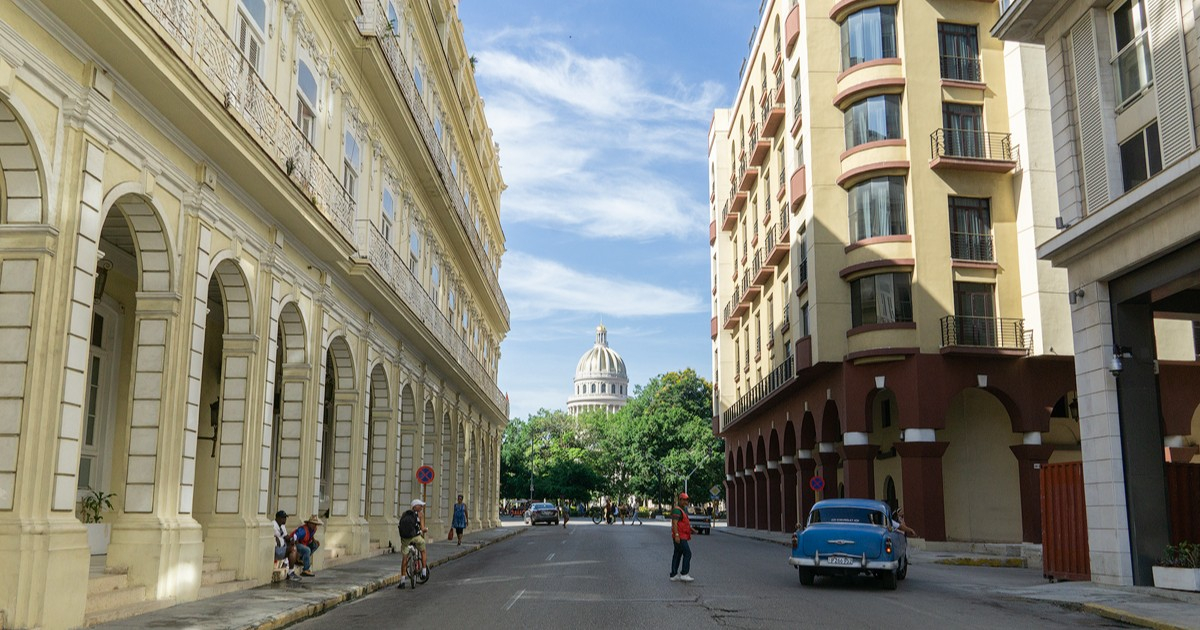
The New York Times released an in-depth report on Monday, following a visit by its correspondents to Havana. The article draws a striking conclusion about Cuba's paradoxical situation: "Without oil, Cuba manages to survive."
Rather than portraying a society that has overcome its crisis, the New York-based newspaper depicts one that has learned to operate — tenuously — outside the conventional electricity grid and fuel sources, relying on the resourcefulness of its citizens.
Journalist Jack Nicas and videographer Alex Pena spent a week in Havana to compile a report on the energy crisis, complemented by photographs from Lisette Poole González.
Innovative Solutions on the Streets of Havana
The report highlights how the streets of Cuba's capital are filled with electric tricycles and Chinese-made scooters, many of which are fitted with solar panels on their roofs to recharge without relying on the grid.
Beyond transportation, they describe an adaptation ecosystem that includes lithium batteries to keep televisions and fans running during power outages, makeshift generators that operate on natural gas, and solar panels installed on private rooftops.
This array of solutions is presented as a grassroots energy infrastructure that allows Cuban society to persist when the state fails to provide electricity or fuel.
An Unprecedented Energy Crisis
The situation discovered by the correspondents stems from a series of blows to Cuba's energy system, which has suffered from decades of neglect.
On January 29, 2026, President Donald Trump issued Executive Order 14380, declaring a national emergency concerning Cuba and imposing secondary tariffs on any country or entity supplying oil to the island, directly or indirectly.
In June 2026, the administration directly sanctioned CUPET, Cuba's state oil company, and explicitly excluded Cuba from a general license authorizing the trade of Iranian oil.
Cuba no longer has energy support from Venezuela or Mexico. The result has been catastrophic, with power outages exceeding 20 hours daily and at least five total collapses of the National Electrical System so far in 2026.
The regime has responded with measures such as establishing community solar centers in provinces like Guantánamo and testing the country's first battery energy storage system in El Cotorro, Havana.
However, the NYT's conclusion is not one of recovery but of endurance. The Cuban government has resolved nothing. The island's population survives not due to state solutions but through their own ingenuity.
Understanding Cuba's Energy Predicament
What are the main transportation solutions found in Havana?
The streets are predominantly filled with electric tricycles and Chinese-made scooters equipped with solar panels.
How has the U.S. affected Cuba's energy situation?
Executive actions by President Donald Trump in 2026 imposed tariffs and sanctions that severely impacted Cuba's oil supply.
What steps has the Cuban government taken to address the energy crisis?
The government has established community solar centers and tested battery energy storage systems, though these have not resolved the fundamental issues.