For years, the Cuban regime has relied heavily on massive public gatherings as a primary tool for political legitimization.
From the Revolution Square to May Day parades, the sight of large crowds has long symbolized strength for the regime.
However, a stark comparison of two events nearly 2,000 kilometers apart raises an uncomfortable question for the Palace of the Revolution.
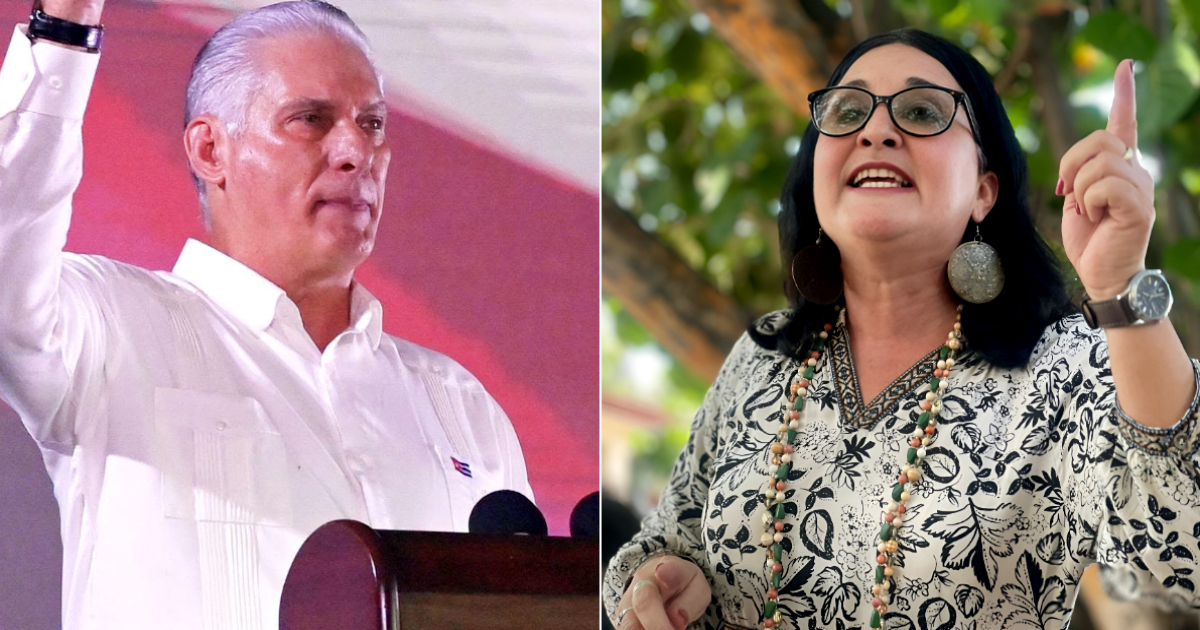
Has Cuban diplomat Johana Tablada de la Torre demonstrated more ability to garner support for Castroism from Mexico than Miguel Díaz-Canel within Cuba?
While it's unlikely that anyone within Cuba's Communist Party or the Castro family is considering replacing the appointed leader with an ambassador, the weekend's images certainly invite irony.
As Díaz-Canel was presiding over the central event for July 26 in Pinar del Río, meticulously organized with rows of chairs and a state-designed setup, thousands in Mexico marched in support of the Cuban regime. This march was organized by solidarity groups, political collectives, and social organizations, with participation from Havana's diplomatic representation.
Symbolic Contrast
Official numbers were conspicuously absent in both scenarios. Neither Mexican authorities nor organizers provided verifiable counts of march participants, and the Cuban regime did not disclose attendance figures for the revolutionary commemoration event.
Yet, the visuals spoke volumes. Videos from Paseo de la Reforma depicted a continuous, substantial procession. In contrast, photos from Pinar del Río's event suggested a turnout comparable to, if not smaller than, the Mexican mobilization.
This isn't a mathematical proof; it's a political comparison. And therein lies the challenge for Díaz-Canel.
Declining Influence
In recent years, Cuba's grand official gatherings have lost the powerful appeal they once had. May Day parades, marches in front of the former US Interests Section—and later the American embassy—or rallies following the July 11, 2021 protests have all shared a common trait: heavy reliance on the mobilization of state workers, students, and official organizations.
These events are typically organized at dawn to avoid the heat, workplaces are instructed to ensure attendance, and official cameras often use tight shots that obscure the real size of the crowd.
Additionally, the figures released by state media frequently spark skepticism among numerous observers and independent outlets.
Johana Tablada's Rising Influence
In this context, the contrast with Mexico on July 26 gains unexpected symbolic significance. Ironically, the most powerful image of regime support over the weekend emerged not from Cuba, but from abroad.
Enter the dynamic diplomat of the regime, Johana Tablada de la Torre. As Cuba's ambassador in Mexico, she has become one of the most visible figures in revolutionary diplomacy.
Unlike the tearful, bureaucratic style of Foreign Minister Bruno Rodríguez Parrilla, the deputy chief of mission in Mexico has crafted a more combative persona. She frequently engages in public debates, counters critics on social media, and vigorously defends Havana's official narrative.
It's no coincidence that her name is increasingly associated with international solidarity campaigns for Cuba. Nor that she is one of the regime's most media-present officials.
If political success were solely measured by the ability to generate impactful photographs, this weekend's events might humorously prompt a review of files in the Communist Party's Cadre Commission.
While Díaz-Canel struggles to project an image of leadership bolstered by island-wide support, the ambassador managed to shift the media focus to Mexico.
It's unlikely 'El Cangrejo' will suggest Tablada de la Torre for the presidential office due to her role in facilitating a march down Paseo de la Reforma. However, the comparisons are inescapable. And few things unsettle the Castro family—who have made image control a state matter—more than realizing that the most compelling political photograph of their hallmark anniversary wasn't taken in Cuba.
Tablada de la Torre has just added a peculiar "achievement" to her resume: for one day, she ensured that images of support for the regime outside the island rivaled those of the primary political event organized by Díaz-Canel's government. For a system obsessed with crowds, this is an irony that's hard to overlook.
Understanding the Political Landscape in Cuba
What is the significance of the July 26th event in Cuba?
The July 26th event marks the anniversary of the 1953 assault on the Moncada Barracks, a pivotal moment in the Cuban Revolution. It's celebrated as a national holiday, symbolizing revolutionary ideals.
Why is Johana Tablada's role significant in Cuban diplomacy?
Johana Tablada is notable for her active and visible presence in defending Cuba's official narrative internationally. Her ability to engage in public discourse and organize events like the march in Mexico highlights her influence within Cuban diplomacy.
How do public gatherings in Cuba serve the regime?
Mass gatherings in Cuba are used by the regime as a tool for political legitimization, showcasing apparent widespread support and unity among the populace. These events are often meticulously organized by the state to project strength and solidarity.