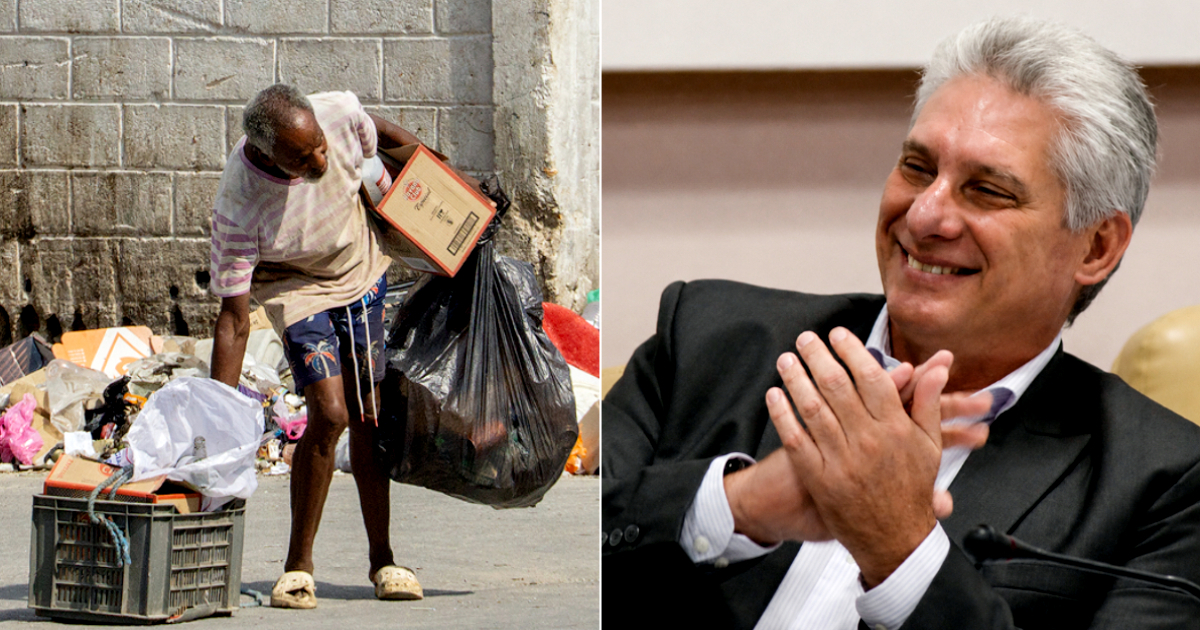
During the central event for July 26th, Cuban leader Miguel Díaz-Canel's remarks about the nation's "inventiveness, creativity, and joy" in response to "suffocation" sparked a wave of reactions among CiberCuba's Facebook followers.
Instead of resonating with his message, most comments used irony to highlight the stark contrast between the official rhetoric and the daily struggles endured by millions of Cubans.
One user sarcastically wrote, "Yay, I'm so happy without power, without water... yay, what joy," while another succinctly captured the sentiment with a question: "What joy?"
The Reality of Blackouts
Frequent power outages were a recurring topic. "Oh yes, we have tremendous joy. And even more when we're in a blackout," mocked one reader. Another commented, "Here I am, happy with life. The 26th passed and with it the electricity... Nothing, here resisting creatively."
Cynicism Toward 'Creativity'
Many users also mocked the leader's emphasis on "creativity" as a solution to the crisis. "Pinar, enjoy creativity with a side of happiness," one person wrote. Another added, "What joy, what creativity," while a third summarized, "That's a joke."
Utopia and Its Ironies
Díaz-Canel's reference to "utopia," quoting Uruguayan writer Eduardo Galeano, was also ridiculed. "Utopia gave us much joy," commented one reader with laughing emojis. Another user quipped, "When I want to laugh, joy takes ten steps toward the horizon," alluding to the well-known metaphor the leader used.
Some messages directly questioned the designated leader's understanding of "joy" amidst the country's crisis. "Does he know what joy means?" one user asked. Another commenter went further: "Here, the only feelings people have are pain and despair. You have joy because you lack nothing."
Pinar del Río in Focus
The situation in Pinar del Río, where the official event was held, was frequently mentioned in responses. "Water in Pinar del Río is a utopia," wrote one reader. Another recalled that the province is "possibly one of the darkest in Cuba," referring to the prolonged power cuts.
Even the image of attendees at the event was used by some commentators to question the official speech. "Despite their shouting, joy is not visible," observed one user. Another added, "The young woman shows a tremendous face of joy because when she gets home, it'll be lit by endless blackouts."
While there were a few humorous or skeptical comments, the dominant tone was one of sarcasm and rejection. Expressions like "How funny," "I'm bursting with the joy I have," "Dark humor," or "Joy... really?" were repeated throughout the conversation.
The reactions reflect the disconnect many Cubans feel between the official discourse and a reality marked by economic decline, inflation, food shortages, lack of basic services, and ongoing blackouts affecting much of the country.
Díaz-Canel's attempt to celebrate the resilience of Cubans ultimately became, at least among CiberCuba readers, an occasion for a flood of ironic responses questioning that optimistic view amidst the national tragedy.
Understanding Cuban Reactions to Government Rhetoric
What was the main reaction of Cubans to Díaz-Canel's speech?
The main reaction was one of sarcasm and irony, as many Cubans found the official message to be disconnected from their everyday hardships.
Why did Cubans find the speech ironic?
Cubans found the speech ironic because it spoke of joy and creativity amidst severe economic challenges, including power outages and shortages of basic needs.
How did users respond to the mention of 'utopia'?
Users ridiculed the mention of 'utopia', using it to sarcastically comment on the lack of basic services and the grim reality faced by many in Cuba.