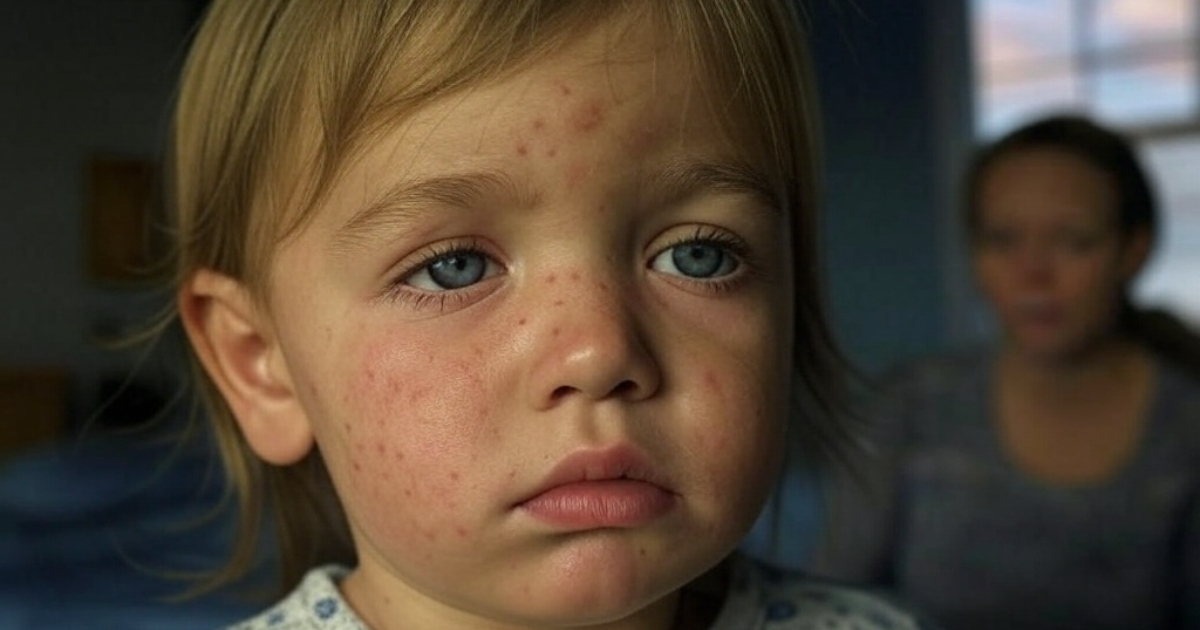
The Centers for Disease Control and Prevention (CDC) disclosed that by 2026, the number of measles cases in the United States had already surpassed the total reported for the entire year of 2025, with five months still remaining. The count reached 2,318 confirmed cases, compared to 2,289 the previous year, marking 2026 as the most severe year for measles since 1991.
Published by the CDC on Friday, July 24, the data highlights large outbreaks in South Carolina, Utah, and Arizona, alongside numerous smaller clusters across 45 jurisdictions nationwide.
South Carolina's Alarming Outbreak
South Carolina emerged as the most severely impacted state, with a significant outbreak beginning in Spartanburg County in October 2025. This outbreak amassed 997 confirmed cases before it was declared over on April 26, 2026, making it the largest state outbreak in 35 years. Of these cases, 932 involved unvaccinated individuals.
Utah's Ongoing Struggle
Utah has faced an ongoing battle against measles for over a year, with more than 700 individuals infected across 22 of its 29 counties. State epidemiologist Dr. Leisha Nolen cautioned that the actual outbreak along the Utah-Arizona border might be three to four times larger than the confirmed cases, based on mathematical modeling and genetic analysis.
Florida's Dramatic Increase
Florida is also among the hardest-hit states, reporting 141 cases in 2026 compared to just eight in 2025—a nearly 18-fold increase, ranking it as the fifth most affected state nationwide. The outbreak's epicenter was Ave Maria University in Collier County.
Vaccination Rates and Public Health Concerns
A structural issue contributing to the spike in cases is the decline in MMR (measles, mumps, rubella) vaccination coverage among preschool children, which dropped from 95.2% in the 2019-2020 school year to 92.5% in 2024-2025. This left approximately 286,000 children vulnerable, according to the CDC. In Florida, this figure fell even lower to 88.1%.
In 2026, 93% of cases were among unvaccinated persons or those with unknown vaccination status, mirroring the previous year's pattern. Experts warn that official figures likely underestimate the situation. Dr. Varun Shetty, chief epidemiologist of Texas, noted that "what we can count and report is almost always an underestimation of what actually happened, because it relies on people being willing to get tested and share information with healthcare providers."
Clinical Severity and Future Outlook
While 2026 has seen 151 hospitalizations, there have been no fatalities, presenting a less deadly scenario than 2025, when three individuals—two children in Texas and an adult in New Mexico—died, all unvaccinated. Dr. Mark Roberts, former director of the Public Health Dynamics Laboratory at the University of Pittsburgh, used an analogy to describe the collective risk of not vaccinating: "Not vaccinating your child is like saying: I don't want my car to have brakes. Because it's other people you can hit. It's not just you in your car. It's other people."
In November 2026, the Pan American Health Organization will formally review whether the United States and Mexico have lost their measles-free status, a certification the U.S. has held since 2000, now facing its most significant threat in over two decades.
Understanding the Measles Outbreak in the U.S.
Why has there been a significant increase in measles cases in the U.S. in 2026?
The significant rise in measles cases is primarily due to a decline in vaccination rates, which has left many individuals, especially children, unprotected against the virus. Large outbreaks in several states have also contributed to the surge in cases.
Which states have been most affected by the measles outbreak?
South Carolina, Utah, Arizona, and Florida have been the most affected states by the measles outbreak in 2026, with significant numbers of confirmed cases reported.
What are the potential consequences of declining vaccination rates?
Declining vaccination rates can lead to increased vulnerability to preventable diseases like measles, resulting in outbreaks, increased healthcare costs, and the potential loss of measles-free status for the country.