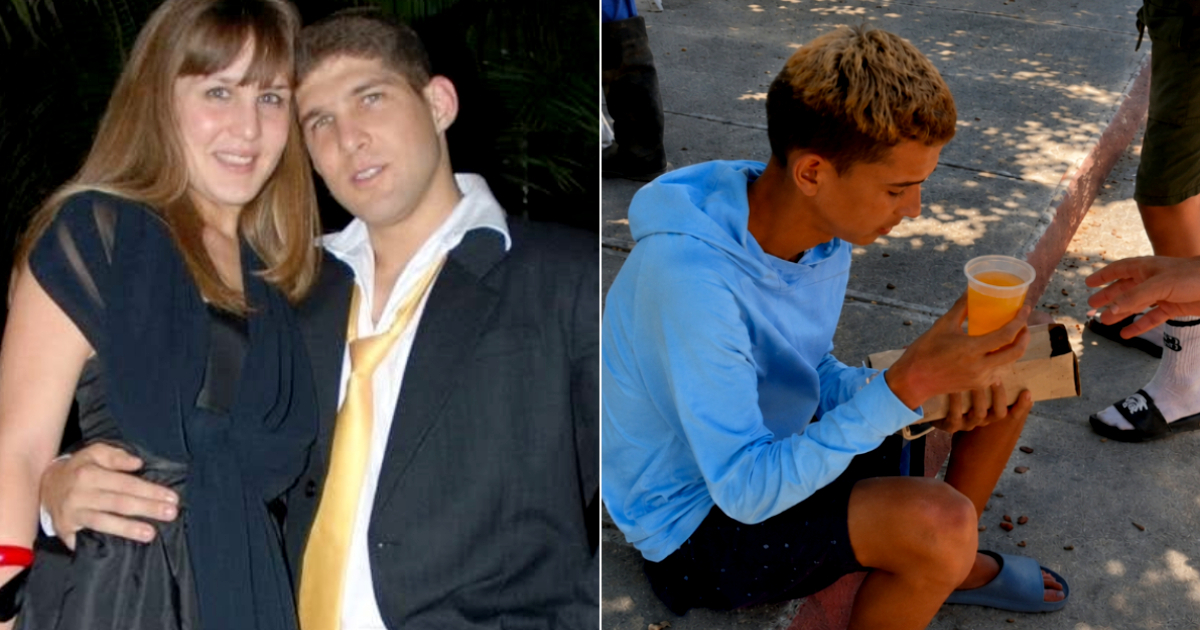
Some images capture the moral state of a nation more effectively than any statistic could.
One such image shows a young boy receiving a food donation and saying, with natural simplicity, "I'm going to save it for my grandparents." His immediate thought is not of himself but of his elderly family members, who likely suffer from even greater hunger.
In stark contrast, we see Raúl Guillermo Rodríguez Castro, known as "El Cangrejo," the grandson of Raúl Castro, discussing his experiences with the Yankees, Paris, foie gras, the luxury of Moscow, Rolex watches, Hermès clothing, and private jet travel.
When questioned about the gap between his lifestyle and that of the rest of the nation, he responds, "It pains me that many people cannot live as I do."
These two scenes encapsulate the tragedy of contemporary Cuba.
The issue extends beyond poverty and inequality. The true obscenity lies in the fact that both realities are not random but are instead the result of the same political system.
The System Behind the Inequity
The child saves food because countless Cuban families rely on donations to survive. His grandparents symbolize a generation that, after a lifetime of labor, endures on pensions that fail to provide a dignified standard of living.
Meanwhile, those who have wielded power for decades indulge in privileges inaccessible to the broader population.
The Moral Disconnect
The immorality is not simply in the existence of a privileged elite—every society has its inequalities. What is morally intolerable is that this elite has built its comfort from a system that, for over sixty years, has promised equality, social justice, and the eradication of privilege.
The disparity becomes even more disconcerting when the regime attempts to present Rodríguez Castro as a valid interlocutor for discussions about Cuba's future with the United States.
Credentials of Power
El Cangrejo holds no elected position. He was not appointed through any public process and is accountable to no representative institution. His sole political credential is his family connection to those who have concentrated power for over six decades.
Yet he emerges as a potential bridge between Havana and Washington, even as millions of Cubans lack a voice in shaping their own country's future.
This is perhaps the most telling image of the Cuban system: power is legitimized not by merit, democratic representation, or popular will, but by proximity to those who have long held it.
A Nation Divided
It's hard to imagine a more profound contradiction with the official rhetoric that for decades condemned family oligarchies, privileged castes, and the hereditary transmission of power.
The stories of the young boy and El Cangrejo are not separate tales; they are two sides of the same country seen from opposing extremes.
While a child learns too early that sharing hunger is also a form of love, the ruling elite talks of foie gras, luxury watches, and grand world capitals as if real Cuba exists in a parallel universe.
Perhaps the most devastating fact is that the issue is no longer just that some leaders live better than the rest. The problem is that they have lost touch with how the rest live.
When a leader demands sacrifice from a position of privilege, speaks of resilience while others queue for bread, and legitimizes as interlocutors those who embody the system's greatest privileges, any moral authority to invoke equality or social justice evaporates.
Cuba's tragedy is not only that there is a privileged caste. It is that this caste continues to pretend to speak for a people whose reality they seem to have long ceased to recognize.
Understanding Cuba's Social and Political Divide
What are the main differences highlighted between the Cuban elite and the general population?
The article contrasts the lavish lifestyle of the Cuban elite with the struggles of the general population, emphasizing the profound inequalities in wealth and opportunity within the same political system.
How does the Cuban system contribute to these inequalities?
The article suggests that the Cuban political system perpetuates these inequalities by maintaining a privileged elite, while the rest of the population struggles with poverty and limited access to resources.
Why is the role of Raúl Guillermo Rodríguez Castro controversial?
Rodríguez Castro's role is controversial because he holds no official position yet is presented as a potential intermediary between Cuba and the United States, despite having no democratic mandate or public accountability.