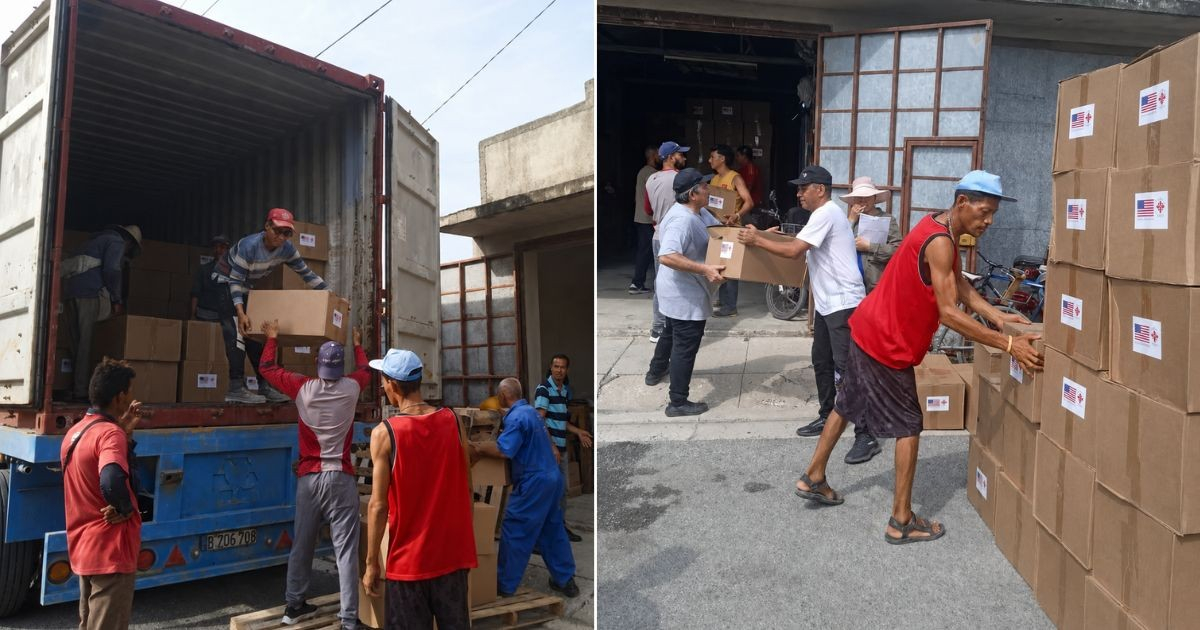
Caritas Cuba is advancing into the second phase of its humanitarian aid distribution for those impacted by Hurricane Melissa in eastern Cuba, while laying the groundwork for a third stage that will expand across the entire island.
The Office of Communications of the Diocese of Holguín provided this update, outlining the ongoing operations and future plans set for 2027.
In the initial phase of the effort, four dioceses in eastern Cuba completed a program valued at $3 million, funded by the United States government, to help those affected by Melissa. Now, they are implementing a second phase with an additional $6 million.
Recently in the Diocese of Holguín, resources were delivered to 1,400 families, though 2,100 families are still awaiting assistance. This process is expected to continue until December.
Current Distribution and Future Plans
Aid distribution is now focused on Las Tunas, Puerto Padre, and nearby communities. Additionally, efforts are underway in the Vicariate Center, with Banes serving as a hub, through parishes managed by the Augustinian Recollect Friars.
The program addresses the devastation caused by Hurricane Melissa in October 2025. The United Nations estimated that approximately 2.2 million people were severely affected, with around 78,700 hectares of crops destroyed.
A later assessment reported 76,689 homes impacted, including 4,743 total collapses, based on official data collected by the Pan American Health Organization.
Nationwide Aid Effort
A third phase set for January 2027 aims to extend the aid nationwide. According to the Diocese's statement, this phase will begin in eastern Cuba but will eventually cover the entire island, starting with the Archdiocese of Havana.
This new stage ties into a $100 million package from the United States intended to provide food and hygiene products to vulnerable Cuban families. Of this, Caritas Cuba will manage $60 million with the assistance of Catholic Relief Services, while other organizations will handle the remaining $40 million.
The national program had a preliminary shipment on July 21, when a plane departed Miami carrying 18 tons of food, hygiene items, and other supplies. This shipment was received the next day at José Martí International Airport and is set to benefit 700 families in the Archdiocese of Havana.
U.S. Undersecretary of State Jeremy Lewin noted that the full package could potentially assist around 196,000 families throughout Cuba.
Determining Aid Recipients
Caritas volunteer teams and parish groups are responsible for identifying aid recipients. According to the Catholic organization, home visits prioritize seniors living alone, pregnant or nursing women, individuals with disabilities or those bedridden, and families with children under five years old facing risky situations.
Each aid package includes staples like rice, beans, oil, sugar, pasta, canned fish, hygiene products, water purification tablets, storage containers, and a rechargeable lamp.
Caritas acknowledged the limitations, stating, "We are fully aware that we cannot reach everyone," emphasizing the focus on homes experiencing the greatest vulnerability.
FAQ: Caritas Cuba's Nationwide Aid Effort
What is the focus of Caritas Cuba's aid effort?
Caritas Cuba is focusing on delivering humanitarian aid to those affected by Hurricane Melissa in eastern Cuba, with plans to extend aid nationwide. Priority is given to the most vulnerable populations, including the elderly, pregnant women, and families with young children.
How is the aid funded and distributed?
The aid is funded by a $100 million package from the United States, with Caritas Cuba managing $60 million of it. Distribution is carried out through local parishes and volunteers, ensuring that aid reaches those in dire need.