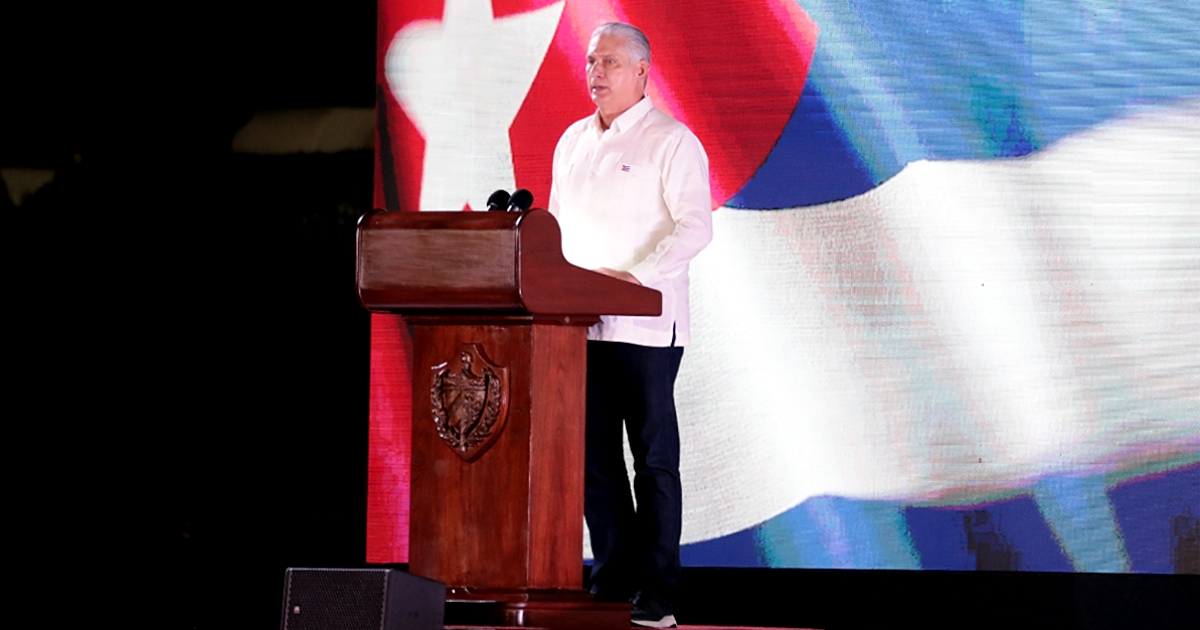
In a bold address on July 26, Miguel Díaz-Canel stood firm against Washington's pressures, emphasizing Cuba's sovereignty in the face of U.S. demands.
"Our economic, political, and social decisions are ours alone," he declared, directly countering the Trump administration's repeated calls for Cuba to undertake structural reforms to escape its enduring crisis.
This assertion comes amid heightened tension between Havana and Washington. Since Donald Trump returned to the White House and appointed Marco Rubio as Secretary of State, U.S. policy towards Cuba has revolved around a persistent notion: Cuba's issues are not merely economic but deeply political, and reforms will remain unattainable as long as power remains unchanged.
U.S. Criticism Intensifies
Marco Rubio has been particularly vocal in his critique, branding Cuba's leadership as "economically incompetent." In late April, Rubio stated, "Things can improve in Cuba with serious economic reforms, but not under the current leadership. They are economically incompetent," encapsulating Washington's stance on Cuba's future.
Earlier, he had remarked, "Cuba's economy cannot change unless its government system changes," dismissing the notion that administrative tweaks or new economic policies could reverse the country's deterioration.
Rubio also publicly dismissed Havana's announced reforms as inadequate. "The bottom line is their economy doesn't work. It's a dysfunctional economy," he asserted from Washington, arguing that Cuba's model had long exhausted its capacity to sustain itself.
Trump's Pressure Campaign
Donald Trump echoed these sentiments, calling Cuba a "failed state" in May, which "only moves in one direction: downward," while his administration heightened economic pressure through new sanctions targeting the state apparatus and military conglomerate GAESA.
While Trump has left the door open for dialogue with Havana, Washington has stipulated that any progress hinges on much deeper changes than those proposed by the Cuban regime.
Rubio has consistently reiterated the U.S. position: economic adjustments alone are insufficient; the issue lies within the political system and its leaders.
A Direct Political Response
In this context, Díaz-Canel's assertion that "our economic, political, and social decisions are ours alone" carries undeniable political weight. More than a mere assertion of national sovereignty, his words seem to directly address Washington's narrative that Cuba requires a far-reaching transformation beyond the 176 Economic and Social Transformations the regime claims to be ready to implement.
However, many economists warn that these measures leave the Communist Party's political monopoly intact and fail to introduce institutional changes necessary for legal certainty, genuine competition, or economic independence.
An Unbridgeable Divide
The chasm between the two narratives seems insurmountable. While Díaz-Canel asserts that Cuba's path can only be determined in Havana and rebuffs any foreign interference, the Trump administration argues that the current leadership has repeatedly proven incapable of lifting the nation from its crisis.
Rubio has even gone so far as to say that Cuba faces two possible outcomes: exacerbating the crisis to the point of systemic collapse or recovery through profound reforms deemed impossible under the present leadership.
In this scenario, Díaz-Canel's remark transcends the commemorative July 26 speech. It serves as a political retort to Washington's ongoing message: Cuba's crisis will not be resolved solely by new economic measures but requires structural changes in the power system.
By reaffirming that decisions "are ours alone," the leader appointed by Raúl Castro makes it clear that the regime is unwilling to accept the conditions set by the United States. Rather than reversing an escalating economic and social crisis, the stance of the "handpicked" leader seems poised to deepen the confrontation with a U.S. administration that deems Cuba's political and economic model exhausted.
Understanding the Cuba-U.S. Political Standoff
What did Díaz-Canel emphasize in his July 26 speech?
Díaz-Canel emphasized Cuba's sovereignty by asserting that the country's economic, political, and social decisions are exclusively theirs.
How has the U.S. responded to Cuba's political stance?
The U.S. has maintained that Cuba's issues are not just economic but political, urging for structural reforms and dismissing the regime's announced changes as insufficient.
What are the implications of the ongoing U.S.-Cuba tensions?
The tensions suggest a deepening confrontation, with the U.S. asserting that meaningful change in Cuba requires a transformation in its political leadership and system.