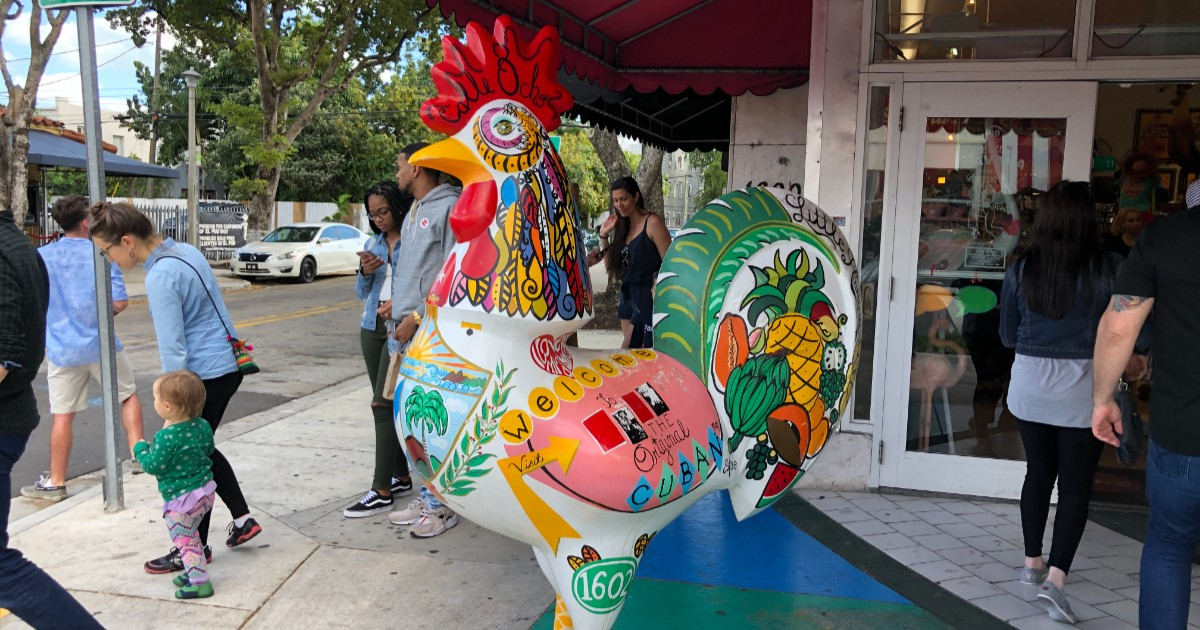
South Florida is witnessing a profound demographic shift, transforming the area into one of the most diverse regions in the United States. Historically dominated by Cuban influence, this vibrant locale now hosts a multitude of expanding Latin American communities, as detailed in a recent analysis by Telemundo 51.
The counties of Miami-Dade and Broward today embody a complex tapestry that extends beyond their Caribbean origins. Miami-Dade boasts a population of 2.70 million, with 1.86 million—or 68.7%—identifying as Latino, according to the U.S. Census Bureau and the American Community Survey (ACS 2020–2023).
Meanwhile, Broward County's population stands at 1.94 million, with Latinos comprising between 540,000 and 580,000 individuals, making up 27% to 30% of the total populace.
The Rise of Latino Communities
Among the most Latino-centric cities in the region, Hialeah leads with approximately 94% of its 223,109 residents being of Latino descent, followed by Miami, where over 73% of its 442,241 inhabitants are Latino.
The Cuban community remains the largest group, comprising nearly one million individuals in Miami-Dade, or about 36% of the county, with significant numbers in Hialeah, Miami Lakes, and Homestead. However, their relative influence has slightly waned from around 45% of the population in 2000. "Although Cubans are still the largest group, their relative proportion has decreased over time, allowing for greater diversity," the analysis notes.
Emerging Nationalities in South Florida
The Venezuelan population has seen the most rapid growth over the past decade, with estimates of 350,000 to 400,000 residing in the area, primarily in Doral, Weston, and Aventura. Doral, nicknamed "Doralzuela" due to its high concentration of Venezuelans, is home to about 27,000 of them, with over 70% of its residents born outside the United States.
According to the Florida International University (FIU), more than 50,000 Venezuelans have relocated to the region in the past 10 years due to their home country's political and economic turmoil.
The Colombian community follows closely, with 250,000 to 270,000 Colombians living in both counties, marking a 12% increase from 2010 to 2020, with significant settlements in Doral, Weston, and Sunrise.
The Puerto Rican population, which surged after Hurricane Maria in 2017, numbers between 220,000 and 240,000 in the area. Meanwhile, Haitians—classified separately from Latinos by the Census—number over 300,000 in South Florida, particularly concentrated in northern Miami and Broward cities like Lauderdale Lakes and Lauderhill.
Additionally, Nicaraguans, Dominicans, Peruvians, and Mexicans are part of the growing medium-sized communities. Salvadorans, Guatemalans, Chileans, Brazilians, and Argentines further diversify the Miami-Dade landscape, which can no longer be defined by a single nationality.
Future Demographic Trends
Telemundo 51's report highlights that despite the latest official census dating back to 2020, data from the ACS, FIU, and Pew Research Center indicate clear trends. The Cuban population is gradually declining in relative terms, while the Venezuelan community experiences rapid growth. South American communities are expected to continue their expansion.
In Miami-Dade, the Cuban historical identity remains prominent, yet Broward County exhibits a more structurally diverse landscape due to a balanced ethnic mix between the Caribbean and South America.
Housing Crisis and Its Impact
This diverse mosaic faces a growing challenge: a demographic slowdown driven by soaring housing costs. Miami-Dade lost over 10,000 residents between July 2024 and July 2025, with a record exodus of 113,700 net residents. The average home price in the county reached $711,025 in 2025, and the cost of living in Miami now surpasses New York by 5%, as reported by the Bureau of Economic Analysis.
Simultaneously, international immigration to Florida plummeted by 56.6%, from over 411,000 people in 2024 to 178,674 in 2025, partly due to stricter immigration policies from the Trump administration. According to the Shimberg Center for Housing Studies at the University of Florida, total migration to the state dropped to 201,191 people in 2025—a more than 66% reduction from recent peaks, marking a historic turning point for a region that has long thrived on the continuous influx of new migrants.
Understanding South Florida's Demographic Shifts
What factors are contributing to the demographic changes in South Florida?
The demographic changes are driven by the decline in the relative Cuban population, the rapid growth of Venezuelan and other Latin American communities, and the impact of housing costs and immigration policies.
How have housing costs affected population trends in Miami-Dade?
Soaring housing costs have led to a demographic slowdown, with significant resident outflows from Miami-Dade, contributing to a dramatic reduction in overall migration to the region.