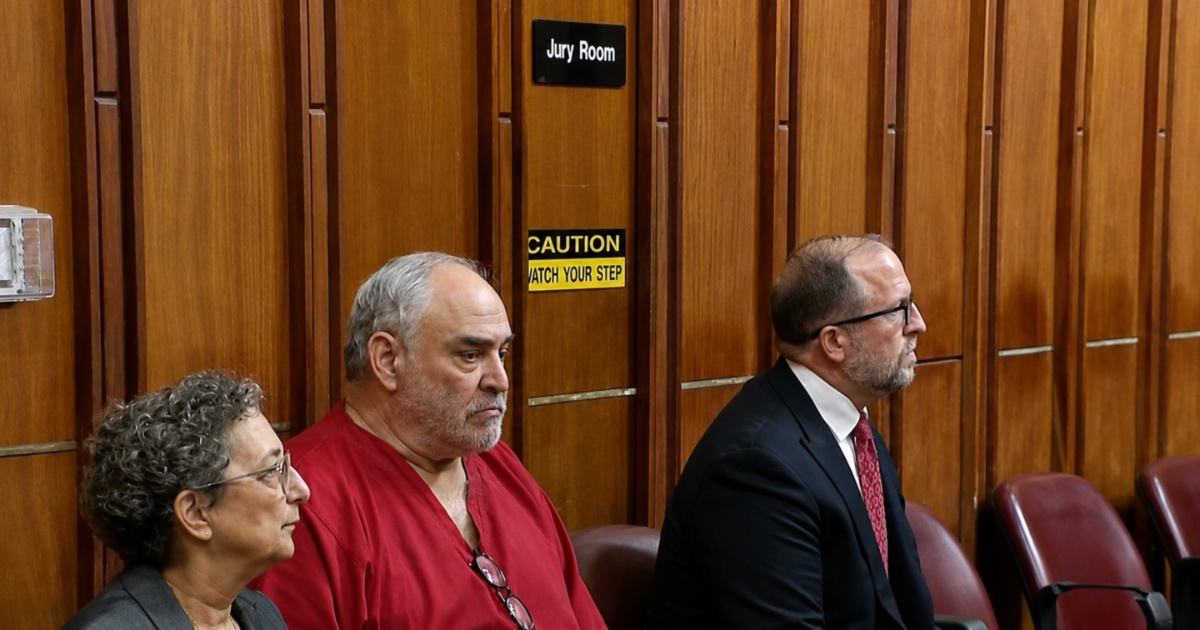
A Miami-Dade judge has once again sentenced Rafael Andrés, aged 62, to death for the murder of Ivette Fariñas, a 31-year-old waitress who worked at La Carreta restaurant at Miami International Airport and was brutally killed in 2005.
A report from Telemundo 51 highlights the alarming history of the convict, making this case particularly severe. During a Friday hearing, Judge Zachary James recalled Andrés's prior conviction for murdering Linda Azcárreta, aged 32, in 1987. In that incident, he violently beat and stabbed her to death.
For the initial crime, Andrés received a nine-year prison sentence but served only 18 months due to good behavior, a consequence of an overcrowded prison system.
This early release allowed him to rejoin society, eventually leading to the murder of Fariñas. Andrés had been hired by Fariñas to perform repair work in her Westchester, Miami apartment.
Prosecutors stated that Andrés attacked Fariñas, striking her face and head, stabbed her three times in the chest, suffocated her, and finally strangled her with the power cord from her own rice cooker before setting the apartment on fire.
The medical examiner estimated that Fariñas endured up to 30 minutes of suffering before succumbing to her injuries.
Andrés also stole Fariñas's ATM card and fled the scene. He was apprehended in March 2006, convicted in 2014, and initially sentenced to death in 2015.
However, this initial ruling was overturned following a 2016 U.S. Supreme Court decision that deemed Florida's scheme, which allowed judges instead of juries to determine the facts necessary for a death sentence, unconstitutional.
In November 2025, a new Miami-Dade jury reviewed the case, recommending the death penalty by a nine-to-three vote, citing the crime's heinous and brutal nature.
Following their recommendation, Judge James sentenced Andrés to death again on Friday, marking the first such sentence in over a decade to place a Miami-Dade inmate on Florida's death row.
Among those present was René Azcárreta, Linda's son, who was only seven when he discovered his mother's murder in 1987. Over the years, he has formed a strong bond with Fariñas's family.
"It's something that, honestly, no one should endure," Azcárreta expressed after learning of the sentence.
The victim's son encapsulated the weight of nearly four decades of waiting with a direct message to the convict: "You were given a chance, a free pass, and you squandered it. You deserve what you have now."
He also noted that while Fariñas's family lost a daughter, they gained a son over time: "Our families have become quite united."
Fariñas's family left the courtroom in tears, declining to give any statements.
The defense has announced plans to appeal the new sentence, potentially arguing that the jury's recommendation was not unanimous.
Understanding the Legal Proceedings in Rafael Andrés's Case
Why was Rafael Andrés initially released early from prison?
Rafael Andrés was released early due to good behavior amidst an overcrowded prison system, serving only 18 months of his nine-year sentence.
What led to the overturning of Andrés's first death sentence?
Andrés's first death sentence was overturned following a U.S. Supreme Court decision in 2016 that declared Florida's sentencing scheme unconstitutional, as it allowed judges rather than juries to determine the necessary facts for imposing the death penalty.
How did the victim's family react to the new sentencing?
Fariñas's family left the courtroom in tears without giving any statements, while René Azcárreta, Linda's son, expressed relief and a sense of justice after the long wait.