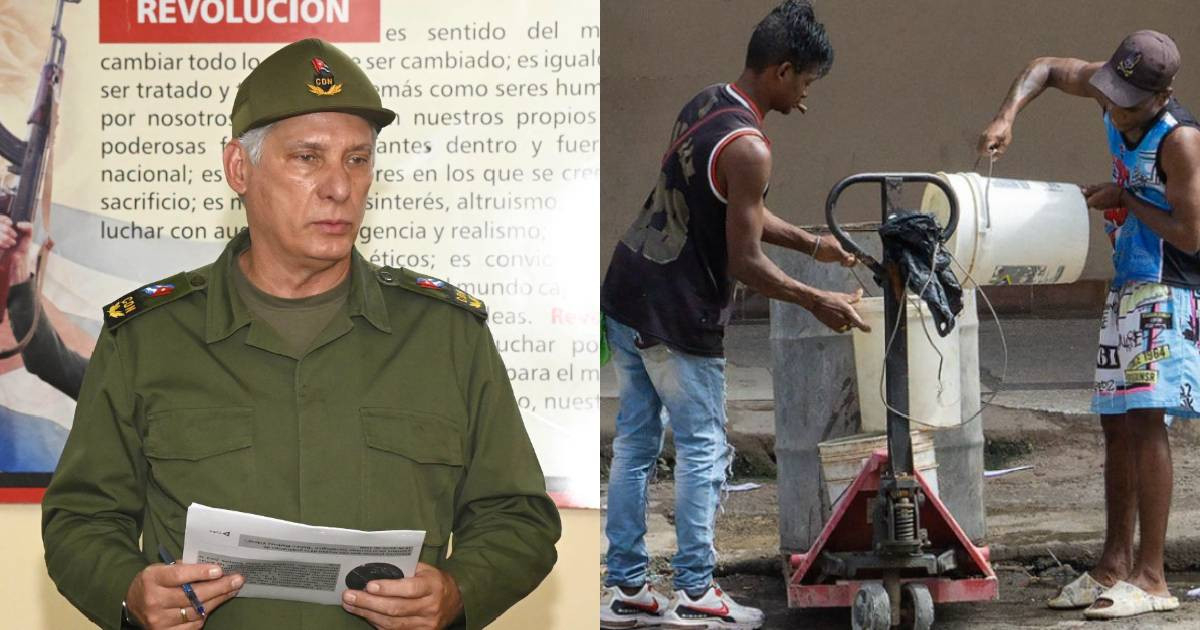
On Friday, Cuban leader Miguel Díaz-Canel visited the Libertad Defense Zone in the Marianao district of Havana. He touted the development of water reservoirs and the use of tankers to transport water as part of what he described as "progress" during the ongoing water supply crisis impacting the capital.
This visit was part of a series of tours to defense zones where Díaz-Canel combined rhetoric about military readiness against the alleged threat from the United States with the promotion of economic changes his administration is implementing.
According to a Facebook post by the Cuban Presidency, Díaz-Canel mentioned that 80 reforms have been approved for implementation, with that number expected to exceed a hundred by next week. He highlighted the incorporation of renewable energy sources, improvements in banking services, renovations of Family Care Systems, and the creation of new water reservoirs as achievements.
When addressing the water crisis, the leader claimed that various sector companies have contributed resources for water transportation and that new reservoirs have been established to tackle supply issues. He presented these actions as management successes, despite them being emergency responses to a deteriorating system.
The statements sharply contrast with the severity of the crisis. The latest data from Havana's water specialists indicate that over 500,000 residents are affected by water supply issues, up from 200,000 in April and 376,055 in May.
Nationwide, approximately 2.7 million individuals face daily struggles to access potable water.
Interconnection of Water and Energy Crises
The collapse of the water system is closely linked to the energy crisis. About 87% of pumping facilities rely on electricity, yet only 135 out of 480 stations have circuits protected against blackouts. Furthermore, 40% of pumping equipment is in poor condition, and the system is operating with just 37% of the necessary fuel.
Díaz-Canel's visit coincided with fresh displays of public dissatisfaction in the capital. On the same day, a group of women blocked the Calzada de Diez de Octubre to demand solutions to the ongoing blackouts, highlighting the rising public frustration over the deteriorating basic services.
Recently, a state tanker driver was filmed dumping water onto the ground in San José de Las Lajas, Mayabeque, sparking a wave of outrage on social media.
In San Miguel del Padrón, the situation has become dire. Residents fought over a single bucket of water when only one tanker was sent for the entire area, with some resorting to using septic tank water.
The Cuban Conflict Observatory recorded 107 street protests in June, an all-time high, many of which were directly related to water shortages and power outages. This trend shows no sign of reversing in July.
Understanding Cuba's Water and Energy Crisis
What are the main causes of Cuba's water crisis?
The primary causes include the deteriorating infrastructure, insufficient electricity for water pumping stations, and inadequate fuel supplies, compounded by the broader energy crisis.
How has the Cuban government responded to the water crisis?
The government has initiated measures such as creating new water reservoirs and using tankers for water transport. However, these efforts are largely seen as emergency responses rather than long-term solutions.
What is the impact of the crisis on Cuban citizens?
Many Cubans face daily challenges accessing clean water, leading to public protests and growing dissatisfaction with the government's handling of basic services.