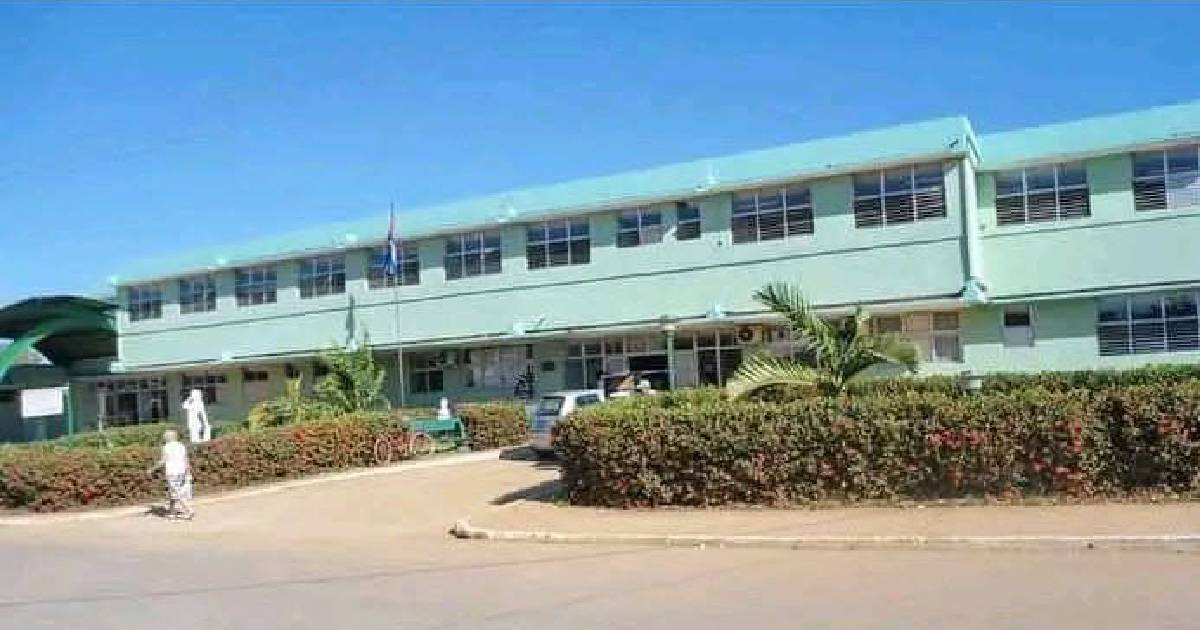
A Cuban father took to social media on Friday to expose the dire conditions at the Güira de Melena clinic in Artemisa province. Visiting the facility at night with his sick child, he discovered a poorly lit center devoid of medications and staffed by medical personnel operating under minimal conditions.
In a Facebook post under the name Fugitivo Kings, the father likened the clinic's appearance to "hospitals in horror movies, dimly lit," noting that although the clinic is equipped with solar panels, they barely power a few light bulbs.
Despite the challenging circumstances, the doctor attending to his son maintained a professional and kind demeanor. However, treatment options were limited due to the absence of essential medicines like duralgina and gravinol. "There's absolutely nothing available for patients here," he lamented.
The father also highlighted the harsh conditions faced by healthcare workers. During the night shift, they were offered "a tiny green piece of bread and a juice" as a snack, a situation he argues showcases the neglect healthcare workers endure.
In his post, he criticized local authorities, questioning, "What do the leaders of Güira do besides deceive and steal 18 million as they recently did?" He also dismissed the official rhetoric about Cuba's healthcare prowess, stating, "Where is the medical powerhouse they boast about? There's nothing in this country."
The post resonated with many, drawing comments from others who shared similar experiences. A healthcare worker commented, "We work out of love for the job because the conditions are nonexistent, and the salary is a joke."
Another commenter emphasized that the issue is widespread. "What happens in this clinic is happening across the country, and no one cares. Leaders and their families have everything secured in the best hospitals," he noted.
A third person warned about the consequences of such deficiencies on medical care. "People die because there's nothing or very little available. It's the same in every municipality," they remarked.
Artemisa's healthcare system has been struggling with shortages, a lack of specialized personnel, and deteriorating equipment since at least July 2025. The situation worsened after Hurricane Rafael damaged numerous healthcare facilities in the province.
Nonetheless, the crisis is nationwide. In February, Public Health Minister José Ángel Portal Miranda stated the system was "on the brink of collapse." By April, 461 out of 651 essential drugs were missing from state pharmacies, over 70% of the basic supply.
In June, the state-run BioCubaFarma admitted its inability to ensure about 300 out of 395 medicines promised to the national health system. The organization blamed the U.S. embargo and a funding gap of over $250 million, an explanation widely rejected as many pointed to internal inefficiency and corruption.
A survey conducted between February and March with over 1,700 respondents revealed that 54.2% of Cubans face severe barriers to accessing medications, while only 4.8% obtained them with ease.
Meanwhile, Cuban doctors are surviving on monthly salaries between $10 and $16, and those who dare to reveal the true conditions of medical facilities risk facing repercussions from the regime.
Understanding the Healthcare Crisis in Cuba
What are the main issues facing the healthcare system in Güira de Melena?
The primary issues include a lack of medications, inadequate lighting, and minimal working conditions for medical staff. These problems are exacerbated by a lack of support and resources.
How are healthcare workers in Cuba affected by the current crisis?
Healthcare workers face challenging work environments, inadequate pay, and insufficient resources, often working out of dedication to their profession despite the lack of support.
What has been the government's response to the healthcare system's struggles?
The government attributes the shortages and issues to the U.S. embargo and financial constraints, but many citizens believe internal inefficiency and corruption are also to blame.