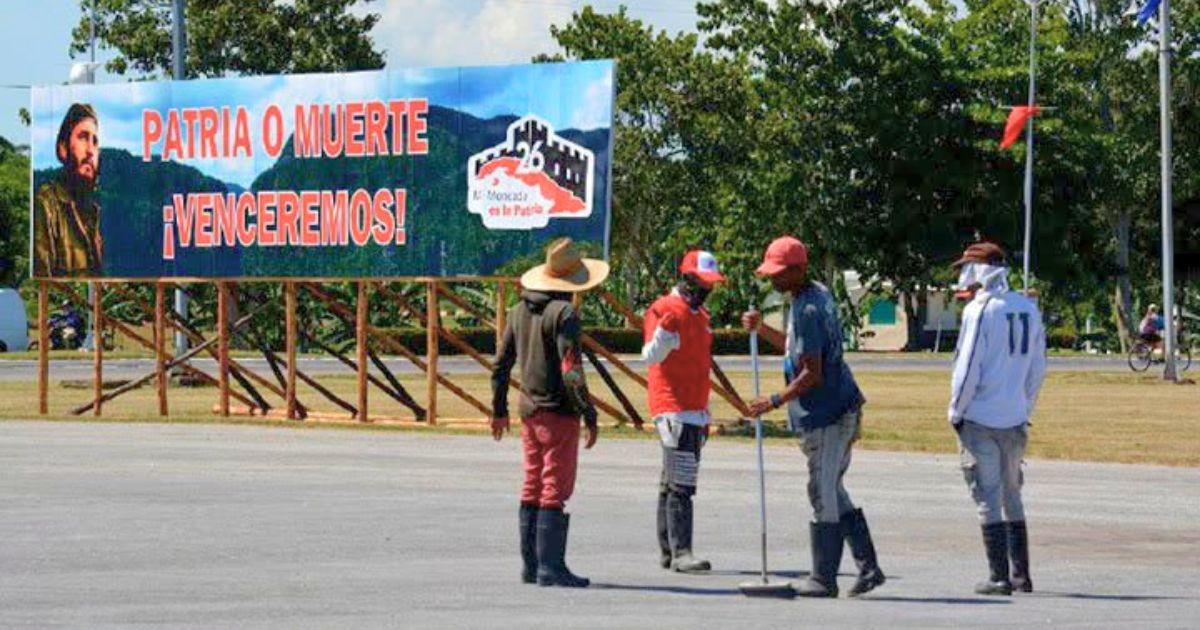
In Pinar del Río, residents endure over two years without consistent access to potable water, and power outages lasting up to 30 hours are not uncommon. Yet, the state-run Periódico Guerrillero proudly reports that the main square in the provincial capital is now "adorned" for the National Central Event commemorating the 73rd anniversary of the Moncada and Carlos Manuel de Céspedes barracks assault, set for Sunday, July 26th.
The scene is meticulously arranged: rows of plastic chairs, sound and lighting towers, Cuban flags, banners of the July 26 Movement, and a large billboard bearing the slogan "Homeland or Death, We Will Overcome." Notably absent, however, is the essential supply of water.
The state media outlet enthusiastically depicted the "people of Pinar del Río, known for their rebellious spirit and resilience, gearing up for a day of patriotic reaffirmation." In the current context of the province, this narrative rings more as unintended irony than genuine praise.
Miguel Díaz-Canel, quoted by Periódico Guerrillero, remarked that this commemoration "calls on us to continue working to improve the quality of life for the population, advance food sovereignty, and uphold our socialist achievements." Many residents, deprived of running water for months, greeted these words with skepticism and frustration.
The response in the comments of the official publication was swift. One internet user captured the collective sentiment with a phrase that went viral: "The country is falling apart, but you can't say it; everything is supposedly great." Another was more succinct: "Pinar del Río without water but a lot of July 26." A third posed the question that seems to go unanswered by the government: "What about the water?" Some, with genuine bewilderment, simply asked, "What are they celebrating?"
The water crisis in the province is neither new nor trivial. In April 2026, residents of Entronque de Herradura in Consolación del Sur reported more than two years without regular water service. In Viñales, reports from May indicated over six months without supply, with power cuts of up to 30 hours incapacitating water pumps. A water truck delivery can cost up to 4,000 pesos, a price out of reach for most families.
This scarcity isn't merely inconvenient; in June 2026, there was a reported surge in suspected hepatitis A cases in the province, directly linked to the lack of potable water. Meanwhile, the regime managed to mobilize a hundred workers to refurbish the Milanés Theater at breakneck speed, starting on June 30th and completing by July 20th. For political events, resources and speed appear out of nowhere; for water and electricity, the answer remains patience and endurance.
Pinar del Río hosts the central July 26th event for the fourth time, having previously done so in 1976, 2000, and 2017. This year's edition carries an extra layer of propaganda: the regime frames it within the centenary of Fidel Castro's birth under the slogan "My Moncada is the Homeland." The Ministry of Labor and Social Security has confirmed a work recess on July 25, 26, and 27, effectively mobilizing workers to the event instead of allowing them to rest.
The economic backdrop does little to support the official narrative. The Cuban economy shrank by 5% in 2025, with a cumulative decline of 15% since 2020, according to various sources. The Economic Commission for Latin America and the Caribbean (ECLAC) projects a further drop of 6.5% this year. But the square is ready, chairs are aligned, and flags fly high. That, it seems, is what matters.
As another internet user commented with resigned sarcasm upon seeing the immaculate photos of the square: "What a lovely plaza, hahaha, will I make it in time?" The question, of course, wasn't about the event's schedule.
Addressing the Water Crisis in Pinar del Río
What is the current water situation in Pinar del Río?
Pinar del Río has been experiencing over two years of inconsistent access to potable water, with some areas like Entronque de Herradura reporting no regular service for this duration.
How is the government addressing the water crisis?
The government's focus appears to be on political event preparations rather than resolving basic infrastructure issues like water supply, leading to public frustration and skepticism.
What impact does the water shortage have on public health?
The scarcity of potable water has been linked to an increase in suspected hepatitis A cases, highlighting the serious public health implications of the ongoing crisis.