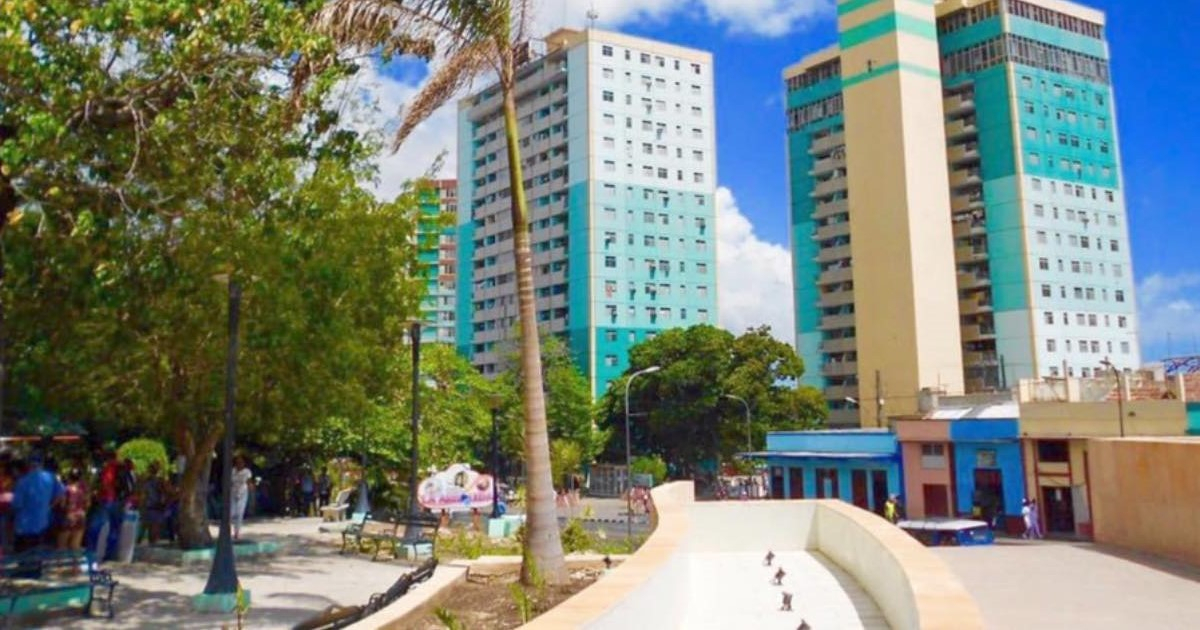
Rescue worker Aris Arias Batalla has issued a warning on social media about the dangers faced by residents of tall buildings in Santiago de Cuba who resort to cooking with charcoal or wood during prolonged power outages. This practice poses a significant collective health risk, especially on higher floors.
The head of Operations and Relief for the Cuban Red Cross in Santiago de Cuba addressed his message, titled "The Other Side of Height," to the authorities responsible for managing the energy crisis. His concern focuses on the Sierra Maestra complex, popularly known as the "18 Plantas de Garzón," located on Victoriano Garzón Avenue, as well as other tall buildings in the city.
"While a family in a low-rise home can cook with charcoal or wood in a ventilated patio or rooftop, on the 15th or 18th floor, this option becomes a collective health issue," Arias explained.
The rescuer notes that smoke and toxic gases linger in high-rise buildings, accumulating in hallways, staircases, and ventilation ducts, which adversely affects many residents, particularly children, the elderly, and those with respiratory conditions like asthma.
"This is not just a minor inconvenience; it literally suffocates," he warned.
His post includes a reasonable demand: "The smoke from cooking with charcoal or wood harms neighbors. Please include these buildings in prioritized electrical circuits."
The health risks associated with cooking with charcoal or wood in enclosed or semi-enclosed spaces are severe: carbon monoxide is odorless and colorless, capable of building up to toxic levels, while fine particulate matter PM2.5 can deeply penetrate the lungs, triggering asthma attacks, heart attacks, and arrhythmias.
The World Health Organization warns that households using biomass stoves without adequate ventilation can experience pollutant levels up to 100 times higher than recommended limits.
Given this situation, Arias Batalla calls for contingency plans to consider an "elevation factor" when distributing resources: small generators to pump water and liquefied gas for cooking.
"I am not asking for magical solutions. I am asking for sensitivity and prioritization," he wrote.
"A blackout is not just darkness; it also means thirst, immobility, and health risks," emphasized the official.
The letter also highlights other issues exacerbated by the energy crisis for those living on higher floors: potable water does not flow by gravity and must be pumped to elevated tanks using electricity or scarce fuel; elevators cease to function, making daily ascents a hardship for people with disabilities, the elderly, and pregnant women; and darkness in stairwells and hallways increases the risk of falls and accidents.
The context of this complaint is of critical concern. Santiago de Cuba's Electric Company admitted in May that some circuits cannot guarantee even two hours of daily service, and it was recently reported that families in a locality within the province endured 26 consecutive days without electricity.
Understanding the Dangers of Charcoal Cooking in High-Rise Buildings
What are the health risks of cooking with charcoal in tall buildings?
Cooking with charcoal in high-rise buildings can lead to the accumulation of carbon monoxide and fine particulate matter, which can cause suffocation, asthma attacks, heart issues, and even death.
How does the energy crisis in Santiago de Cuba affect high-rise residents?
The energy crisis has led to frequent power outages, making it difficult to pump water to high floors and causing elevator shutdowns, thus increasing the risk of health issues and accidents due to lack of accessibility and lighting.