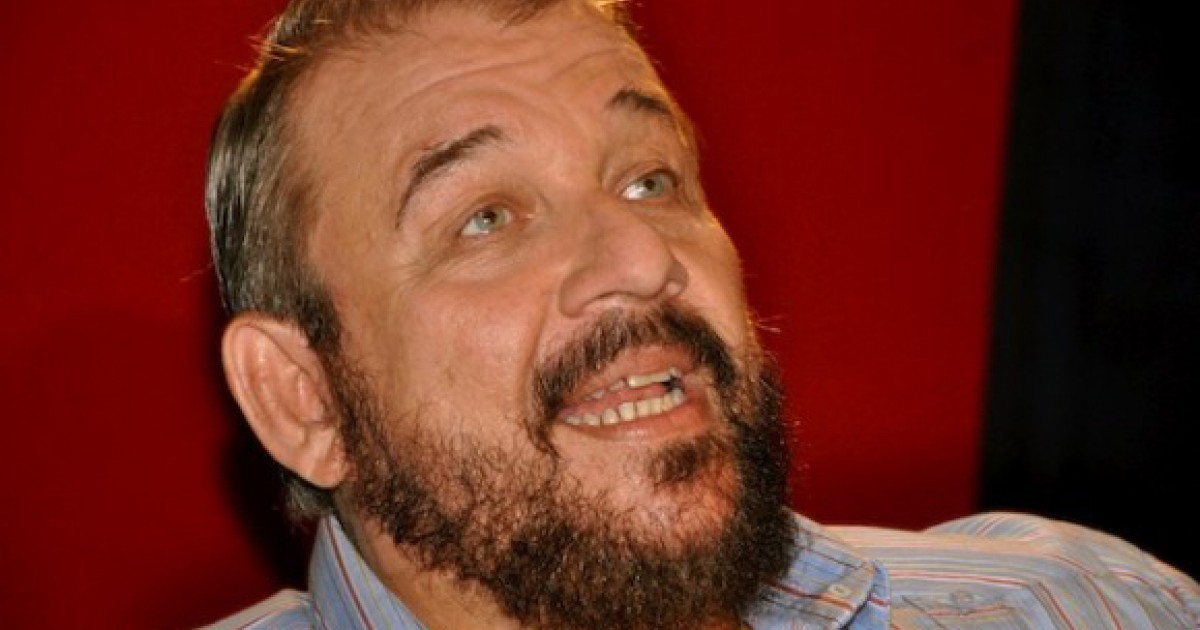
Psychologist and broadcaster Manuel Calviño has called for regulated hours for street vendors in Cuba, criticizing their activity from the early hours of the morning until late at night as a source of noise pollution that disrupts the quality of life for residents.
Calviño's comments were made during his program "Vale la Pena," which aired on Cubavisión under the title "Let's See Who Makes More Noise."
The issue was sparked by a letter left at the door of the Cuban Institute of Radio and Television (ICRT), which Calviño read on air. The letter writer described their street as "the noisiest in the country": a baker blowing a whistle at six in the morning, a car horn at six thirty, a stream of vendors loudly selling potatoes, coconut pie, buying gold, and mattress repairs, joined by cars blasting music. As the night goes on, late-night revelers shout until two or three in the morning.
"I say, street vendors, with all due respect, I understand it's their job and they need to make sales, etc. But they don't have to start at six in the morning, not even at seven. Markets open at eight-thirty, not before. And they shouldn't be shouting their products at ten at night; this needs to be controlled," Calviño asserted on the program.
He clarified that his demand doesn't question the existence of street vendors—an activity formalized by the National Assembly in June with a vendor's license and simplified tax regime—but rather the lack of control over their operating hours and the noise impact they generate.
Calviño supported his argument with data from the magazine "Medio Ambiente y Desarrollo," published by the SIDMA provincial delegation in Villa Clara, indicating that 50% of citizen complaints in that province are related to noise. Sources range from home music systems to state recreation centers, mechanical workshops, carpentries, and power generators.
The issue is neither new nor exclusive to Havana.
Noise Pollution: A Growing Concern
Noise in Sancti Spíritus has worsened since 2022, with speakers, engines, and music frequently exceeding legal limits.
In June, residents of Nuevo Vedado complained about the unbearable noise from an ETECSA generator that operates continuously in a neighborhood receiving just two hours of electricity a day.
Calviño pointed out that Cuba has legislation to regulate noise pollution—Law 81 on the Environment, Cuban Standard NC 26:2012, and Decree Law 200/1999—but they are barely enforced.
"There are laws that regulate all these things, yet they aren't enforced, and because they aren't enforced, they are even less likely to be followed," he stated. Regarding the police, he was blunt: "They rarely intervene when there is noise."
Beyond its impact on physical and mental health, Calviño framed the issue as a failure of coexistence: "There is a basic problem of respect, consideration for others, respect for others' rights, and avoiding sound invasion in shared spaces."
A segment of the program posted on Facebook by Cubavisión garnered over 31,000 views, indicating the topic's resonance with the Cuban audience.
Calviño concluded the episode with a warning summarizing his stance: "The difficult part is realizing when you are the source of noise. Believe me, it's worth it."
Key Questions on Street Vendor Regulations in Cuba
What did Manuel Calviño propose regarding street vendors in Cuba?
Manuel Calviño proposed regulating the hours of street vendors to prevent noise pollution that disrupts residents' quality of life.
Why is noise pollution a significant issue in Cuban cities?
Noise pollution is a major concern because it affects both physical and mental health, and represents a breakdown in communal respect and shared space considerations.